Potrebno ti je više informacija?

Author: Tijana Ilić

  • “We must work to ensure that history does not repeat itself”

    “We must work to ensure that history does not repeat itself”

    Experiences change us. The people we meet throughout life change us. The places we visit also change us. We take all these claims for granted, because they are “general places”, and something that applies to most of us. However, the way in which we are affected by new experiences, and especially people and places that we come into contact with for the first time, or in a different context than before, have the ability to do much more – to encourage us to think, inspire us in further work, and often provide us with a completely different perspective on things that we thought we already knew.

    A group of young people who took part in a study visit to Prishtina and Gračanica at the end of April, organized by Civic Initiatives, got the opportunity to experience it. Although short, the study visit gave them a chance to meet a different Kosovo than what they mostly had the opportunity to read, hear and see, both in the mainstream media and in the general public.

    “The experiences and stories I encountered further motivated me to be more active in the promotion of dialogue, tolerance and protection of human rights.”
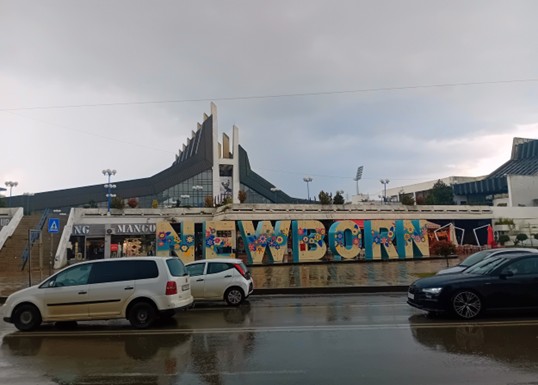
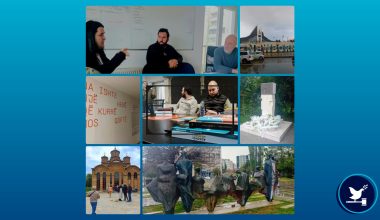
    NEWBORN sign, in the background: Youth and Sports Center (formerly known as “Boro i Ramiz”)

    The visit to Pristina began with a visit to the editorial office of the Kosovo 2.0 platform and a conversation with the editor-in-chief, Besa Luca, about the history and work of the platform, the role of the media in building reconciliation and dealing with the past in the region, as well as examples of good practice of inter-ethnic cooperation in the field of media and investigative journalism. The group had the opportunity to see various researches and reports that Kosovo 2.0 has published over the years on the topic of dealing with the past, but also to look at publications and some of the rare physical copies of the Kosovo 2.0 magazine.

    The meeting with the publicist, analyst and activist Shkëlzen Gashi focused, first of all, on the conversation about his work on the analysis of history textbooks in the countries of the former Yugoslavia, then his book “Massacres in Kosovo 1998-1999”, as well as his multi-year project “The Other Serbia”. In addition, many interesting and important topics were raised, such as the role of civil society in the reconciliation process, the relationship of the Albanian national minority in Serbia towards Kosovo and vice versa, but also the fate of the transitional justice process today.

    “This visit inspired me to work even harder on what we started as young Albanians and Serbs, and to fight even more strongly for our rights.”
    Visit to the Barabar Center

    At the end of the first day, a visit to the Barabar Center was organized, which is located in the very center of Pristina, in the former Grand Hotel. In addition to the historical importance of the location itself, the Barabar Center plays an important role in the artistic and activist scene, both in Kosovo and in the region. The group was hosted by Kushtrim Koliqi, director of the Integra organization, who presented the work of the Barabar Center and the importance of the availability of space for independent art and artivism. Special attention was also given to the discussion about the importance and role of the “Mirdita, good day” festival in the process of building trust and reconciliation, which has been organized for years in Belgrade and Pristina in cooperation with Integra, the Youth Initiative for Human Rights and Civic Initiatives.

    “I knew there was a ‘Brotherhood and Unity’ statue, but I didn’t know the story behind it.”
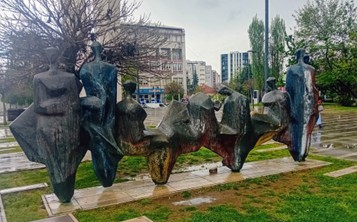
    Monument to the Heroes of the National Liberation War

    Although the weather conditions were not the most favorable on the second day of the visit to Prishtina, the group of young people resolutely continued their activities as planned. The first such activity was a walking tour of the city, with special emphasis on the Yugoslav and post-Yugoslav heritage of Pristina, in the company of Korab Krasniqi from the organization ProPeace Kosovo.

    The walk started from the National Library, that is, the University of Pristina, including talks about the art installation Informative Hat by Eliza Hoxha and the Temple of Christ the Savior located within the campus. After that, the tour continued to the Monument to the Heroes of the National Liberation Struggle, where there was a discussion about the fate of the monuments that represent the Yugoslav past, as well as the additional symbolism that such “redacted” monuments carry today.

    “Describing the monument as a place of collective memory made the biggest impression on me.”
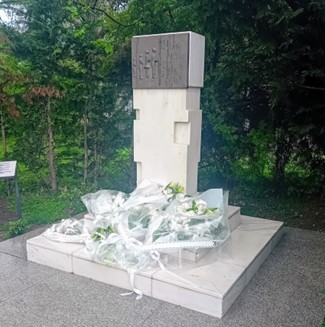
    Monument to the missing “Those we miss”

    The next monument that the group of young people visited was the monument to the missing called “Those we miss”, one of the few monuments to the victims of the wars of the 90s in the territory of the former Yugoslavia that is not ethnically colored. Created as an initiative of the victims’ association, today it is an expression of the common suffering of all those who still do not know the fate of their family members, but also a place where they leave flowers together every year on the International Day of the Missing in memory of all the missing.

    The path led the group of young people to the monument to Ibrahim Rugova, Mother Teresa Square, and the statue of Zahir Pajaziti, as well as to the monument dedicated to the student protests of 1968. The visit to these monuments also encouraged a discussion about monuments that glorify fighters and the dominant masculinity that is usually present in such monuments. The walk, symbolically, ended at the now famous NEWBORN monument, which is located in front of the Youth and Sports Center, once better known as “Boro and Ramiz”. It was the story of the fates of the “real” Bora and Ramiz that rounded off this walking tour, and served as a lesson in fostering togetherness and solidarity, which we desperately need even today.
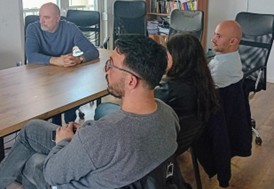
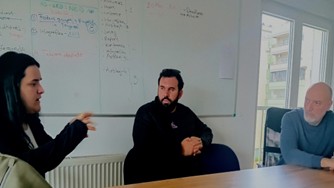
    The discussion on important topics for our societies continued during the visit to the Institute for Social Policy of Musina Kokalari, where the young people talked with Visar Ymeri, the executive director of the Institute, primarily on the topic of the future. Given that the expression “dealing with the past” in public discourse in our region is often used only as a phrase, without any essential meaning, the question arose whether today, in 2025, is actually the time to look at the common future of the region, and agree on what we want it to look like. Problems between which it is possible to draw a parallel were also discussed, such as minority rights, as well as social problems such as health care, workers’ rights and “living wage”, as well as possible common solutions for these not so small challenges.

    “Honestly, I did not know the exact number of children killed or missing during the years 1998-2000.”
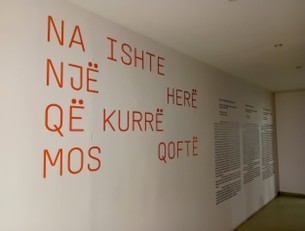
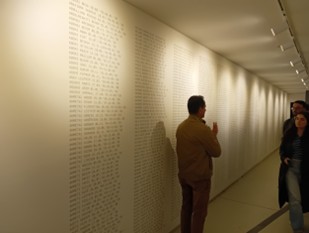
    The day ended in an extremely emotional way – with a visit to the exhibition “It happened once, it never happened again” in the Documentation Center of Kosovo, organized by the Fund for Humanitarian Law of Kosovo, and a meeting with the executive director Bekim Blakaj. This exhibition is dedicated to children who were victims of war in the period 1998-2000. killed, or are still missing.

    “The displays of the stories of the suffering of children and the personal belongings of the victims reminded me how destructive crime and war are and how important it is to learn from the past so that such events never happen again.”

    According to them, the fact that this exhibition contains personal items and stories about children of all ethnic communities left a special impression on the group of young people, that is, that it is not one-sided. Some of them had heard about the exhibition before, but no one expected how much they would be affected by dealing with, first of all, the number of child victims, then the number of children who are still missing, and finally – the stories that Bekim Blakaj shared with them, concerning the process of creating the exhibition and communicating with the families of the victims.

    “I was especially inspired by her dedication to documenting war crimes and promoting the protection of human rights.”

    On the last day of the visit, and before returning to Belgrade, the group visited Gracanica and spoke with historian Marijana Tom. Before the actual meeting, the young people had the opportunity to visit the Gračanica monastery. Particularly interesting, in addition to the tour of the monastery itself, was the fact that several parallel events took place in one small space. On the one hand, there were tourists from different parts of the world who came to visit the monastery as part of cultural and religious heritage, take photos, and learn more about its history. A television crew was also present, standing by the entrance to the church, and probably came to take a statement from the priest. And in the church itself, a baptism was taking place.
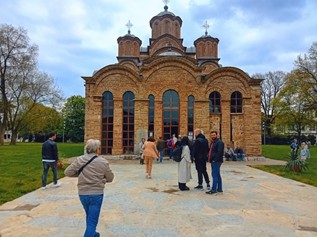
    Gracanica Monastery

    After the Gračanica monastery, it was time for the last meeting as part of this study visit, namely with the historian Marijana Tom, who has been living and working in Gračanica for many years. In a relaxed conversation with young people, Marijana told about her experiences and achievements of working on dealing with the past and documenting war crimes, but also the fact that continuous work on these topics and advocating for transitional justice in the region, without great results in terms of changing the dominant narratives and achieving truth and justice, can unfortunately also have negative consequences, in the form of burnout.

    “One of the significant parts of the study visit for me was the meeting with Marijana [Tom] in Gračanica. Her rich experience and commitment to work on dealing with the past gave me a deeper understanding of the importance of truth and justice in the reconciliation process.”

    After that, they discussed the situation in Gračanica itself today, but also the topics Marijana deals with today, namely the rights of minority communities in Kosovo. Young people had the opportunity to hear a lot of new information, especially regarding the rights of the Roma national minority in Kosovo.

    This study visit, judging by the impressions of the participants, succeeded in its intention, which is to educate, broaden horizons and make people think about topics that are unfortunately not present enough in the public eye. Instead of a conclusion, it is best to quote one of the participants of the visit:

    “Although I am very sensitive when it comes to the process of building peace and dealing with the past, every time these topics are discussed, one is affected in many ways. If I were to put it in a stylized way – the victim has no color, no age, let alone any other subtle identity determinants.”

    *All quotes used in the text were taken, in their original form, from the evaluation form that the participants filled out after the study visit*

    The study visit to Kosovo was organized as part of the project “Confronting the past – new generations, new perspectives” implemented by Civic Initiatives as part of the project “Support of the European Union to building trust in the Western Balkans” funded by the EU and implemented by UNDP, and implemented in Bosnia and Herzegovina (BiH), Kosovo*, Montenegro, North Macedonia and Serbia.
  • FIGHTING STRENGTH: Braver and everyday support for children with rare neurotransmitter diseases

    FIGHTING STRENGTH: Braver and everyday support for children with rare neurotransmitter diseases

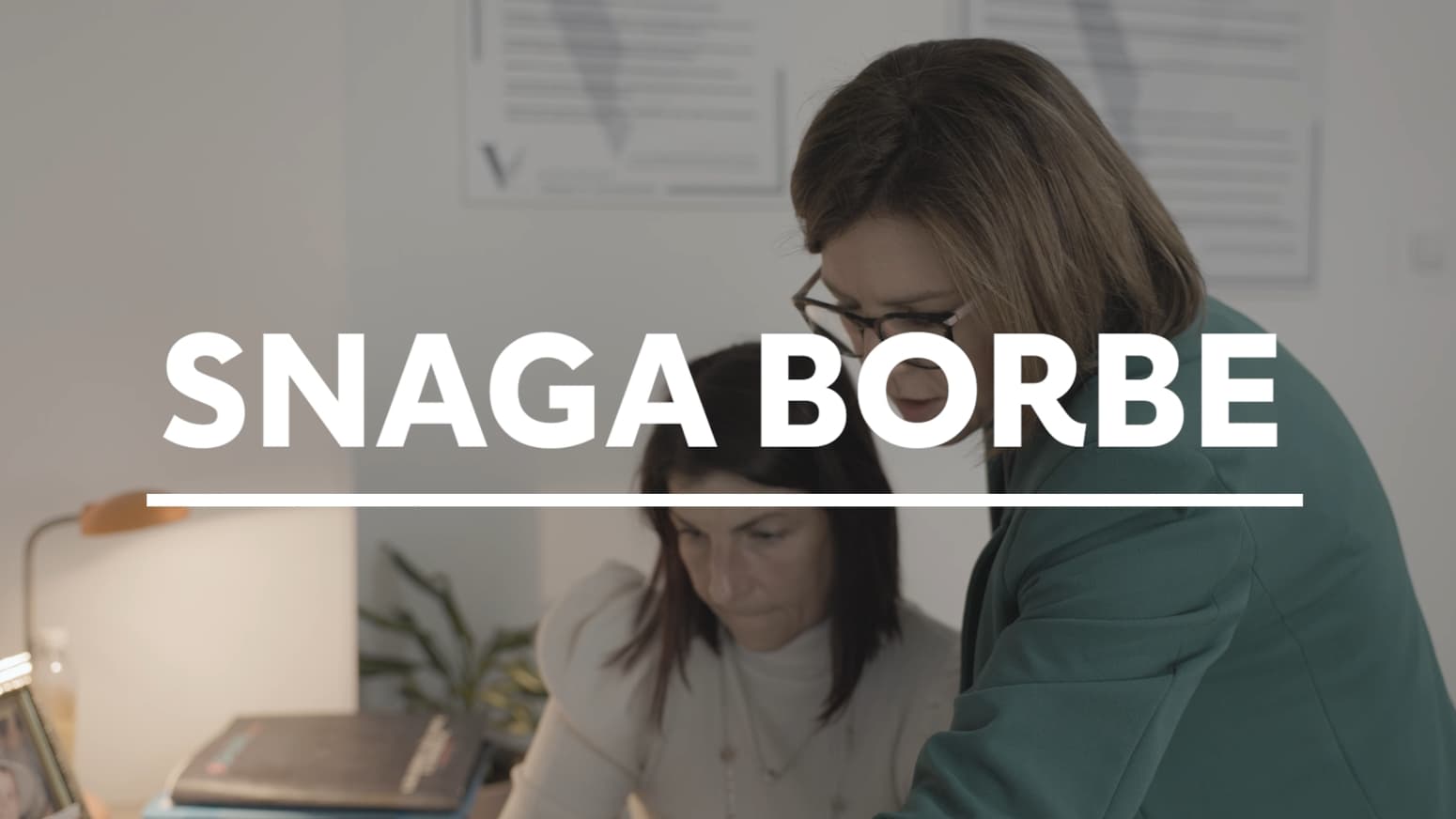
    Some stories don’t start with big words. They start with quiet questions, uncertainties, but also with something much stronger – the determination not to give up. The Brave Association was born from such stories. From the struggle of parents and children with rare neurotransmitter diseases. Their mission is to show that where there are few answers, there can be much hope. The story of Hrabrisha is brought to you by a new episode of the series “Strength of the Fight”.

    “Our entire path to diagnosis and treatment was quite thorny. It was a long diagnostic odyssey,” testified Ivana Badnjarević, founder of the association, whose daughter suffers from tyrosine hydroxylase deficiency, a congenital metabolic disease. “I recognized the need to help others not to go through the same thing, to make it easier for them.”

    A collective mission emerged from a personal struggle. Today, the Hrabriša Association represents a safe point for many families who for the first time encounter unknown diagnoses, confusing bureaucracy and emotional challenges that come with living with a rare disease.

    Parents facing rare diagnoses are often therapists, lawyers, and fighters. According to Vanja Kovačević from the Hrabriša association, there are rules and procedures that must be followed, and for parents of children with rare diseases, every day is a struggle and they often have “neither the time nor the capacity to deal with legal issues”.

    “We are here to be the wind at their backs. To study, instruct which rulebook should be applied, which legal regulation, which authority to turn to, what to write in which request… To help them reach a diagnosis, therapy as soon as possible, and – if the treatment cannot be carried out in Serbia – to be sent for treatment abroad at the expense of the state with the help of state funds”, explains Kovačević.

    The Hrabriša Association was founded in 2016 with the idea of ​​providing support to families with children with neurotransmitter diseases, and today it has a wide role – from navigating through complicated procedures to public advocacy for systemic changes.

    “Rare diseases are just beginning to be seriously dealt with in Serbia. The register of rare diseases has only just been adopted, which is very important in order to know the number of sufferers and accordingly create action plans on how to help those children and families, how much money is allocated for treatment, for additional support… But as long as children pass under the radar of diagnosticians, we have work to do – both in terms of education and the legal framework,” adds Badnjarević.

    And while some rare diseases, like spinal muscular atrophy or cystic fibrosis, can be detected right after birth—thanks to newborn screening—many parents go through years of wandering, misdiagnosing, and changing doctors until they get the right answer. “And when they get it, only then does a new struggle begin: therapy, rehabilitation, new living conditions,” says Ana Pataki from Hrabriša.

    Children with rare diseases often have invisible disabilities – specific needs that require constant attention. “Every hour of a parent’s life is dedicated to the care of the child,” it is emphasized. “And then there are additional challenges – enrolling in kindergarten, starting school, integrating into society, accessing the labor market.”

    Finally, what does it mean to be brave? Sometimes courage is not in fighting – but in waiting. It is not always in hope – but in acceptance. The Hrabriša Association exists precisely for this reason: to be a support for those whose everyday life has turned into a struggle. To be an umbrella over families who show day by day what it means to fight for the right to childhood.

    Because all those small steps they take – together – lead to something bigger. Towards a society that understands, sees and leaves no one behind.

    That takes courage. And Hrabriša has it.

    🎥 Watch the story and meet those who choose courage every day.
    The Association “Hrabriša” says that it is very important that anyone who suspects that a member of their family may be suffering from neurotransmitter diseases, dopa-reactive dystonia and other neurometabolic diseases – immediately establish contact with “Hrabriša”, either through the website or social networks that this association runs.

    This video was realized with the support of the Swiss Government project “Together for an active civil society – ACT”, implemented by Helvetas Swiss Intercooperation and Civic Initiatives. The opinion expressed in this video does not necessarily represent the opinion of the Government of Switzerland, Helvetas or Civic Initiatives.

  • Three freedoms under scrutiny: April 4 – April 17, 2025

    Belgrade, April 17, 2025

    Violation of basic human rights in Serbia
    April 4 – April 17, 2025

    The police forcefully removed the students who blocked the bus from Novi Pazar to the SNS rally in Belgrade. The police violently tried to break up the student blockade of RTS. The police raided the Faculty of Medicine and the Faculty of Philosophy in Niš.

    Supporters of the ruling party beat a young man for chanting. Supporters of the ruling party beat a father and son for shouting slogans in support of students. Supporters of the ruling party physically attacked the Zrenjanin KTV team.

    Violence is ubiquitous. Violence goes unpunished. Violence is carried out by institutions.

    For more information about these and other cases recorded in the previous period, see the full report below:

  • They don’t grow up alone here: How Cepora changes the lives of children without parental care

    They don’t grow up alone here: How Cepora changes the lives of children without parental care

    While preparing the stage for the play “Missed Chances”, the members of Cepora – the Center for Positive Development of Children and Youth – tell a story that is not invented, nor is it artistically embellished. The story was created from the real experiences of young people from the home system, and tells about their journey from entering the social welfare system until the moment they leave it – with all the challenges that path brings.

    For more than a decade, Cepora has been working with young people who need support the most – children without parental care, young people growing up in homes, foster families or facing various forms of social exclusion. Through programs that combine applied theater, workshops and educational activities, career guidance and mentoring support, they create a safe space where young people can grow, make mistakes, learn and discover their own potential.

    “The methodology we use is not something we do only with children in homes. We also apply it when we teach children some skills in schools, because we are focused on social and emotional development,” explained Cepora. “Through play, challenges and various interesting situations that come from applied theater and drama, children and young people learn and practice the skills they need for life. These are everyday situations – from communication and support, to taking responsibility and getting out of the comfort zone,” emphasizes Lidija Bukvić, director of Cepore.

    The performances created in Cepora are not only educational – they are interactive, created and performed by the young people themselves for an audience made up of their peers, educators, social workers and teachers. Those are the moments where real understanding comes in – when the audience gets a chance to step into someone else’s shoes and see the challenges these young people go through.

    “When we played the play for young people from homes, we asked them to turn on the light if they noticed that something on the stage was an unrealistic representation of their lives. No one turned it on,” says Iva Gayin. This was a clear sign that Cepora does not speak on behalf of young people – but together with them.

    Children without parental care form a specific group because that label is often their only point in common – and it is precisely this label that strongly shapes them.

    “Once they enter the system, they accept that identity very quickly and find it difficult to get rid of it. Our task is to remind them that they are, first of all, individuals, special children with their own experiences, enormous courage and potential that they themselves sometimes forget. We are here to help them integrate everything that has happened in their lives and, as they grow up – in the system and after it – to build their own personal path”, stresses Lidija Bukvić.

    The organization was founded in 2011, and today it gathers a team of pedagogues, experts from the social protection system, and volunteers. Through 15 performances, more than 4,500 workshops and thousands of individual conversations, Cepora has become a second home for generations of young people. Their activities are not only therapeutic – they are transformative. Young people learn to communicate, set boundaries, resolve conflicts and – most importantly – believe in themselves.

    “I thought I came to help children grow up, but actually I am the one who grew up,” said one volunteer, which sums up what many in Cepora feel.

    In addition to working with children without parental care, they cooperate with more than 50 Belgrade primary and secondary schools and run programs for young people in the community. “Any young person between the ages of 15 and 30 can contact us and get free support – whenever they need it. That’s key for us: all our activities are always available and always free. If we don’t have funds from the projects, we have time. We will work voluntarily, because we believe in what we do,” Cepora points out.

    For children and young people growing up without support, this often means that the system sees them through paperwork, protocols and deadlines. Cepora, however, sees people. And in a world where this is an increasingly rare practice – it makes a difference.

    Watch the story of Cepora in the video attachment:

    This video was realized with the support of the Swiss Government project “Together for an active civil society – ACT”, implemented by Helvetas Swiss Intercooperation and Civic Initiatives. The opinion expressed in this video does not necessarily represent the opinion of the Government of Switzerland, Helvetas or Civic Initiatives.

  • Jovanović for HRHF: Historic protests in Serbia – why hundreds of thousands of people take to the streets

    Jovanović for HRHF: Historic protests in Serbia – why hundreds of thousands of people take to the streets

    In the past months, Serbia has witnessed some of the largest protests in its recent history – and the largest student mobilization to date. With slogans like “Corruption kills” and “Pump” – students have become the driving force of leaderless protests, while at the same time civil society is under increasing pressure.

    In an author’s text for the Human Rights House Foundation, Uroš Jovanović from Civic Initiatives – a member of the Belgrade House of Human Rights – sheds light on the roots of the protests and explains why dialogue with institutions is no longer seen as a solution.

    You can read the original text in its entirety, published in English on the HRHF website, HERE, and read parts of the text translated into Serbian below.

    Historic protests in Serbia – why hundreds of thousands of people take to the streets

    The protest held on March 15, which made it to the front pages of the world media, was one of the largest gatherings in the history of Serbia. It was a grassroots, spontaneously organized student protest that united the wider public and exposed the deep-rooted corrupt system built by the Serbian Progressive Party during its 13 years in power. In an inspiring, creative and unprecedented way, the students successfully challenged the regime and forced it to function in crisis mode for months, mobilizing hundreds of thousands of citizens to take to the streets.

    You won’t find student leaders here. Every time students appear on television, they are new faces. In some shows, they don’t even reveal their names – they are simply “students”. This makes it much more difficult for the authorities to target and attack individuals, because there is no single leader or fixed spokesperson.

    Life in Serbia often means feeling demotivated and exhausted, because the daily injustice of this system is slowly eating away at you. Nevertheless, the students managed to restore faith and hope for a better future for all of us.

    I’ve been to many protests over the last eight or nine years, but I’ve never seen a movement that was so clearly communicated and organized. It seems that this success has become an inspiration beyond the borders of Serbia – students receive invitations to share their experiences with colleagues from North Macedonia and Turkey.

    During the March 15 protest, students had marshals on the ground and a system of signs, including those warning of attempts by the authorities to inject hooligans into the crowd to cause chaos and violence. Due to the huge number of people, the mobile internet often did not work, so the guards used the old school of communication – running to the next person to get the message as quickly as possible.

    Despite the enormous pressure and their own diversity, the students remained united and persistent in their demands, which basically concern the fight against corruption. The government is clearly in trouble. For example, one of the demands is the publication of documentation on the reconstructions in Novi Sad, where the canopy of the railway station collapsed and killed 16 people – which would completely expose the government.

    More and more protests are appearing in the country, organized by various groups of citizens and dealing with various social issues. However, they all emphasize that, in the end, they are on the streets to support four student demands.

    At the same time, the inflammatory and dangerous rhetoric of top government officials has fueled numerous verbal and physical attacks on students – many of these attacks have even been described as attempted murders. On March 15, top government officials incited violence, and hooligans under police protection were seen near the protest site. On that day, protesters were hit by an as-yet-unidentified sonic weapon, causing injuries and panic. Civil society has so far collected more than 4,000 testimonies about this attack.

    Tactics and trends of intimidation of civil society and the protest movement

    The government systematically abuses legislation to target activists who criticize its moves and take revenge on those who take to the streets. We have already seen something similar in Georgia, and now it is clearly developing here as well. I believe that if the protests stopped suddenly, the regime would launch a full crackdown.

    Tactics include invasion of privacy, leaking of personal information, surveillance, framing of charges, false reports, prosecution and detention. The list is too long. We are working to document and link these cases to SLAPP lawsuits, as we have seen an increase in such cases since last year’s environmental protests. There is a clearly noticeable increase in the misuse of the provisions of the Criminal Code and the law on freedom of assembly. For example, spontaneous gatherings – which are protected by law – are now criminalized if someone just posts about them on social media. Activists are accused of “violent change of the constitutional order” just because they talk about regime change.

    We have also documented cases of students and activists who have been arrested on politically motivated charges. The former prime minister even filed criminal charges against the students for “misleading the public” after they were attacked by unknown men and they talked about it in public.

    We were not surprised when Amnesty International’s report on the surveillance and suppression of civil society in Serbia came out – which, of course, the government immediately rejected without any investigation. There is also the recent investigation into the use of Pegasus spyware against journalists from the Balkan Research Network (BIRN). That report sparked a wide social debate, and now everyone knows: if the police pull you over and ask you to hand over your phone, it’s almost certain that they’re going to try to install something.

    On February 25, several civil society organizations, including Civic Initiatives, experienced unannounced raids by state authorities – without a search warrant. This was not a legal proceeding, but an abuse of the criminal process, in which the police used their emergency powers, even though there was no urgency. A whole series of irregularities was recorded.

    Some of my colleagues were present when the police raided. It’s not easy watching heavily armed cops walk into your office as if you’ve done something wrong – when in fact you’ve been doing everything right.

    After the protest on March 15, our colleague, a lawyer from YUCOM – a member organization of the Belgrade House of Human Rights – was physically attacked by a police officer on duty, while she was trying to visit her client who was arrested during the protest.

    The executive director of Civic Initiatives, Maja Stojanović, is a continuous target for her criticism of the government and public support for protests. She has been subjected to continuous smear campaigns, threats to her family and husband, as well as fraudulent procedures and investigations for money laundering and terrorist financing. We currently do not have any information about the proceedings that the Directorate for the Prevention of Money Laundering initiated against her and four other activists.

    Speaking of new tactics – the government can formally open a case against an activist, and then simply leave it “hanging”, leaving the person in constant fear that something will happen tomorrow.

    Many activists are aware that somewhere in the prosecutor’s office there is a folder with their name on it – ready to be opened again at any moment.

    The absence of EU support despite Serbia’s candidate status and the break in cooperation between civil society organizations and the authorities

    The authorities in Serbia have completely lost our trust.

    It has become senseless to sit at the same table with institutions that nominally invite dialogue and conversation, and at the same time actively participate in or consciously remain silent in the face of open attacks on civil society. Civil society organizations have been reduced to mere indicators and ticked boxes in action plans and reports to the European Union. In this absurdity, part of the civil sector decided not to participate in those performative conversations anymore. But that doesn’t mean we stop working. We will continue to monitor how laws and policies are enacted and implemented, participate in public debates and consultations, and point out harmful solutions. We just don’t spend time in meetings anymore where we serve as decoration.

    At the same time, unfortunately, we did not notice any change in the messages of the European Commission. They remain very general, no different from statements that have been repeated for years. The fact that the president of Serbia is still received in official visits as if everything is in the best order is also disappointing. That is why citizens’ support for EU membership is today at a historic low.

    The Commissioner for Enlargement, Marta Kos,’s continuous calls for dialogue – despite the clear position of civil society organizations and the current circumstances – are grounds for our criticism.

    I don’t want the international community, like the EU, to force me to sit at the table with people who will attack me the very next day, as if nothing had happened.

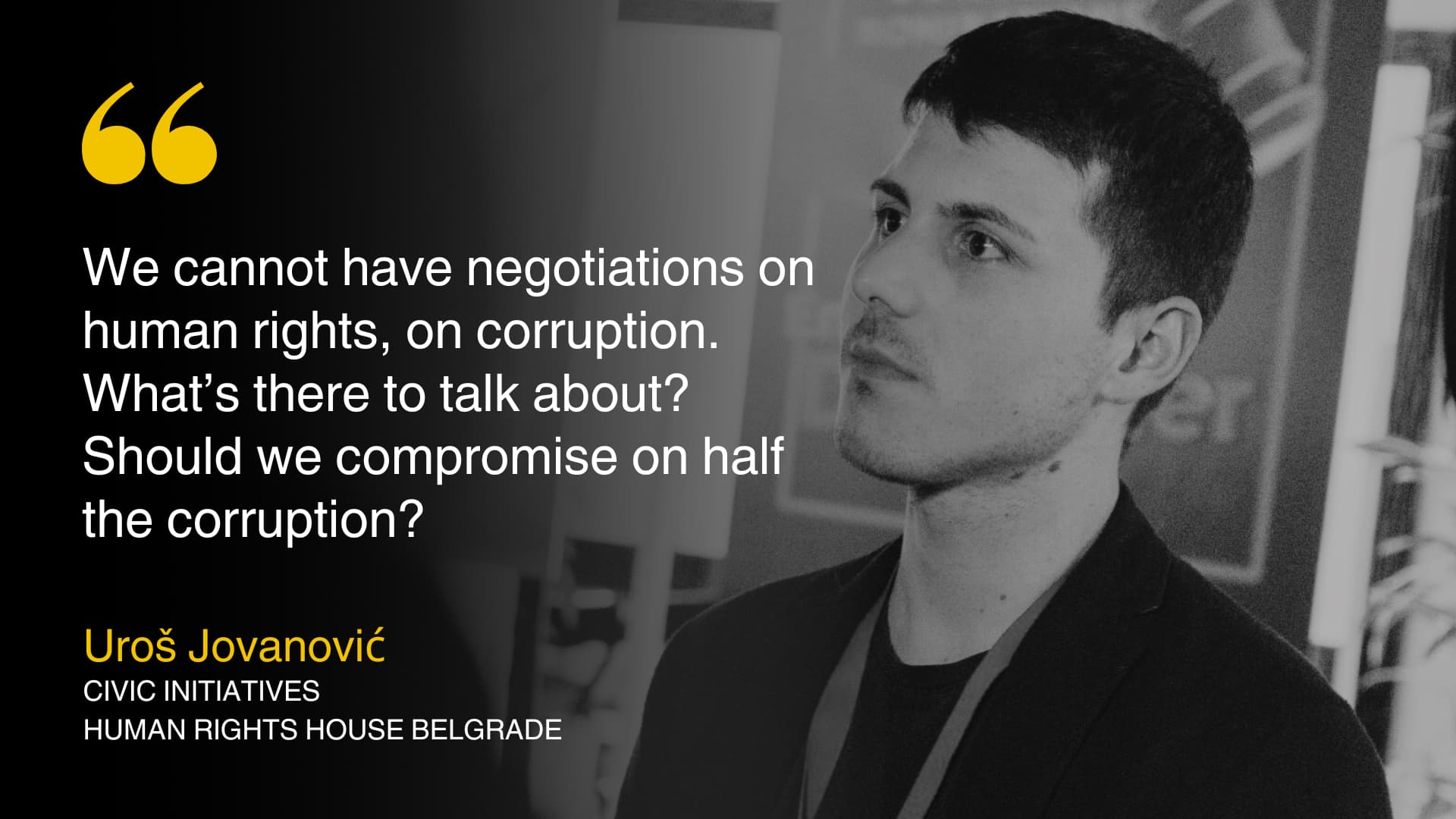
    We cannot negotiate on human rights, on corruption. What should we talk about? Should we agree to keep half the corruption?

    As one of the Serbian students said in an interview: “Our demands are clear and there is no room for negotiation — we have clearly said that we expect the institutions to do their job. When it comes to respecting the law, there can be no negotiation or agreement.”

    On the other hand, support came from some members of the European Parliament, who took the opportunity to publicly and openly support the demands of the protest.

    On April 3, a group of students rode their bikes to Strasbourg in order to raise international awareness of the events in Serbia and the lack of reaction from the responsible institutions. Members of the European Parliament said they were waiting for them there.

This site is registered on wpml.org as a development site. Switch to a production site key to remove this banner.