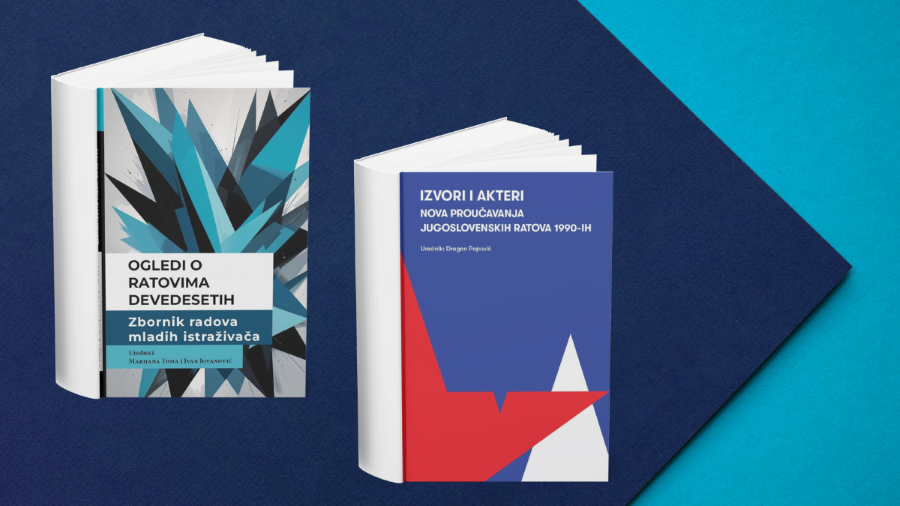
Before you are electronic versions of two collections of scientific papers, “Sources and Actors – New Studies of the Yugoslav Wars of the 1990s” and “Reviews of the Wars of the 1990s”, which in different ways address topics related to the wars of the 1990s in the former Yugoslavia. What makes these two collections of papers particularly special, in addition to the topics themselves and the fact that they are collections of scientific papers published by a civil society organization, is that the authors of the texts are young historians and young scholars from other related disciplines, such as art history, sociology, communication studies, etc.
In this way, these two collections have given space to a new generation of researchers to engage in research on topics that the academic public in Serbia is still somewhat shy of, especially in the field of scientific paper production. In addition, topics related to the events during the wars of the 1990s are most often viewed through the prism of daily politics, which usually carries with it a large dose of non-objectivity, bias and emotions.
That is why the special value of the collection before you is precisely the success and achievement of these young people – that, despite being only at the beginning of their academic careers, they managed to “come to grips” with the topic of the wars of the 1990s in an objective, healthy and mature way, bring new perspectives to their study and thus show that dealing with the region’s war past and facing it is the path towards recovery, building trust and a common peaceful future.
You can download the proceedings by clicking the button below.
The collection “Sources and Actors – New Studies of the Yugoslav Wars of the 1990s” has been translated into English. You can download the English edition by clicking the button below:
The collections of works by young researchers “Reviews of the Wars of the 1990s” and “Sources and Actors – New Studies of the Yugoslav Wars of the 1990s” were published as part of the project “Dealing with the Past – New Generations, New Perspectives” implemented by Civic Initiatives as part of the project “European Union Support for Confidence-Building in the Western Balkans”, funded by the EU and implemented by UNDP, and implemented in Bosnia and Herzegovina (BiH), Kosovo*, Montenegro, North Macedonia and Serbia.
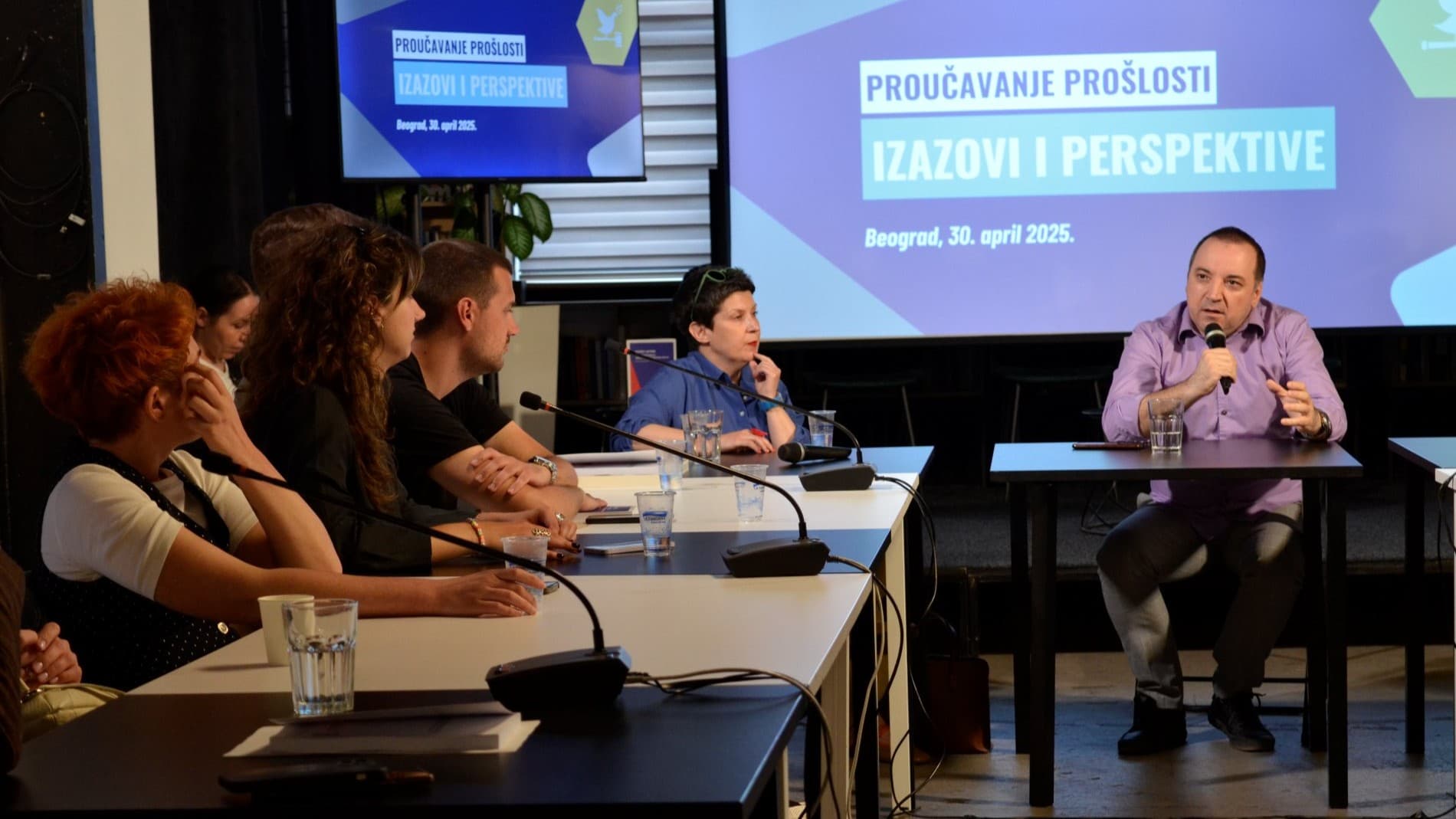
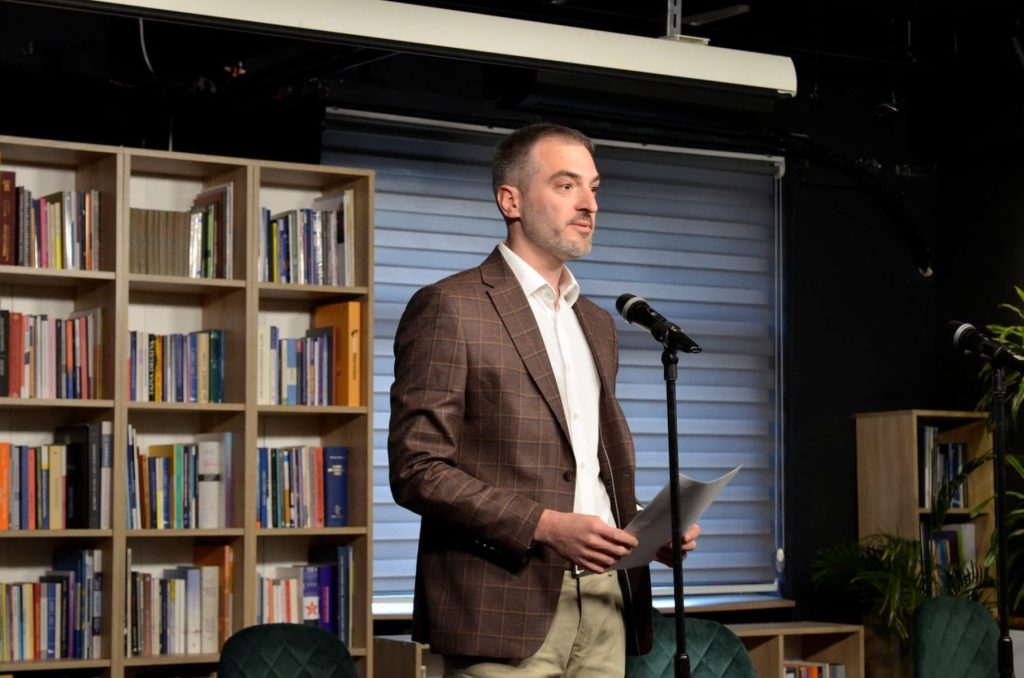
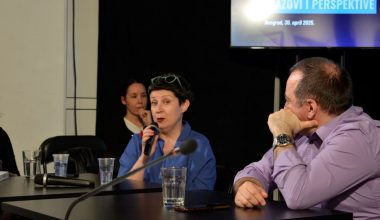
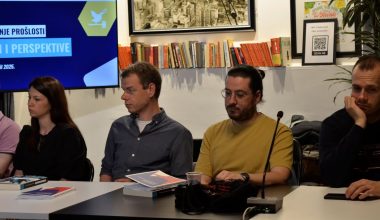
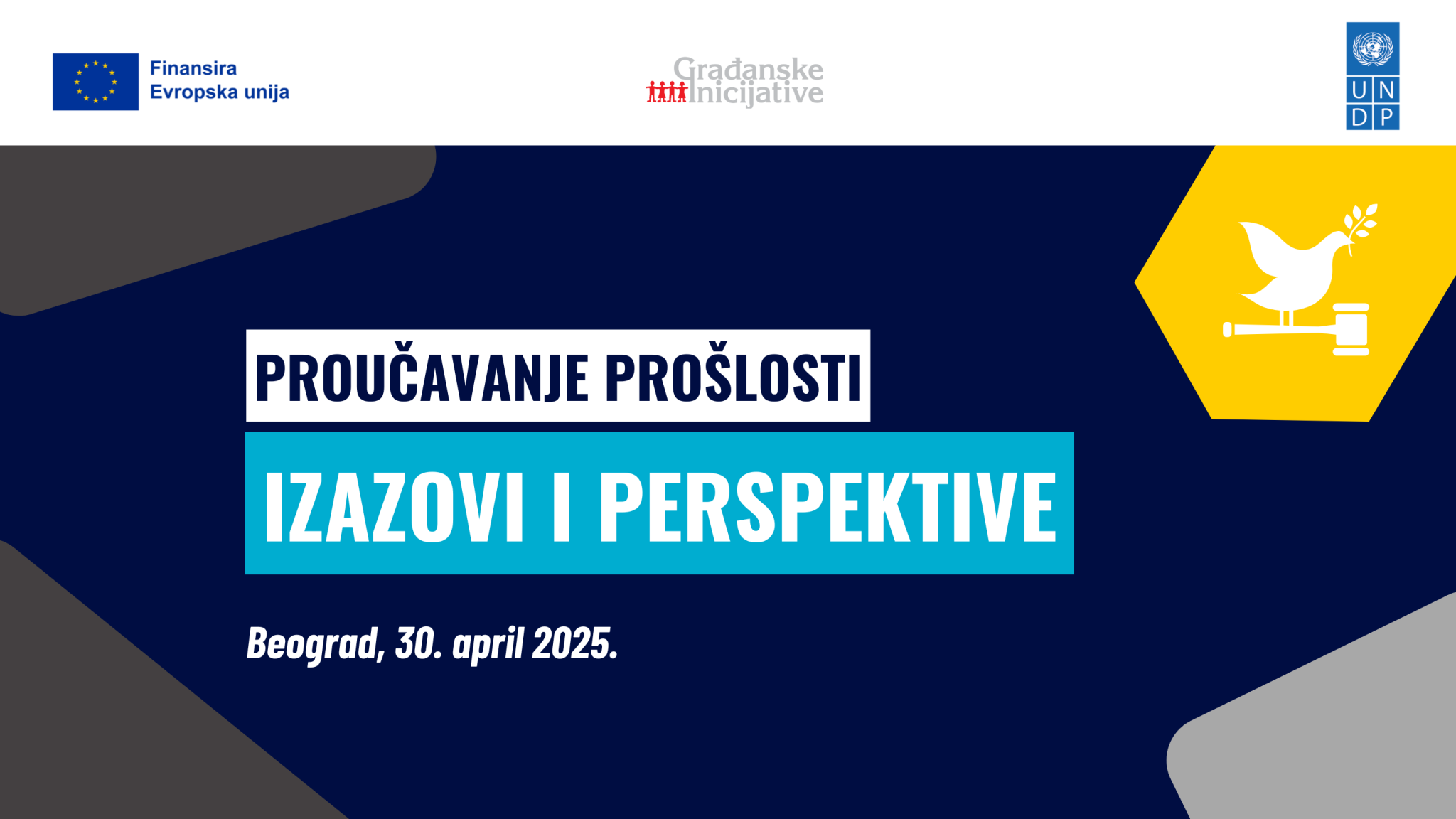
Civic initiatives held on Wednesday, April 30, 2025, in the “Miljenko Dereta” area, an event called “Study of the past: Challenges and perspectives”, where two collections of works by young researchers were presented to the public, “Sources and actors – new studies of the Yugoslav wars of the 1990s” and “Reviews of the wars of the 1990s”, which offer a new perspective on the conflicts in the territory of the former Yugoslavia.
The presentation of the proceedings as well as their publication are part of the project “Confronting the past – new generations, new perspectives” which is carried out within the regional initiative “Support of the European Union to building trust in the Western Balkans”.
The event brought together historians, researchers and representatives of civil society to discuss the need for a thorough and responsible study of the wars of the 1990s, thirty years after their outbreak. The presented anthologies bring together authors of the younger generation, who, through various sources – the archives of the International Criminal Tribunal for the former Yugoslavia, the media, memoirs and oral testimonies – shed light on topics that are still often avoided. Although the avoidance of this topic can be explained, according to the authors, it can no longer be justified – “enough time has passed to create the conditions for an honest, thorough and multidisciplinary approach”. In the works included in the collections, the focus is not only on political and military elites, but also on local communities, media, international organizations and anti-war movements.
At the opening of the event, Gojko Pantović, head of the “EU Support to Confidence Building in the Western Balkans” project in front of the United Nations Development Program (UNDP) office in Serbia, stated that this is one of 12 civil society initiatives in Serbia, to which the European Union provided grants in the total amount of 578,000 euros in 2024 in order to promote dialogue and peace in the region, with a special focus on initiatives dealing with education about recent history.
“We recognized the work with young researchers, scientists and new generations in general as particularly important for understanding conflicts from the recent past in the light of proven and legally established facts. This is also a key prerequisite for overcoming the legacy of the past and an open way for the cooperation of the entire region,” said Pantović.
He emphasized that UNDP, apart from these 12 initiatives, has supported similar civil society initiatives throughout the region, as well as the activities of associations of victims and their families.
The editor of the collection “Sources and actors – new studies of the Yugoslav wars of the 1990s” Dragan Popović pointed out that the Civic Initiatives in the previous year and this year enabled a large number of young scientists to publish their works on the wars of the 1990s, primarily through two scientific collections.
“Thus, a shift was made, not only in scientific production, but also in the topics that society deals with in Serbia. Young scientists, primarily historians, generally do not deal with the wars of the 1990s, including the crimes that followed them. There are many reasons for this, and the social atmosphere is not the least of them. That is why these collections and the entire process of working with young scientists are important and as an incentive to others to take courage and decide to devote themselves to one of the numerous topics related to this traumatic decade. “Serbia and the whole of former Yugoslavia must take a good look at themselves in order to leave a foundation for building new relations for generations to come. Science is irreplaceable here,” said Popović.
The collection “Glimpses of the Wars of the Nineties”, which was presented to the general public on this occasion, was created as a result of a multi-week seminar organized at the end of 2020 and during 2021 as part of the Regional War Crimes Project (RWC), which was implemented by UNDP with the financial support of the United Kingdom government, in the period from December 2018 to March 2022. On that program, students of history, sociology and history of art worked with judgments, archives, testimonies and analyzed the cultural aspects of the wars, under the guidance of professors from the Faculty of Philosophy in Belgrade, Dubravka Stojanović and Radina Vučetić.
Ksenija Nikić from Civic Initiatives pointed out that the topic of dealing with the past has become almost taboo in Serbia – “it is rarely talked about, and when it is talked about, the nationalist narrative mostly prevails.”
“Civil society has been putting efforts into this fight for years, but we are aware that without a strong support in the scientific community, those scopes remain limited. We believe that it is the academic community, especially historians, who can ask this question in a way that is grounded, professional and socially relevant,” Nikić said.
This event is organized as part of the project “Confronting the past – new generations, new perspectives” which Citizen Initiatives implements with the help of the project “Support of the European Union to building trust in the Western Balkans” funded by the EU and implemented by UNDP.
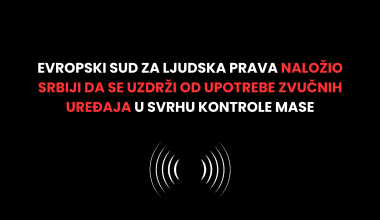
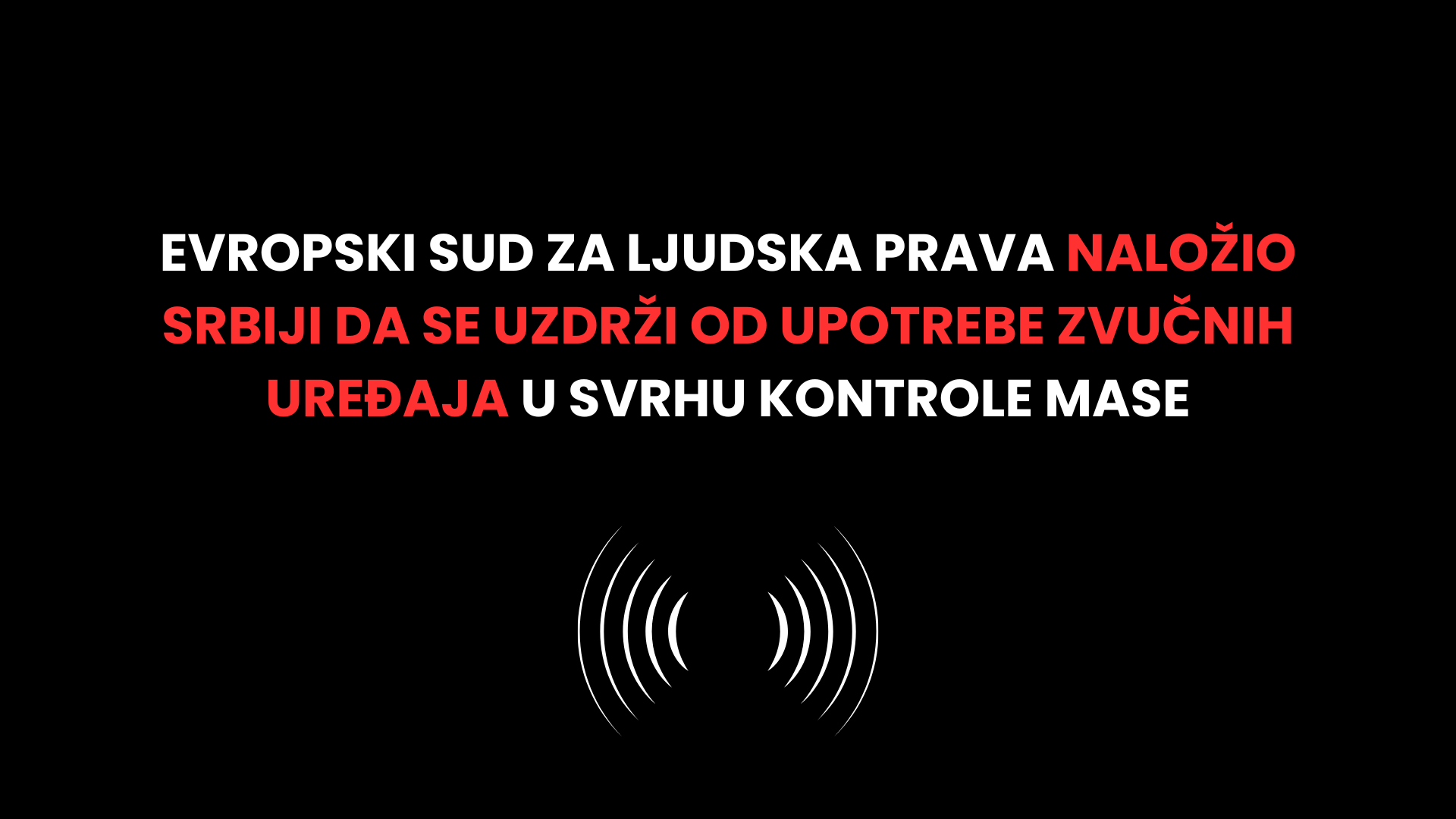
The European Court of Human Rights (ECtHR) has issued a temporary measure ordering the Republic of Serbia to refrain from using sound devices for the purpose of controlling gathered citizens until further notice. This decision followed the request submitted, on behalf of 47 citizens, by civil society organizations – Belgrade Center for Human Rights, Crta, Committee of Lawyers for Human Rights – YUCOM, Initiative A 11, Civic Initiatives and FemPlatz.
The request was submitted in connection with the events of March 15, and the organizations believe that the Court acknowledged the serious concerns of citizens with this decision. The temporary measure represents an important warning to the state of Serbia and another argument against the authorities’ claim that “nothing significant happened” on March 15.
Examining the submitted evidence, the statements of the parties to the proceedings and the fact that the use of sound devices for crowd control is illegal according to the current laws in Serbia – and especially taking into account the potentially serious health consequences for a large number of people – the Court, based on Rule 39 of the Rules of Procedure, ordered the Government of the Republic of Serbia to prevent the use of such devices until further notice.
The organizations decided to use the mechanism for the imposition of temporary measures, which the ECHR rarely applies, but which obliges the Court to react quickly, precisely because of the urgency and seriousness of the situation. It is important to emphasize that a temporary measure is not the same as a Court judgment on a petition, which is a procedure whose completion can take years.
The European Court invited all 47 citizens on whose behalf the request was submitted to submit official petitions against the Republic of Serbia by May 28, 2025 at the latest. If the Court decides that their rights have been violated, such a procedure could result in a judgment confirming the facts of the state’s responsibility.
Violation of basic human rights in Serbia April 18 – April 30, 2025
This week saw the first attempt by the police to forcibly break the blockade. In Novi Sad, the police hit the gathered students and citizens with batons and shields, injuring 31 people. Not only was there no condemnation of the police violence against the crowd by the representatives of the government, but the president of the state said that he was dissatisfied with the reaction of the police, who “did not do their job” as he stated.
From April 25 to 27, the Commissioner for Human Rights of the Council of Europe, Michael O’Flerty, visited Serbia. After the visit, the Commissioner appealed in a statement to the authorities to conduct an investigation as soon as possible and find those responsible for the possible use of sound weapons against those gathered on March 15 in Belgrade. In the announcement, the Commissioner touched on other human rights violations that have intensified in recent months, such as: the campaign targeting students and protesting citizens, the expulsion of foreign citizens from the country, the use of spyware to monitor activists and journalists, as well as attacks on civil society organizations.
For more information about these and other cases recorded in the previous period, see the full report below:
We invite you to attend the event where the collections of works of young researchers investigating the Yugoslav wars of the 1990s, as well as the broader context of dealing with the past in Serbia, will be presented.
The proceedings bring new approaches and perspectives to the study of the conflict, focusing on different actors, in addition to political and military leaders, such as local communities, media, international organizations and activists who opposed the war.
This event is an opportunity to discuss the possibilities for further research into the wars of the 1990s and their consequences, with the aim of promoting the building of reconciliation, improving awareness of war crimes and trials, and a new approach in historical research. Dealing with the past in Serbia today faces serious challenges, and the discussion will open space for new actors who want to contribute to this process with new perspectives.
We hope you will join us in a discussion that will contribute to a deeper understanding of past events and their impact on both the present and the future.
The event will be held on Wednesday, April 30, 2025, starting at 6 p.m. in the “Miljenko Dereta” space (Dobračina 55, Belgrade).
The event will be opened by Gojko Pantović, head of the project “EU Support for Confidence Building in the Western Balkans” – United Nations Development Program, and Ksenija Nikić from Civic Initiatives.
Introductory remarks will be given by:
Sanja Petrović Todosijević, Institute for Recent History of Serbia
Ana Panić, Museum of Yugoslavia
Dragan Popović, editor of the collection “Actors and sources – new studies of the Yugoslav wars of the 1990s”
This event is organized as part of the project “Facing the Past – New Generations, New Perspectives” implemented by Civic Initiatives as part of the “European Union Support to Confidence Building in the Western Balkans” project funded by the EU and implemented by UNDP, and implemented in Bosnia and Herzegovina (BiH), Kosovo*, Montenegro, North Macedonia and Serbia.
This site is registered on wpml.org as a development site. Switch to a production site key to remove this banner.