

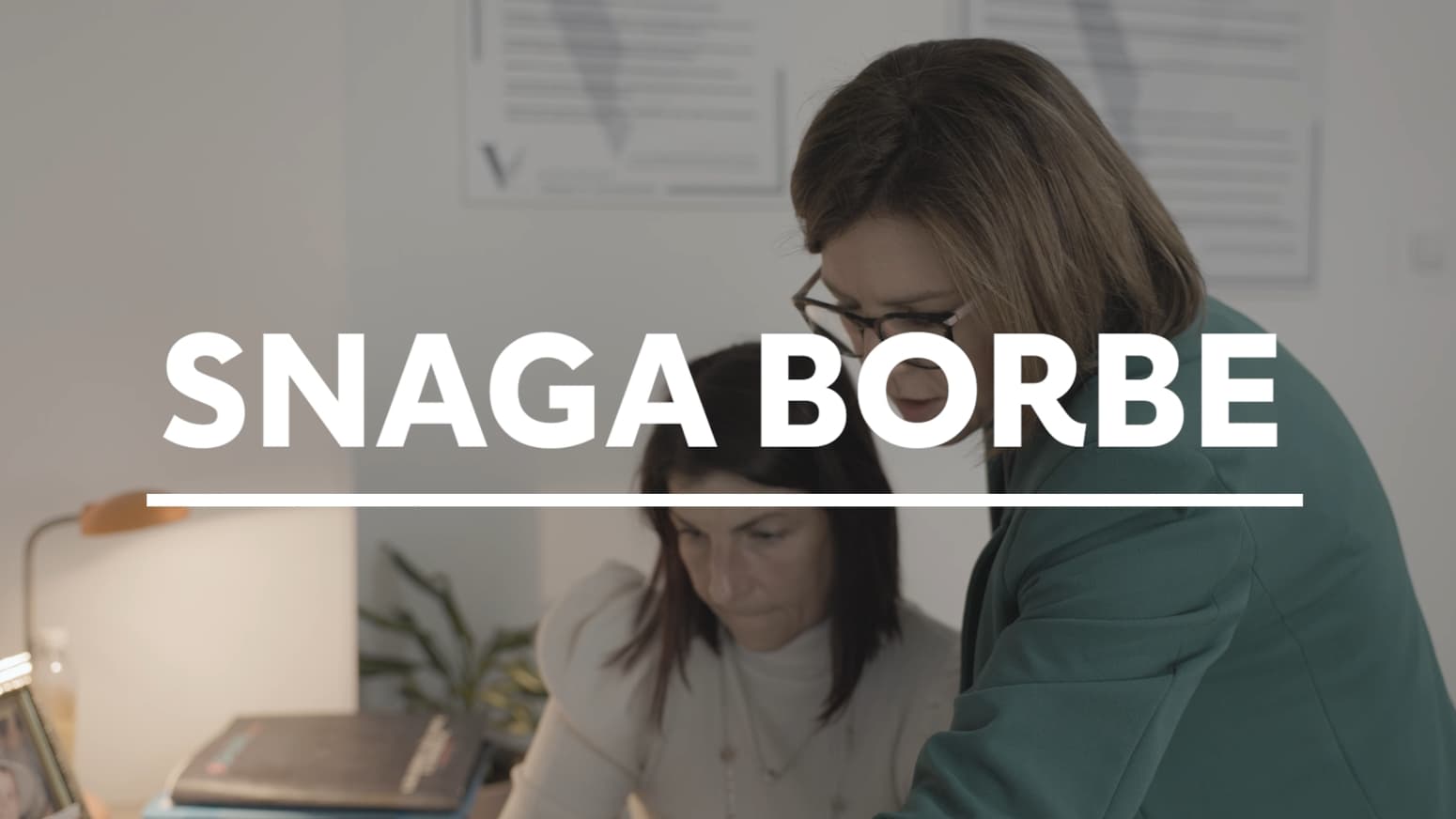
Some stories don’t start with big words. They start with quiet questions, uncertainties, but also with something much stronger – the determination not to give up. The Brave Association was born from such stories. From the struggle of parents and children with rare neurotransmitter diseases. Their mission is to show that where there are few answers, there can be much hope. The story of Hrabrisha is brought to you by a new episode of the series “Strength of the Fight”.
“Our entire path to diagnosis and treatment was quite thorny. It was a long diagnostic odyssey,” testified Ivana Badnjarević, founder of the association, whose daughter suffers from tyrosine hydroxylase deficiency, a congenital metabolic disease. “I recognized the need to help others not to go through the same thing, to make it easier for them.”
A collective mission emerged from a personal struggle. Today, the Hrabriša Association represents a safe point for many families who for the first time encounter unknown diagnoses, confusing bureaucracy and emotional challenges that come with living with a rare disease.
Parents facing rare diagnoses are often therapists, lawyers, and fighters. According to Vanja Kovačević from the Hrabriša association, there are rules and procedures that must be followed, and for parents of children with rare diseases, every day is a struggle and they often have “neither the time nor the capacity to deal with legal issues”.
“We are here to be the wind at their backs. To study, instruct which rulebook should be applied, which legal regulation, which authority to turn to, what to write in which request… To help them reach a diagnosis, therapy as soon as possible, and – if the treatment cannot be carried out in Serbia – to be sent for treatment abroad at the expense of the state with the help of state funds”, explains Kovačević.
The Hrabriša Association was founded in 2016 with the idea of providing support to families with children with neurotransmitter diseases, and today it has a wide role – from navigating through complicated procedures to public advocacy for systemic changes.
“Rare diseases are just beginning to be seriously dealt with in Serbia. The register of rare diseases has only just been adopted, which is very important in order to know the number of sufferers and accordingly create action plans on how to help those children and families, how much money is allocated for treatment, for additional support… But as long as children pass under the radar of diagnosticians, we have work to do – both in terms of education and the legal framework,” adds Badnjarević.
And while some rare diseases, like spinal muscular atrophy or cystic fibrosis, can be detected right after birth—thanks to newborn screening—many parents go through years of wandering, misdiagnosing, and changing doctors until they get the right answer. “And when they get it, only then does a new struggle begin: therapy, rehabilitation, new living conditions,” says Ana Pataki from Hrabriša.
Children with rare diseases often have invisible disabilities – specific needs that require constant attention. “Every hour of a parent’s life is dedicated to the care of the child,” it is emphasized. “And then there are additional challenges – enrolling in kindergarten, starting school, integrating into society, accessing the labor market.”
Finally, what does it mean to be brave? Sometimes courage is not in fighting – but in waiting. It is not always in hope – but in acceptance. The Hrabriša Association exists precisely for this reason: to be a support for those whose everyday life has turned into a struggle. To be an umbrella over families who show day by day what it means to fight for the right to childhood.
Because all those small steps they take – together – lead to something bigger. Towards a society that understands, sees and leaves no one behind.
That takes courage. And Hrabriša has it.
 Watch the story and meet those who choose courage every day.
The Association “Hrabriša” says that it is very important that anyone who suspects that a member of their family may be suffering from neurotransmitter diseases, dopa-reactive dystonia and other neurometabolic diseases – immediately establish contact with “Hrabriša”, either through the website or social networks that this association runs.
This video was realized with the support of the Swiss Government project “Together for an active civil society – ACT”, implemented by Helvetas Swiss Intercooperation and Civic Initiatives. The opinion expressed in this video does not necessarily represent the opinion of the Government of Switzerland, Helvetas or Civic Initiatives.