Violation of basic human rights in Serbia May 1 – May 15, 2025
The Higher Public Prosecutor’s Office in Novi Sad filed an indictment against seven activists of the informal student group Stav and five members of the Movement of Free Citizens. The Prosecution proposed that the High Court in Novi Sad find the defendants guilty on suspicion of having committed the criminal offense of Preparing an offense against the constitutional system and the security of Serbia in co-perpetration with the criminal offense of Assault on the constitutional system and the criminal offense of Calling for a violent change of the constitutional system and to impose the maximum penalties prescribed by law for the criminal offense charged against them. Activists face up to 5 years in prison. Six activists are still in custody, while the other six are out of the country. One of the arrested, professor Marija Vasić, went on a hunger and thirst strike and today she was transported to a hospital in Belgrade due to her poor condition.
Citizens and students recognized the danger of this case of gross political abuse of the law in order to deal with political dissidents of the ruling regime and called for protests in several cities. There was a scuffle with the police in front of the court building and the prosecutor’s office in Novi Sad and in front of the Basic Court in Niš.
The process being conducted against the activists, based on an illegally eavesdropped conversation, and a possible verdict for a crime that was not committed would be putting the final stop to freedom of expression in a country where the law is not equal for all, and institutions primarily protect party interests.
For more information about these and other cases recorded in the previous period, see the full report below:
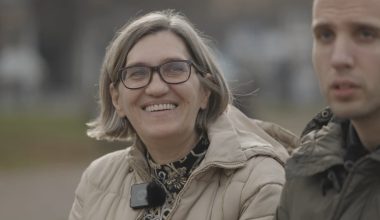
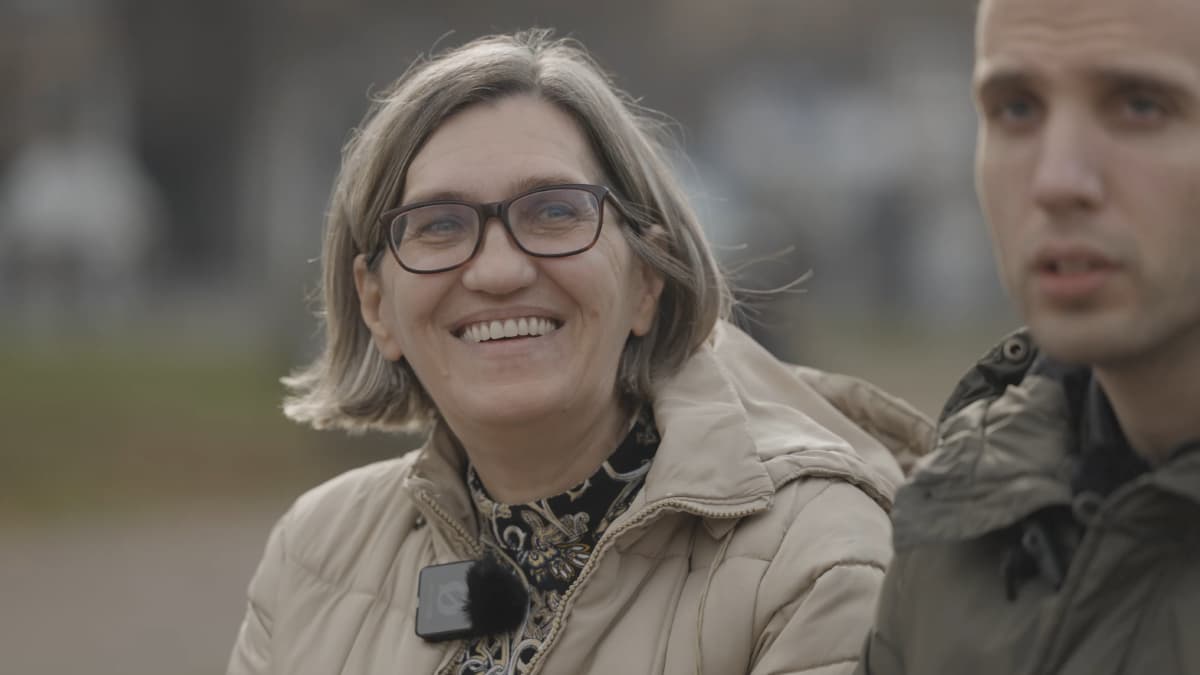
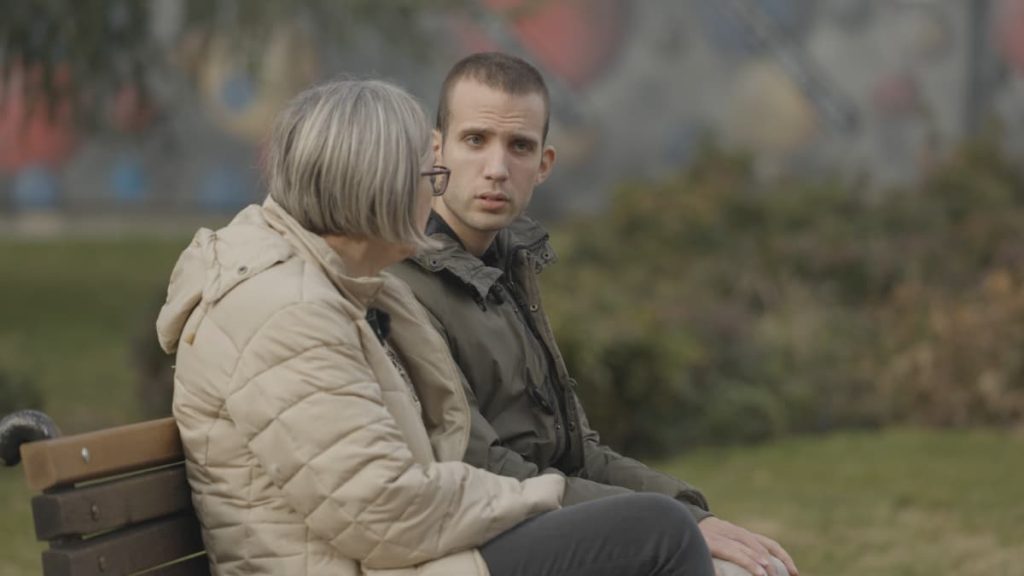
In the new episode of the series Struggle, we meet Snežana Lazarević, the mother of a young man with autism and an activist of the organization MDRI-S – Initiative for the Rights of Persons with Mental Disabilities. Her struggle started out of a personal need: to provide her son Stefan with a dignified and fulfilling life. Over time, that struggle grew into advocating for systemic changes and the rights of all persons with intellectual and mental disabilities in Serbia.
“I didn’t want to choose what was easier for me, but what was better for him,” says Snezhana, talking about the decision for Stefan to attend a regular school, despite prejudices and advice that it would be “easier” for him in a special school. Today, Stefan is not only a member of MDRI-S, but also a blog author and an important voice in the fight for a better understanding of people with autism.
“I was diagnosed with autism at the age of three because I didn’t speak, but I was reading newspapers. I didn’t speak until I was four,” says Stefan. His mom, he says, read books about autism to better understand him. Today, he speaks clearly about what the system must change, but also emphasizes how important clear and precise communication is: “People with autism often do not understand what is expected of them. They need specific instructions and announcements of every change – otherwise they can become anxious.” When asked if he is proud of his mother, he answers simply and honestly: “I am. She worked hard for me.”
Snezana especially warns about the situation of people and children who are housed in social welfare institutions:
“They are there because we in the community are not able to provide them with support and many rights are denied to them in those institutions. They have no right to privacy. They live in rooms with six, eight, ten people they have never met before. They have some group showers, they have toilets without doors. They have to eat when a meal is served, not when they are hungry. They have to ask permission to leave the institution, and some even have to ask permission to go out of the room into the yard of the institution. There are a lot of people and children who are not mobile and who almost never leave their beds, not their rooms”, says Snezana.
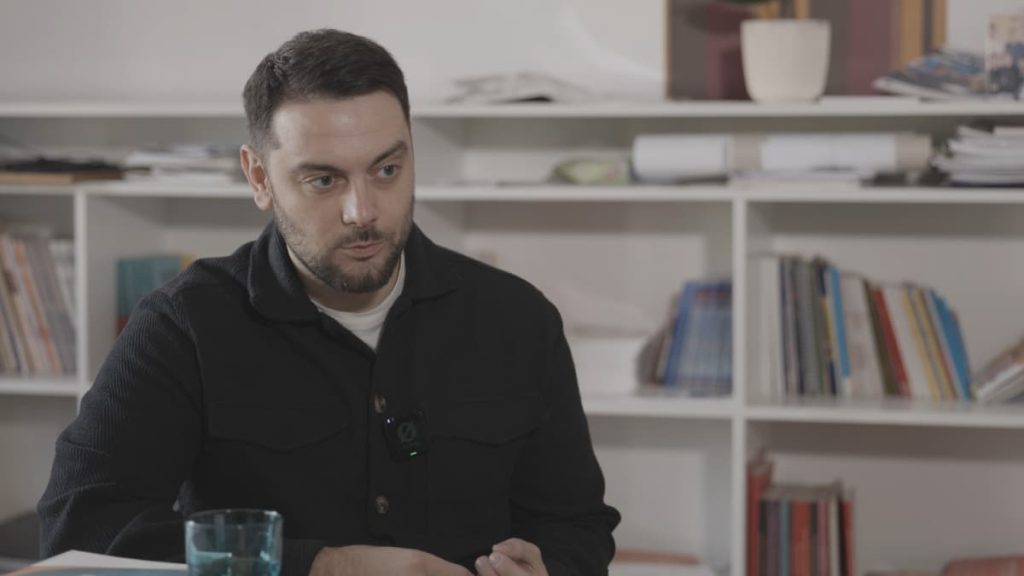
Lazar Stefanović, a member of MDRI-S, developed his commitment to the organization through engagement in the National Mechanism for the Prevention of Torture. He visited the institutions and witnessed first-hand the conditions that deeply shook him. One of the visits to the home for people with disabilities in Sremčica left a huge mark.
“That moment of entering the home, in the circle of the home where you see a dozen children running towards you because they miss the human touch the most”, he says and adds that this is exactly what seals your motive forever – that no child should ever live like that.
Although residential institutions are staffed by professionals who work hard, it is not enough for one child:
“He needs a lot more. He needs a stable figure, either a parent or a foster parent or an adoptive parent. Either way, their stay, their life in a residential institution is definitely something that no child in the world should ever have to experience.”
He adds that MDRI-S primarily deals with changing the legal and strategic framework, which is a process that lasts for years
“These changes are sometimes very painstaking. They can take a very long time and from the point of view of one person who deals with it, the path and the process can be discouraging. Sometimes changes in the law take ten, fifteen or twenty years. Sometimes the law is written and sits in a drawer for five years”, he points out.
Despite the slow pace of change, MDRI-S believes in the power of persistence and collective pressure on the system. “I can’t let go. I hope that with persistence we will achieve greater changes, that someone will hear us and understand that it is nothing complicated to provide support for someone in the community,” Snezana concludes.
Watch the whole story in the video attachment:
This video was realized with the support of the Swiss Government project “Together for an active civil society – ACT”, implemented by Helvetas Swiss Intercooperation and Civic Initiatives. The opinion expressed in this video does not necessarily represent the opinion of the Government of Switzerland, Helvetas or Civic Initiatives.
Maja Stojanović, director of Civic Initiatives, supported the students’ call to hold extraordinary parliamentary elections and pointed out that the result of the election depends on the number of people and that there is now a large number of young people who could turn the result against the government.
Commenting on the students’ request to call for extraordinary parliamentary elections, Stojanović said in “Iza vesti” that this call represents the articulation of the huge dissatisfaction not only of students, but also of citizens, which was seen in the previous months.
Asked if it is logical to ask for early elections and ignore election conditions, the “Iza vesti” guest says that it is and that she does not believe that the government will give election conditions in order to lose the elections.
“Many more citizens need to go to the polls and we have to work on the conditions… I hope that young people don’t just call for elections to be called, but that they also go to the polls. We now have a huge number of young people who could overturn the elections,” Stojanović said.
When it comes to the election conditions themselves, she said that REultimate is an election condition, and that the students saw that.
“As citizens, the opposition, the media, we can never have insight into the entire voter list. They did something about it, but it is very difficult for anyone to say whether the voter list is in order. I am in favor of choosing those conditions that we can control, and REM can. And here it is important that this election condition is not fulfilled,” said Stojanović.
She added that this time, due to the publicity, there will be independent candidates for REM Council members in all nine areas.
The EU’s attitude towards Serbia has changed because the citizens have changed their attitude
The Director of Civic Initiatives assessed that the European Union’s narrative towards Serbia has completely changed. He says that harsher messages have started since January.
“Everything started with Laura Koveši and the initiation of the investigation, the visit of Marta Kos, what she said at the very session of the European Parliament. We have a very big turnaround in relation to the kind of rhetoric, and that way of pressuring the government to harmonize, above all with European values. I think that has changed a lot,” Stojanović said.
Asked if the President of Serbia, Aleksnadar Vučić, must meet the requirements of the European Union, Stojanović says that the message is that the country must meet those conditions.
“Whether this government will work in the interest of the state is another and internal question. The message of the EU is that it will no longer turn a blind eye to the authorities on the obligations of the state of Serbia,” the guest of “Iza vesti” pointed out.
Speaking about why it took so long for the EU to change its attitude towards Serbia, Stojanović says that what has changed is that they realized that the society in Serbia no longer wants to live like this.
“They looked to see if there were different voices, if there were dynamics in society that were different from what the party in power does, they looked to see if there was opposition, the opposition is not visible if it cannot collect 30 to 40 percent in the elections. The students brought what is clear, that the young generation and the majority of people do not want to live like this, they want the rule of law and legal security in the country, and that started from the slogan ‘corruption kills,’” Stojanović pointed out.
Watch Maja Stojanović’s entire guest appearance in the video attachment.
In light of the announcement of a new competition for REM Council members, Civic Initiatives remind the public of the illegalities and manipulations that marked the previous attempt to elect this important regulatory body.
At the moment of the biggest protests in Serbia since the 1990s, the Government of Serbia and the Parliamentary Committee for Culture and Information tried to use the atmosphere of the crisis in order to secure control over REM – a body that has a key role in monitoring the media with a national frequency – through a non-transparent process. The competition was then announced on November 25, 2024, several months late in relation to the deadlines established by law. It was continued – non-transparent.
Civic initiatives closely followed the candidacy process and published it on the website www.remontuj.tv, and compiled the findings in a report that, among other things, revealed:
17 out of 34 candidates for REM Council members did not meet the legal criteria.
32 out of 121 candidate nominators also did not meet the legal requirements.
The final election of REM Council members did not take place because, due to irregularities during the election process, 7 candidates from 5 different areas withdrew their candidacies. You can watch the press conference, held on January 28, on the occasion of the candidate’s withdrawal, at this link.
After the two-week student blockade of RTS, with the request to announce a new competition for members of the Council, the previous process was invalidated and a new competition was announced at the session of the Committee for Culture and Information, held on April 28, 2025. The whole procedure starts with the announcement of the competition in the Official Gazette. Publication is expected on May 5, 2025.
You can download the analysis on the election process for REM Council members by clicking the button below:
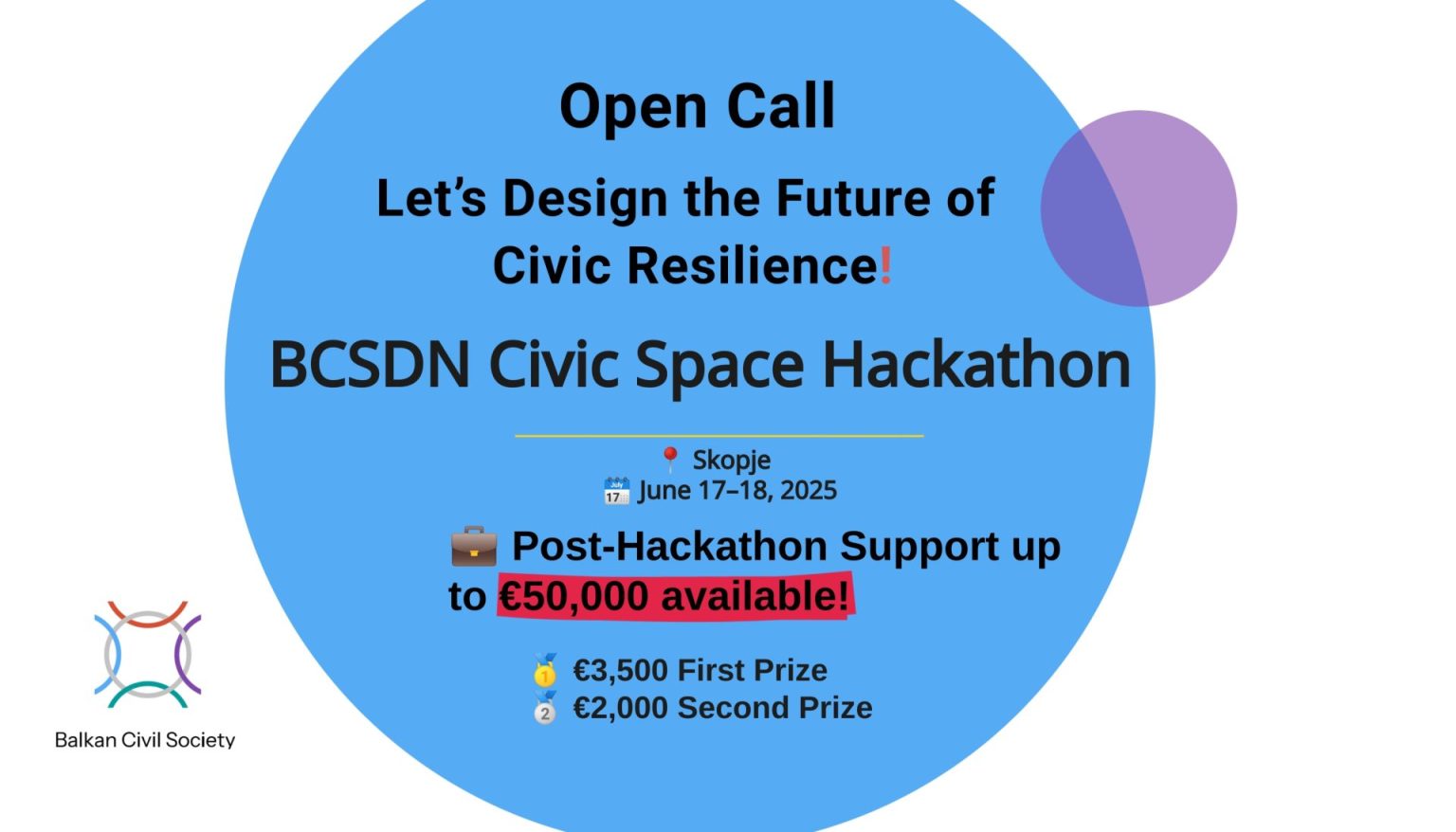
The Balkan Civil Society Development Network (BCSDN) invites you to the Civic Space Hackathon held in Skopje, 17-18. June 2025, in order to jointly devise solutions to the challenges faced by civil society in the region (disinformation, smear campaigns, reduction of available resources).
Are you ready to turn bold ideas into concrete solutions?
BCSDN invites civil society organizations and academic institutions from all over the Western Balkans to gather their best team and apply for the first Civic Space Hackathon: Innovate for Impact!
Together, we will create powerful solutions to some of the most pressing challenges facing civil society today: misinformation, smear campaigns and diminishing access to basic resources. This is an opportunity to bring together your brightest minds — activists, IT experts, lawyers, communicators, designers — and design the future of a resilient civil sector.
Challenge: Let’s design a future of resilient civil society
Civil society in the Western Balkans is under double pressure:
Smear campaigns and misinformation undermine public trust.
Restrictive and politicized funding practices undermine the independence of organizations.
As a result, civil society becomes financially unstable and vulnerable, while fake organizations (so-called GONGOs) dominate due to a lack of transparency.
The invitation is open to civil society organizations and academic institutions from Albania, Bosnia and Herzegovina, Kosovo, Montenegro, North Macedonia and Serbia, which can form interdisciplinary teams of 4 to 6 members.
Who can apply?
● The applicant must be a registered organization or academic institution from the region.
● Applications from individuals are not accepted.
● Teams need to bring together different skills – from activism, technology, design, law, communications to research.
● Participants must be committed, ready for teamwork and intense engagement before and during the event.
What do you get?
First prize: €3,500
Second prize: €2,000
Support after the hackathon: Initial funding and the possibility of a contract for further development (up to €50,000)!
Expert Mentoring: Hands-on support from mentors in the fields of technology, communications, advocacy and digital innovation.
Networking: Meet regional innovators, civic tech experts and potential partners.
Visibility: Your solution will be presented throughout the region through BCSDN’s network and partners.
In addition, all travel, accommodation and local expenses for the selected teams are covered.
Who? Civil society organizations and academic institutions from Albania, Bosnia and Herzegovina, Kosovo, Montenegro, North Macedonia and Serbia.
Applications are open until May 11, 2025.
The full text of the call and the application form can be found on the BCSDN website, available HERE.
This site is registered on wpml.org as a development site. Switch to a production site key to remove this banner.



 Watch the whole story in the video attachment: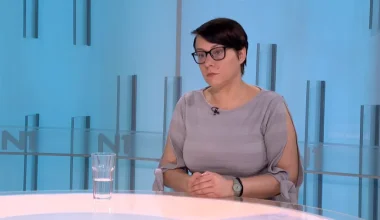


 Smear campaigns and misinformation undermine public trust.
 Restrictive and politicized funding practices undermine the independence of organizations.
 First prize: €3,500
 Second prize: €2,000
 Support after the hackathon: Initial funding and the possibility of a contract for further development (up to €50,000)!
 Networking: Meet regional innovators, civic tech experts and potential partners.
 Visibility: Your solution will be presented throughout the region through BCSDN’s network and partners.