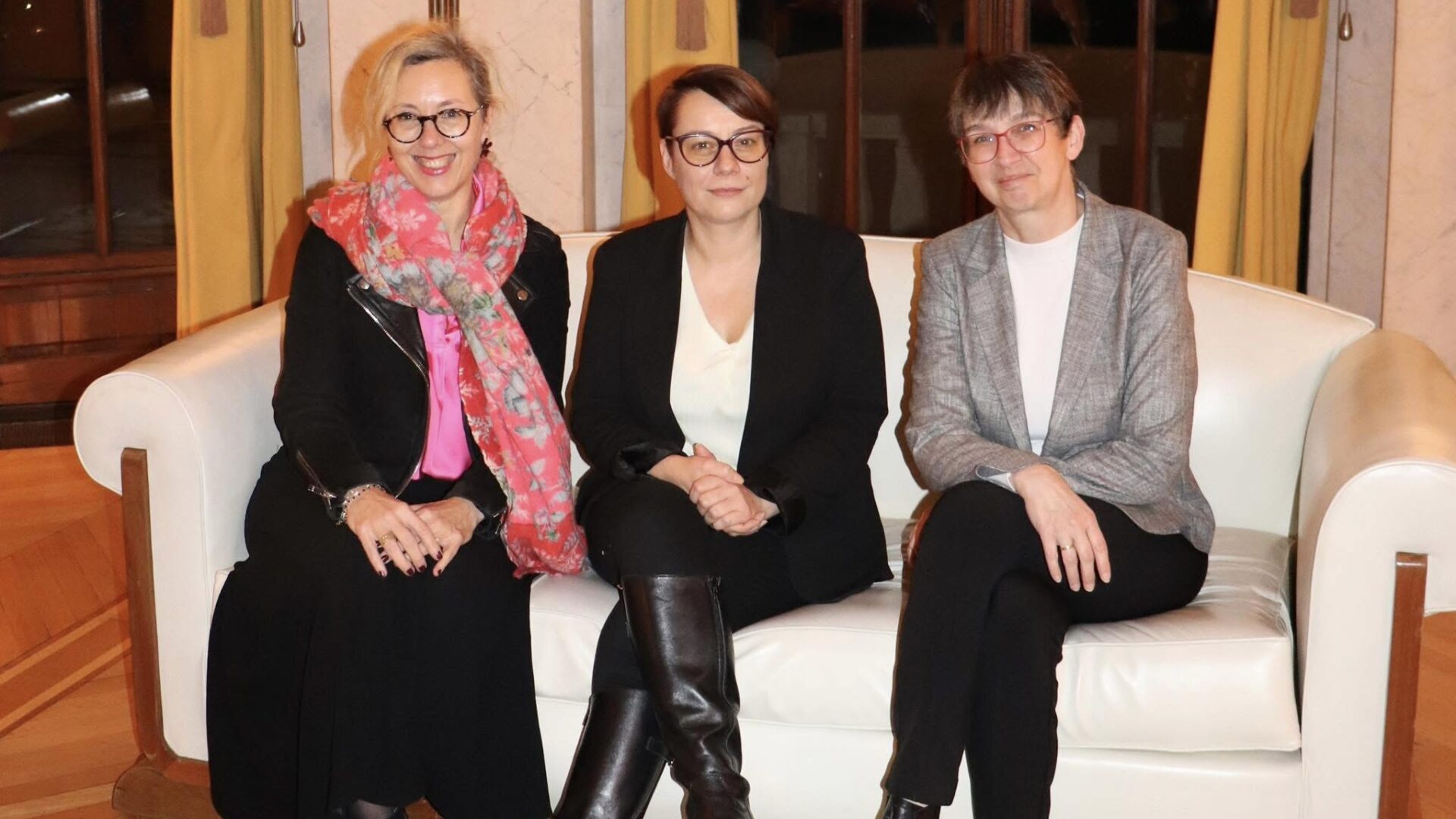
The embassies of France and Germany announced today that the executive director of Civic Initiatives, a civil society organization from Belgrade, Maja Stojanović, is the winner of this year’s French-German award for human rights and the rule of law.
Ambassador of France Florence Ferrari stated that the engagement of Maja Stojanović is consistently aimed at “defending democratic processes, protecting human rights and promoting independent media”, without which “no democratic society can progress”, the joint statement of the two embassies reads.
“By awarding the Franco-German prize for human rights to Maja Stojanović, France and Germany reaffirm their joint commitment to support those in Serbia who dedicate their voices to the fight for human rights and the reform of the rule of law, areas that are essential for Serbia’s progress on the way to the European Union,” said Ambassador Ferrari.
German Ambassador Anke Konrad stated that the work of Maja Stojanović shows “the necessary role of civil society in the promotion and protection of human rights, democracy and the rule of law.”
“The Franco-German Prize for Human Rights and the Rule of Law is a testament to the unwavering commitment and courage of all those who stand up for democracy and human rights,” said Ambassador Konrad.
Stojanović thanked for the recognition and said that for her it was “a confirmation of the importance of the voices of citizens who fight for dignity, justice and human rights every day.”
“It is a recognition of the work of Civic Initiatives and all other organizations and citizens who persistently defend democratic processes in Serbia and reminds us how important engaged citizens are for the future of our society,” said Stojanović.
Maja Stojanović has been dealing with human rights for more than twenty years, and since 2014 she has been the executive director of Civic Initiatives. Previously, she was the president of the Board of Directors of the House of Human Rights and Democracy in Belgrade.
He participates in several initiatives to strengthen democratic processes, media independence and transitional justice throughout Serbia and the Western Balkans.
She began to engage in activism in the Student Union of Serbia.
The Franco-German Prize for Human Rights and the Rule of Law was established in 2016. It is awarded worldwide for work in the defense and improvement of human rights, freedom of expression, impartial reporting in the media, the fight against impunity and torture, discrimination, violence against women and the promotion of equality between men and women. The award is given to 15 laureates each year.
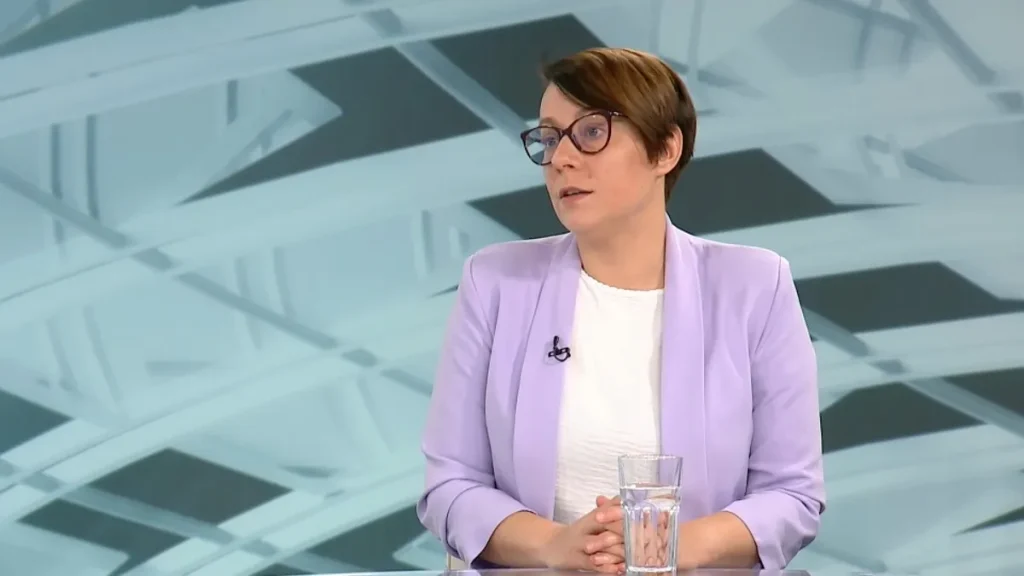
The current year was marked by Serbia’s very poor level in the area of human rights, but also by an unprecedented struggle for them, said Maja Stojanović from Civic Initiatives.
Commenting on the fact that Civicus Monitor announced in its latest report that it had lowered the assessment of the civic space in Serbia to the level of “under repression”, which represents a turning point after years of escalating attacks on fundamental freedoms, Stojanović stated in a guest appearance on N1 Television that when it comes to respecting human rights, which must be guaranteed by the state, Serbia was at a very poor level in 2025.
“What somehow marked the year for me, unlike some previous ones, was the great fight for human rights and the fight for the rule of law, starting with students, then citizens and all other segments of society. Probably because of that fight and because citizens have seen the level of human rights for years, we have had this increased repression, but I would say never before, the fight for human rights since 2000,” she said.
He believes that the struggle will continue, because we have not reached the “light at the end of the tunnel.”
“What is important to me is that I see success in the fact that this fight is consistent, that it is repeated day after day. It seems to me that these local elections that we know this year were also under significant attacks by the authorities during the elections themselves. Even those elections in which the previous government retained power and this year, the increase in people who voted for the opposition, the way in which citizens fought for those elections shows that it is now clear to all of us that democracy is fought for every day – not only now while we want to establish the basic criteria of democracy, but also later when that democracy stops. We cannot simply stop,” says Stojanović.
In the Civicus Monitor report, Serbia is placed in the “under repression” category, which is the second lowest in the global framework, and Stojanović points out that the problem is that we are currently at such a low level that basic rights and freedoms are simply not guaranteed for any citizen.
“On a human level, this means that the law simply does not apply to everyone, that the law is applied selectively. And it seems to me that now, also because of N1 television, most citizens are aware of how people’s rights are violated, how many people are fired, how students are arrested, what kind of police torture is. It simply shows how the state applies the law to those who are trying to fight for human rights,” says N1’s interlocutor.
One of the things that made Serbia so low on the list is the pressure on the judiciary.
“We know that our judiciary has not been completely free for a long time, but what has happened this year, when the president himself threatens judges and officials who are doing their job, various dismissals and changes in the judiciary indicate exactly how the state actually views the judiciary. In the last few months, we have also had various public officials calling out judges by name. There are various smear campaigns against them. So, any judge who has decided to apply the law in a case or a prosecutor who has filed indictments for certain things, such as this Prosecutor’s Office for Organized Crime regarding the issue of the canopy, are simply under enormous pressure,” says Stojanović.
When it comes to the situation in the media, she states that the media is under great pressure.
“We know that the situation is already dark. I will just remind you of the campaign from 2017 and 2018 about the media darkness, which we called it back then, and the situation is simple, similar to the judiciary. The situation was dark before this. What is happening now is much more naked pressure, attacks on the UM group and the ways in which pressure is being exerted on private owners to change editorial policy or resign in the media is an indicator, but what is also happening is great pressure on journalists and local media that have been reporting very well on the protest all these years,” says Stojanović.
Drop from the “obstructed” category to the “under repression” category
Basic freedoms in deep crisis as authorities step up pressure on persistent protests
Protesters face violence from the police and groups linked to the ruling party, mass arrests and intimidation
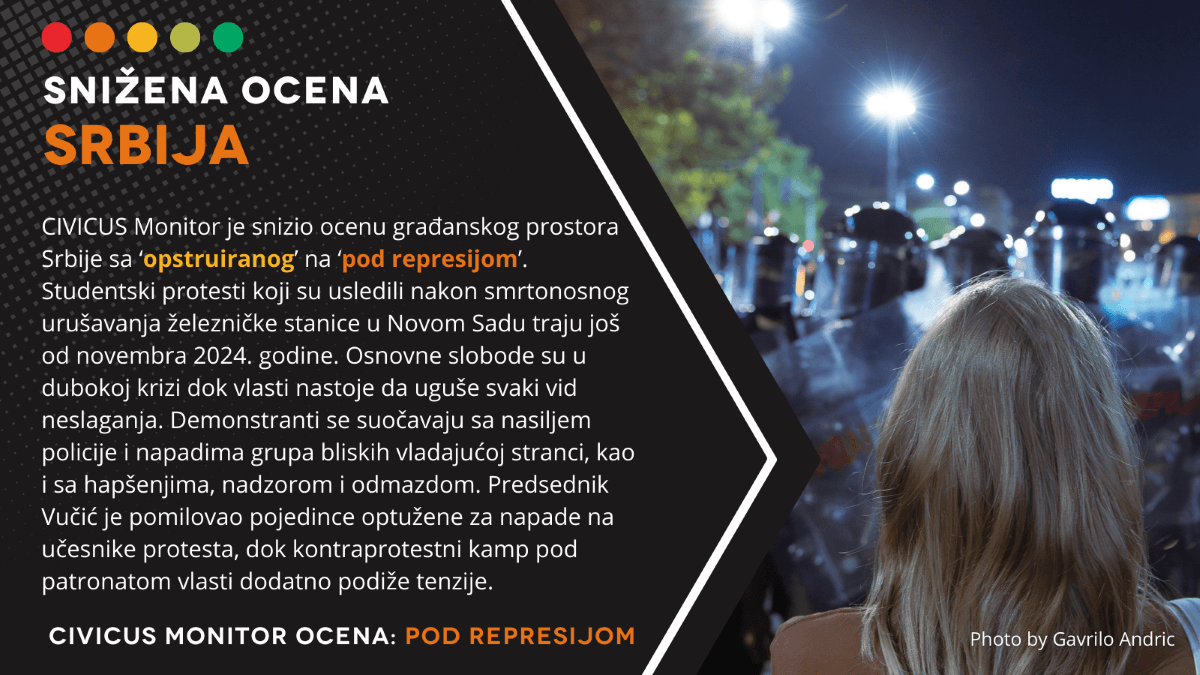
In its latest report, CIVICUS Monitor announced that it had lowered its assessment of civic space in Serbia to the level of “under repression”. This represents a turning point after years of escalating attacks on basic freedoms. The “repressed” category — the second lowest in the global framework — refers to states where the space for citizen action is severely limited, and dissent from the government carries severe consequences, including violence, prosecution or even prison terms. Thus, in 2025, Serbia will join the group of 50 countries with the status “under repression”, among which are Georgia, Zimbabwe, Pakistan and El Salvador.
“The downgrade for Serbia is a turning point,” said Ine Van Severen, head of CIVICUS Monitor’s research. “The authorities are no longer just trying to suppress criticism, but are actively stifling the right to free expression, association and protest. A state that claims to pursue democracy must not persecute citizens for demanding accountability.”
The student protests, which broke out after the deadly collapse of the train station in Novi Sad, attributed to corruption, have been going on since November 2024. At the same time, basic freedoms are under strong attack due to the increasingly repressive moves of the government. Protesters and those who support them face police violence, attacks by groups linked to the ruling party, mass arrests and intimidation campaigns, while the perpetrators of such attacks enjoy almost total impunity.
Human rights organizations say that more than 1,000 people have been detained since the beginning of the protests. Most were soon released, but some are still under house arrest or under restricted movement measures. Twelve civil society and opposition activists face criminal prosecution on disputed charges of allegedly subverting the constitutional order, while six of them are already in exile.
In July, President Aleksandar Vučić pardoned people accused of serious violence against protesters, including four men associated with his party who brutally beat a female student, as well as a woman accused of attempted murder after she drove her car into a crowd of protesters. Authorities have refused to seriously investigate allegations of police abuse, from excessive use of force at protests to beatings and threats of sexual violence reported by student Nikolina Sinđelić. They also failed to launch effective investigations into the alleged use of stun guns at the March 15 protest or into reports of the use of spyware against journalists and human rights defenders.
The authorities further exacerbated tensions by organizing counter rallies and camps around key institutions in Belgrade. Investigative journalists identified persons connected to organized crime among the participants. With the support of local authorities and police protection, these camps became places of frequent clashes with anti-regime demonstrators.
“The ruling party now permeates every segment of public life, making pressure inevitable,” says Uroš Jovanović, from Civic Initiatives. “Serbia has become a country where even a single critical word attracts retaliation. That retaliation can take the form of job loss in the public or publicly funded sector, targeted inspections by state authorities, smear campaigns in the media close to the ruling party, arbitrary detentions or various forms of administrative harassment.”
Freedom of assembly could soon be even more threatened. The proposed amendments to the Criminal Code from September 2025 provide that any traffic blockade becomes a criminal offense punishable by up to one year in prison, which, as civil society organizations warn, would in practice mean the criminalization of peaceful protest.
And freedom of expression is under constant attack. Those who publicly and vocally support the protests face smear campaigns, pressures and dismissals. More than a hundred employees in education lost their jobs due to support for student blockades. Independent media are also under attack: there were allegations that President Vučić personally influenced the takeover of critical television stations N1 and Nova, and politically motivated and legally questionable appointments to the Council of the Regulatory Body for Electronic Media ensured that this institution remained under the full control of the ruling party.
“This downgrade is not a surprise. We have been warning for years that the position of civil society must be at the center of the EU accession process. The situation in Serbia clearly confirms this,” said Simona Mladenovska from the Balkan Network for the Development of Civil Society. “When justice is delayed, it means there is none — for grieving parents, for journalists, for activists and all those silenced by repression. Now it is up to the European Union to act, protect civil space and ensure accountability.”
CIVICUS calls on the authorities in Serbia to immediately stop violence and politically motivated criminal prosecutions, withdraw changes that would criminalize peaceful gatherings, and launch independent investigations into abuses of police powers and illegal surveillance.
CIVICUS Monitor is a research tool that monitors the state of civil liberties in 198 countries and territories, generating quantitative and qualitative assessments of civic space. The data is collected in cooperation with more than 20 research partners from the civil sector and independent human rights assessments. Civic space can be evaluated in five possible categories: open, narrowed, obstructed, under repression and closed.
Violation of basic human rights in Serbia November 14 – November 27, 2025
In the week when 16 days of activism against violence against women begin, a policeman hits a woman in the head at a protest in Novi Sad. This blow is a symptomatic indicator of what all victims of gender-based violence face – systemic, deeply rooted violence, violence that is institutionalized, violence for which there is no systemic solution because the system itself is the problem.
The police attacked the citizens of Novi Sad and on that occasion several students were injured, whose bloody faces are a reflection of the repression that has been carried out in this country for the last year.
In the previous two weeks, the main actors of violence in society were also persons based in the camp of supporters of the government – Ćacilendu. A man, a convicted criminal residing in this camp, physically attacked the N1 team and broke their camera. The president of the country, in accordance with his values and rhetoric, condemned the “attack on the camera”, as he said.
For more information about these and other cases recorded in the previous period, see the full report below:
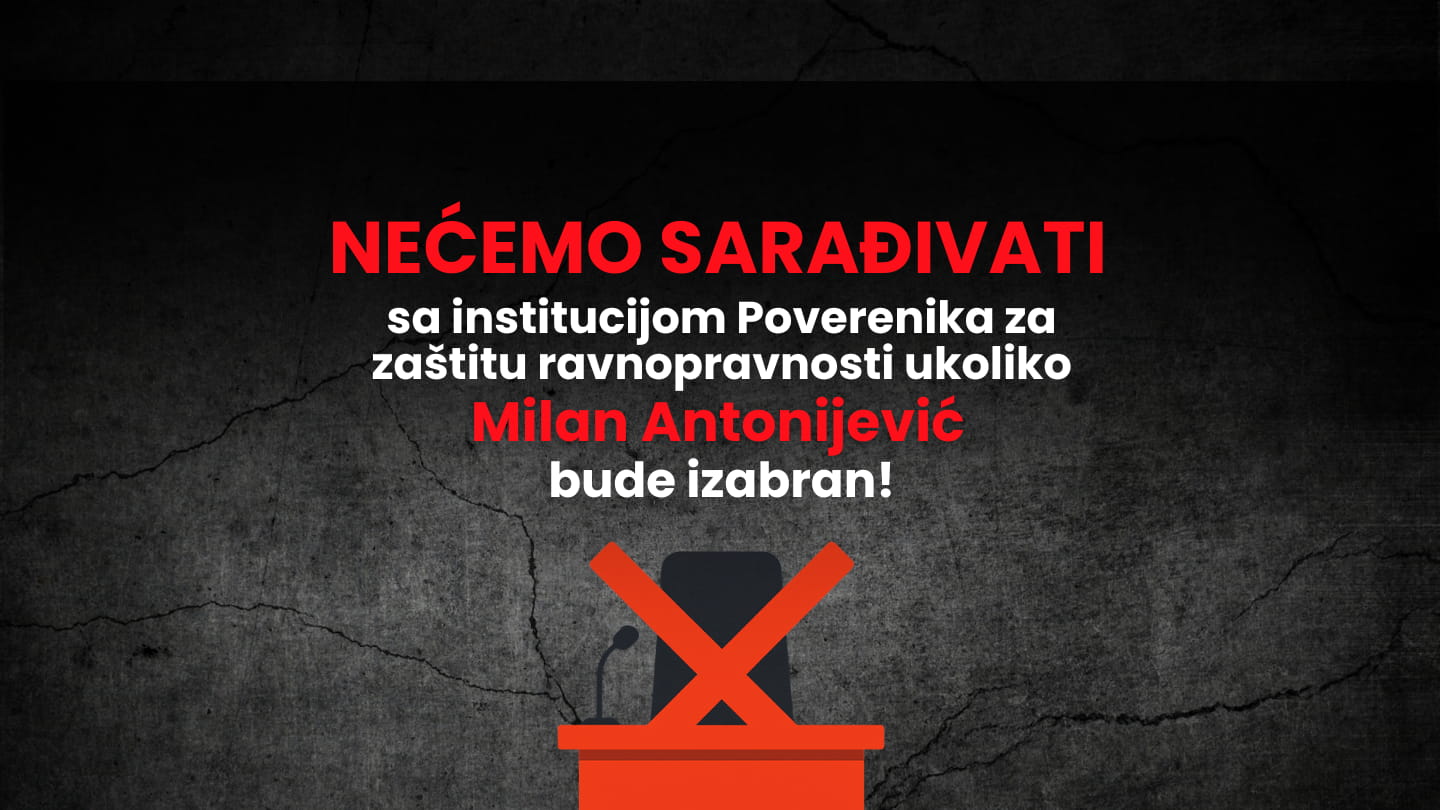
Civil society organizations that work to protect human rights and equality warn that the election of Milan Antonijević as Commissioner for the Protection of Equality would represent another step in the complete collapse of independent institutions in Serbia.
Of the five independent institutions that Serbia has, including the Protector of Citizens and the Commissioner for Information of Public Importance, all are under the control of the authorities, systemically delegitimized and headed by men elected on the basis of political loyalty, not on the criteria of independence and expertise.
The election of Milan Antonijević to the post of commissioner continues the practice of taking over institutions and turning mechanisms for the protection of citizens into an extended arm of the executive power. His political public support for power holders and ties to the structures that should be monitored make him inadequate to perform this function in an independent and impartial manner. Not least, the public relativization of violence against women makes him an unacceptable candidate, especially considering the prevalence of violence against women in our society.
In a situation in which discrimination is more and more present, and marginalized groups are more and more exposed, such a choice would additionally render meaningless the last pillar of institutional protection of equality in Serbia.
Civil society organizations therefore announce that they will not cooperate with the institution of the Commissioner for the Protection of Equality, if Milan Antonijević is elected. We will not participate in consultations, working groups, projects or public processes led by an institution whose credibility has been compromised in advance.
This decision is the last attempt to defend the idea that independent institutions should exist, to serve citizens and not the authorities, as well as that protection against discrimination and promotion of equality in Serbia must not be illusory or politically controlled.
Signatories:
Activist group “Women for Change” Novi Sad
Alternative center for girls
BeFem
Belgrade Center for Human Rights
Women’s Support Center
Center for the Development of Local Media from Požarevac
Center for independent living of persons with disabilities of Serbia
CRTA
Dugina iskra
FemIn collective
FemPlatz
Geten
Građanske inicijative
Helsinki Committee for Human Rights
Impuls Tutin
…IZ KRUG – VOJVODINA, organization for support of women with disabilities, Novi Sad
Kolektiv Femiks
Lila Initiative Belgrade
Democratic Dialogue Network
Independent Association of Journalists of Serbia
Psychosocial Innovation Network – PIN
Buffer zone
Trag Foundation
Phenomena Association
KROKODIL Association
Empowered Women Association
Women’s Association Peščanik
Association for Nature and Society Multivoks Niš
Successful women from Kostolac, Tanja Grgić
Zrenjanin Social Forum
Women in Black
Women’s platform for the development of Serbia
Women’s studies and research, Subotica
Women’s Research Center, Niš
Aida Ćorović
Prof. dr Marijana Pajvančić
Radmila Gujaničić
Zorana Antonijević
This site is registered on wpml.org as a development site. Switch to a production site key to remove this banner.