

Potrebno ti je više informacija?

Author: Tijana Ilić

  • National Anti-SLAPP Task Force: Judge Đorđević’s criminal complaint against KRIK is new intimidation of journalists

    National Anti-SLAPP Task Force: Judge Đorđević’s criminal complaint against KRIK is new intimidation of journalists

    Published: October 14, 2025.

    The National Anti-SLAPP Working Group strongly condemns the new, third lawsuit filed by Belgrade Court of Appeal judge Dušanka Đorđević against KRIK journalists and their “Judge Who Judges” database.

    Judge Đorđević has now filed a criminal complaint demanding 10 months in prison and a two-year ban on journalism for KRIK editor Bojana Jovanović and Jelena Radivojević due to the alleged violation of the right to privacy. The proceedings for the first two lawsuits are ongoing – KRIK editor Stevan Dojčinović and journalist Bojana Pavlović are the defendants.

    The judge and her husband, lawyer Aleksandar Đordjević, filed a new lawsuit because, as they claim, they only learned during the trials they are conducting against KRIK that Jovanović and Radivojević participated in the creation of the “Judge Who Judges” database of judges. It is interesting that it was journalist Radivojević who sent Judge Đorđević a request for an interview and specific questions during research and work on the basis of judges.

    We point out that this lawsuit is also a classic example of a SLAPP case – the goal of which is not to satisfy justice, but to put pressure on journalists, financial exhaustion and intimidation so that they stop dealing with certain topics that are important to citizens.

    KRIK’s “Judge Who Judges” database was created in order to increase the transparency of the work of the judiciary, and the specific profile related to the judge contains information about the cases in which Đorđević judged, information about the assets she and her husband own, and nothing that could threaten their safety was published within the profile itself, which was the main reason for filing lawsuits.

    The international Coalition Against SLAPP Lawsuits in Europe (CASE) labeled the first two lawsuits (civil and criminal) in which the Đorđevićs seek monetary compensation, imprisonment and a ban on journalism as “classic SLAPP lawsuits” that are filed without any basis and whose goal is to put pressure on journalists to stop reporting on certain topics.

    The very fact that the judge is asking for jail time for journalists in his lawsuits clearly shows that the goal of such lawsuits is first to silence journalists, and then to shut down the database, which would represent a huge blow to the transparency of such data, which we remind you are completely public and available, and open up further space for various forms of censorship against journalists.

    It is particularly worrisome that such a lawsuit is filed by a judge who also holds a public office – a person who should be the guarantor of the rule of law, and not someone who abuses the court system to deal with journalists. Such behavior seriously compromises the integrity of the judiciary and undermines citizens’ trust in the courts. Holders of such positions are obliged to tolerate the expression of critical opinions related to the results of their work, or related to the performance of their functions, regardless of whether they feel personally harmed by the expression of such information or opinions.

    Lawsuits with SLAPP features are already recognized as a serious threat to democracy – the Council of Europe and the European Parliament have called on member states to introduce mechanisms to prevent them. In Serbia, unfortunately, this term is still not officially accepted, but the practice of multiple and identical lawsuits clearly shows that it is an abuse of the judiciary in order to silence critical voices. The National Anti-SLAPP Task Force requests that the state urgently recognize the problem of SLAPP lawsuits and, in accordance with the recommendations of the Council of Europe and the European Union, introduce the necessary measures to prevent them. We ask the holders of judicial functions to pay attention to this problem as soon as possible and apply the already existing procedural mechanisms for the protection of journalists from such lawsuits more consistently and strictly.

    The National Anti-SLAPP Task Force, consisting of:

    Građanske inicijative

    Partneri Srbija

    Independent Association of Journalists of Serbia

    Slavko Ćuruvija Foundation

    KRIK

    Independent Association of Journalists of Vojvodina

    Committee of Lawyers for Human Rights – YUCOM

    KROKODIL Association

    Belgrade Center for Human Rights

    BIRN Serbia
  • Holistic mentoring of social innovators

    Holistic mentoring of social innovators

    Written by: Ema Štefanac and Andreja Koršič

    After a year of participatory processes, consultations with theoreticians, practitioners, innovators of mentoring processes, we are proud to present the publication Holistic Mentoring of Social Innovators.

    It all started with a question – how do we mentor those whose environment of influence is constantly changing?

    In September 2024, we asked ourselves what mentoring support looks like, which brings long-term development to social innovators, and allows us, the mentors, to become part of the active community of our mentees, and not just bystanders in their development.

    Why Holistic Mentoring?

    Although popular, we did not choose the adjective holistic in this context by chance. Holistic in medicine means looking at a person as a whole, in a kind of intersection of his mental, psychological, physical, and social capacities.

    In this context, holistic means an approach to social innovators, social problems and, ultimately, social innovation.

    Social innovators, our mentees, are individuals, activists, informal groups, associations, organizations, startups, basically individuals and/or teams dedicated to social innovation. As such, often in the agile and challenging role of redefining and re-articulating their contribution to the vision of a just, solidary and open society, social innovators require equally agile mentoring support.

    Holistic is thus often the only approach that can enable substantial and sustainable development within individual and collective systems of social actors operating in a context and environment in a continuous state of transition and change.

    In practice, this means that:

    “A mentor does not come as a guru with solutions. He/she comes with attention, listening, openness. He/she provides a framework, but does not draw a map. He/she provides support, but does not eliminate the struggle. He/she learns to lead through presence, not through control. And most importantly, he/she changes. (Marina Simeunović, lawyer)

    A holistic approach gives us space for individuality, autonomy and authenticity. On the other hand, the level of responsibility among mentees has also increased, as well as the desire and enthusiasm to work on their own development, pay attention to the process and ensure milestones and progress.

    “Following the mentee’s/mentee’s thinking, questioning and decision-making helps them find their own path that is in line with them, not just with external expectations.” (Svetlana Stefanović, political scientist and activist)

    Why social innovators?

    If we ask ourselves why we need a civil society, we will come across a range of answers, conclusions and perspectives. One of them is related to social innovation.

    Civil society – as a community of individuals who work within or outside the institutional framework of organizations, informal groups, etc. – can also be defined through the prism of social innovation.

    First of all, it is about the role and responsibility that civil society actors assume in the socio-political context in which they operate. The environment imposes barriers, challenges and problems that concern all citizens and are often the result of a lack of institutional mechanisms and resources that the state should provide. In the shadow and gaps of such (un)established systems, civil society is forced to act innovatively, creating opportunities, services, practices and knowledge that can compensate for the key deficiencies of the system and institutional support.

    Seen in this way, social innovators are all those who create solutions and bridges from below, take the initiative, take risks and experiment, i.e. innovate in the social, public interest.

    Accordingly, in the context of social innovators, it is true that only if they continue to change, they can continuously innovate.

    “When grassroots knowledge is systematized and horizontally shared, it becomes a strategic resource for the entire sector, for the entire community of knowledge.” (Milica Batricevic, activist)

    The book and the model in front of you are dedicated to the practice, idea and ideal of mentoring.

    Thanks to all the co-authors for the trust shown and the joint learning that inspired and informed the model, which does not teach but continues to “learn” with us.

    Sharing our mentoring approach with you, we hope it will enable new, more significant and even more innovative mentoring processes!

    You can download the Holistic Mentoring Handbook by clicking the button below:

    Expert review

    “To be together in a safe and courageous space for growth, which is both personalized and connected to the community, this is how to summarize the open invitation that holistic mentoring extends to current and future social innovators. In this book, “holistic” means two things. On the one hand, it is about the complete inclusion of the mentee in the process, and on the other hand, the inclusion of the “whole picture”, that is, the recognition of all connections of the mentee with the community in which he acts and in which he intends to make a change.

    Everyone needs a mentor, wrote David Clutterbuck, but what mentoring approach to the process would be most appropriate for individuals, teams, or organizations seeking to make sustainable social change?

    The book Holistic Mentoring offers valuable guidance and answers to this very question. This transformative approach to mentoring does not place the mentee’s skills and knowledge at the center of its activity, but above all strengthening, or as the authors vividly say, “anchoring” in the innovator’s identity. And really, is there anything more sustainable than change at the level of identity?

    Illuminating the territory with a holistic mentoring space, the authors point out the importance of understanding the ideological assumptions that inform or shape a certain mentoring process in an (in)visible way. Are the goals defined in the mentoring process belonging goals or alienating goals?

    There is no holistic mentoring without holistic mentors, who bring their whole self, their own history, strengths and weaknesses to the mentoring process, while being anchored in the “mentoring position”. In this process, the mentor, thanks to his curiosity and willingness to discover – together with the mentee – creates the conditions for the mentoring process like a pendulum movement that enables the examination of the existing limits of thinking and moving the mentee out of balance, providing, on the other hand, a safe place to return.

    The book Holistic Mentoring introduces the reader or mentoring practitioner to deep reflection on their own practice, and offers valuable inspiration for improving and co-creating the mentoring process.

    Enjoy reading, critical thinking, and the multidimensionality of mentoring.”

    Darko Marković, Systemic Solutions Institute

  • Three freedoms under scrutiny: September 5 – September 18, 2025

    Belgrade, September 18, 2025

    Violation of basic human rights in Serbia
    September 5 – September 18, 2025

    Another brutal police intervention against peaceful citizens was recorded in Novi Sad on September 5. During the police action, a huge amount of tear gas was thrown, and the policemen themselves were also hit by it. Students of the Faculty of Science and Mathematics performed a chemical laboratory analysis that showed that the highly toxic and prohibited CN gas was also used at the protest. The Ministry of Internal Affairs denied this, but let’s remember that high-ranking officials of the Ministry of Internal Affairs denied that they also owned a sound cannon, which later turned out to have been on the street on March 15. Several people were injured in the police action in Novi Sad, journalists were also attacked, and 42 citizens were detained.

    The police repressed and limited the counter-gatherings of citizens who gathered in protest against the gatherings of supporters of the ruling party. We remind you that the police did not prevent violent gatherings of SNS supporters who attacked peacefully gathered citizens with pyrotechnics and other means during the month of August, which indicates the selective behavior of the police.

    Pressures in education continued, including dismissals, dismissals and disciplinary proceedings against teachers who supported the student protests.

  • IT’S BURNT: Invitation to a two-day event dedicated to fires in the environment

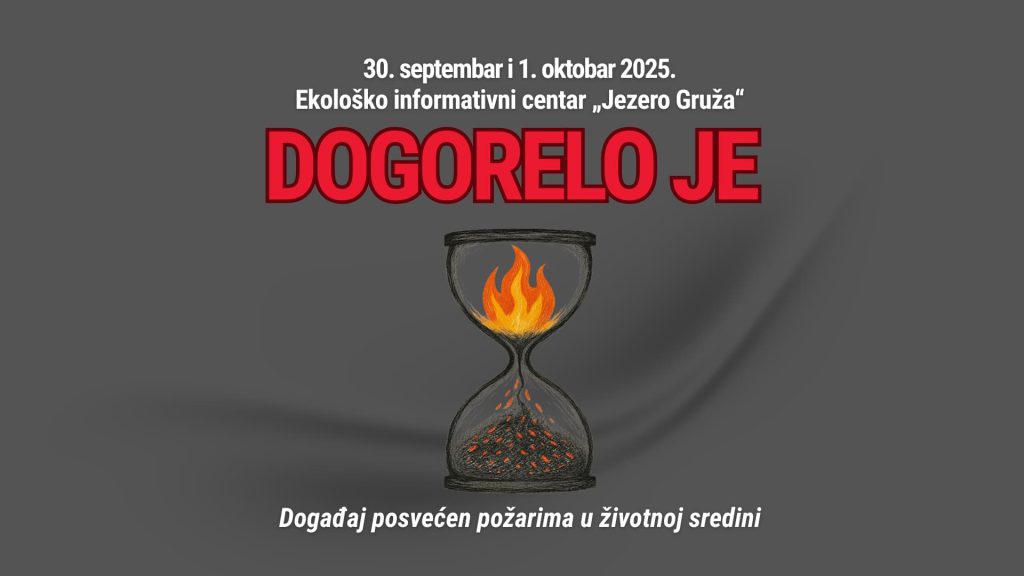
    IT’S BURNT: Invitation to a two-day event dedicated to fires in the environment

    📍 Ecological information center “Jezero Gruža”, Knić
    📍 Accommodation: Hotel Ravni Gaj, Knić
    📍 30. September and October 1, 2025.

    We invite representatives of citizens’ associations, the academic community and informal groups to join us at the two-day event “Dogorelo je“, which will be held in Knić on September 30 and October 1 this year.

    In light of the alarming data — almost 2,000 fires were recorded in Serbia in August 2025 alone — it is time to gather, share knowledge and take action.

    The event is dedicated to the analysis of the current situation and the exploration of possibilities for the active involvement of various social actors in the prevention and resolution of the fire problem in the environment.

    What awaits you?

    🔹 On the first day: introductory lectures, panel discussion and cultural program

    🔹 On the second day: work in small groups, practical training and final discussion

    We will deal with topics such as:

    • the current situation with fires in Serbia
    • the role of civil protection and voluntary fire brigades
    • fires as a consequence of climate change
    • the impact of fire on social, cultural, natural and economic resources
    • investor, agricultural, forest fires, as well as those in landfills and picnic areas

    Applications are open until September 25, 2025. at 4 p.m.

    You can sign up by clicking the button below.

    SIGN UP

  • Jovanović on changes to the Criminal Code: Serbia is starting to look like Russia and Belarus, the goal is to silence people

    Jovanović on changes to the Criminal Code: Serbia is starting to look like Russia and Belarus, the goal is to silence people

    September 17, 2025.

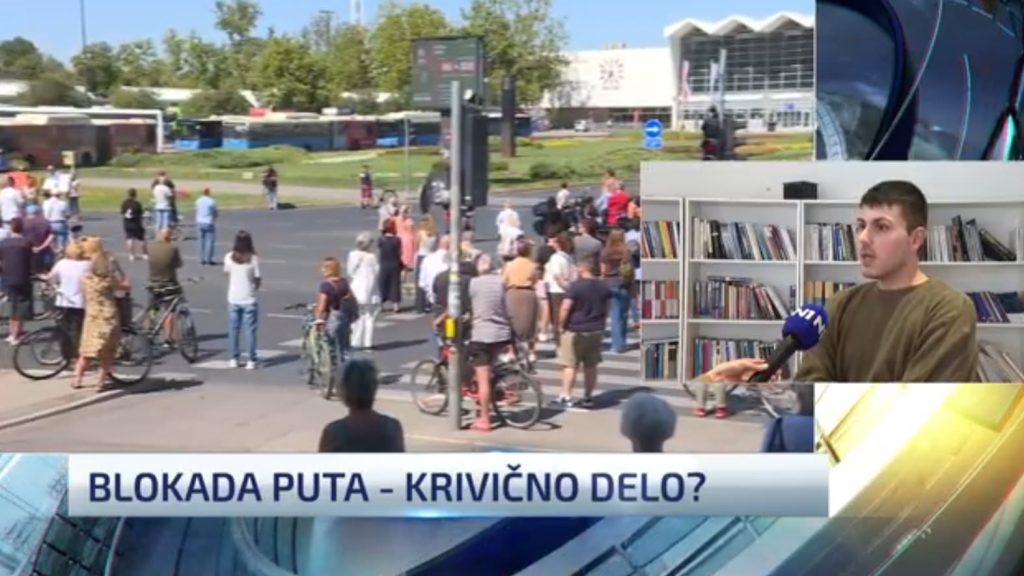
    Civil initiatives warned that with the proposal to amend the Criminal Code, the regime is trying to criminalize protests, explaining that with its adoption, any roadblock is declared a criminal offense, which is why they sent a request to the Ministry of Justice to urgently withdraw this proposal. Uroš Jovanović from Civic Initiatives states that this puts Serbia on par with Georgia, and that it is becoming a highly repressive country where critical voices are stifled.

    Jovanović states for N1 that if the proposed amendments to the Criminal Code were to be adopted, anyone who places an obstacle on the road and stops vehicles on the road can be punished with up to one year in prison.

    “I must mention that we already have a provision like this in the Criminal Code at the moment, but with an important addition, which is if the life or body of a person is endangered, that is, if property is endangered on a larger scale. Now we have this basic form of criminal offense, where we do not have danger to life, body and property, but only have an obstacle on the road and have a means of transport stopped,” he stated.

    According to him, with such changes to the law, the government is telling the citizens that they will no longer allow such things to happen.

    “I would also like to remind you of the statement of the high official of the Serbian Progressive Party, Vladimir Đukanović, who said that he is ready to propose to the state amendments to the Criminal Code and the introduction of serious criminal offenses, such as blocking highways, roads, railways and airports. And when we combine that with the statements of politicians in power, we get these amendments. Unfortunately, this is only the criminalization of protests, the criminalization of men and women citizens who seek justice on the street,” said Jovanović.

    With this, he adds, Serbia is beginning to resemble Russia and Belarus.

    “Now we are somewhere perhaps on a par with Georgia, unfortunately we are becoming a highly repressive country where critical voices are stifled, where anyone who dares to publicly utter a word that would shake the image of the government would be punished, and this is not just one provision in the law, it would join many other provisions that are interpreted very broadly with the aim of oppressing people and keeping them silent,” said Jovanović.

    Watch the entire guest appearance in the video attachment.

This site is registered on wpml.org as a development site. Switch to a production site key to remove this banner.