Potrebno ti je više informacija?

Author: Tijana Ilić

  • Serbia in the smoke of the landfill: Poisons in the air, silence in the institutions

    Serbia in the smoke of the landfill: Poisons in the air, silence in the institutions

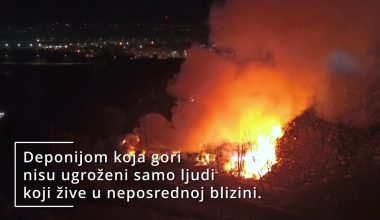
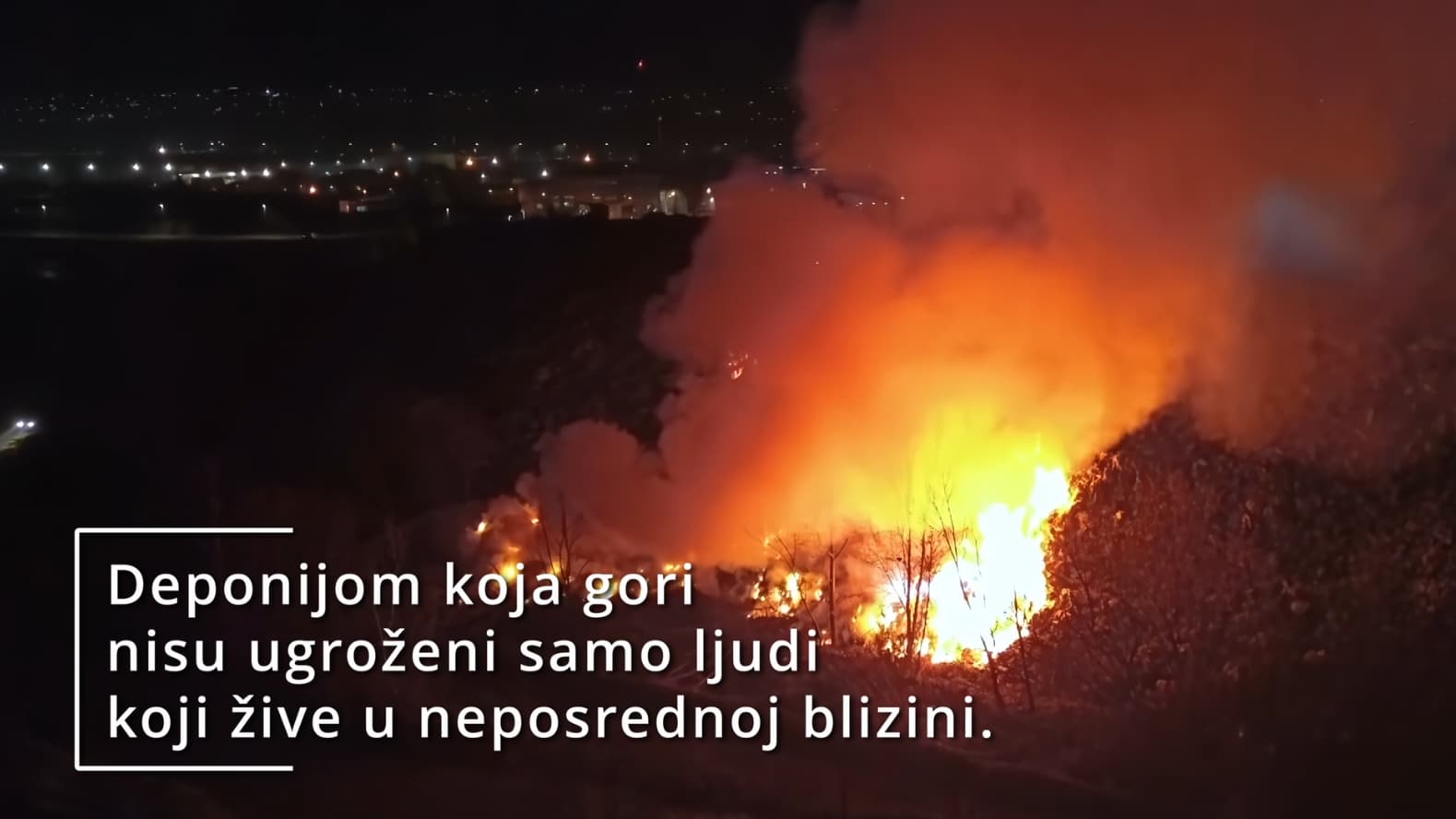
    The story of unsanitary landfills is again in the center of attention. Since the beginning of this year, the landfill in Valjevo has burned several times, and the citizens have started blocking its access and preventing garbage disposal, in order to point out again that this unsanitary landfill has been endangering their health for decades.

    The problem of unsanitary landfills has been burning in the literal sense for several years, and Valjevska is only one of those where the situation is most urgent. Milan Ninić has lived all his life 200 meters from the landfill. As he says, in some periods of the year, the stench is the least of the problems.

    “In addition, the landfill brings mice, rats, birds, bags, various garbage that flies and falls into the yard. It brings us various diseases, it’s all there.”

    However, the stench is not negligible either, especially in the summer.

    “We are forced to open the windows less, air the house less, there is no playing for the children in the yard. We are going to the city, literally, to take the children outside,” says Milan Ninić.

    Valjevo is one of the many cities where burning landfills additionally pollute the air.

    For years, Valjevo has been the most polluted city in terms of PM 10 and PM 2.5 particles, and the residents who live next to the landfill have a slightly more tragic fate, because several types of pollution accumulate there. One of the particles that comes in the winter is from the Valjevo heating plant, and the thing that most threatens the health of Valjevo residents from that area is when the landfill burns,” believes Vladimir Radosavljević from iRevolution.

    In addition to Valjevska, landfills in Uzice, Kraljevo, Mladenovac, Temerin and many other places burned in the previous period.

    “Fires at landfills have tripled in the last seven years. We usually hear that a landfill has caught fire in the summer, but they burn all year round,” says Nataša Gligorijević, coordinator of the Eco block – network for cleaner air.

    The impact of burning landfills on human health is worrisome.

    “Landfills that are not sanitaryly secured affect all organ systems of all living beings. Living near a landfill causes the most consequences for the respiratory system, leading to allergies, slowed development and growth in children, heart problems, problems with circulation, nervous system. It is frightening that living near a landfill leads to anxiety, depression, sleep and learning problems,” warns Mirjana Nastasić, activist, graduate student in medicine and member of the Contemporary Educational Network.

    According to Nastasić, not only the people who live in the immediate vicinity are threatened by the burning landfill, because particles, gases and heavy metals fly and end up in the air, water, and through the soil they end up in food.

    There are 2,689 official landfills in Serbia, and more than 3,500 unofficial ones. Only 12 regional sanitary landfills were built, instead of the planned 26.

    “The problem is that waste is not only disposed of in sanitary landfills, which are subject to certain controls, but most local self-government units have their own unsanitary landfills, so-called landfills, where the capacities are almost full,” Nataša Gligorijević warns.

    Inadequate disposal of waste is certainly the biggest cause of increasingly frequent fires at landfills.

    “At such landfills, there are neither gates, nor guards, nor a monitoring system for landfill gas, which is created by the disposal of biodegradable waste, which produces gas, more than 50% of that gas is methane, which when it comes into contact with certain substances causes explosions and fires.”

    The solution to the above landfill problem is certainly not simple, in the first place it is necessary to create a waste management system, and the first step is separation.

    The body of the landfill must be constantly covered with certain materials, in order to prevent both fires and air pollution. In addition to using all the necessary filters, it is necessary to carry out regular systematic inspections of the residents who live near the landfill, advise our interlocutors.

    Watch the whole story in the video attachment:

    This video was created as part of the “Garden, Ashes” initiative, which is implemented with the support of the Swiss Government project “Together for an active civil society – ACT”, implemented by Helvetas Swiss Intercooperation and Civic Initiatives. The opinion expressed in this video does not necessarily represent the opinion of the Government of Switzerland, Helvetas or Civic Initiatives.


  • HOW CITIZENS’ MONEY IS SPENT: A Manual for Identifying GONGOs and Phantom Organizations

    HOW CITIZENS’ MONEY IS SPENT: A Manual for Identifying GONGOs and Phantom Organizations

    Do you know how your money is spent?

    Every year, millions of dinars from the public budget end up in the hands of dubious organizations. Although public competitions should support the work of organizations that truly serve the public interest, the reality is different: funds often go to so-called GONGO organizations (government organized non-governmental organizations), which are often established solely to extract budget money.

    Civic initiatives, together with organizations gathered in the coalition Open About Competitions – OKO, have been monitoring these abuses for years. Through an analysis of the competition, allocated funds, and related organizations, we documented numerous irregularities and corruption schemes that enable non-transparent distribution of money from the budget.

    Our research methods and findings have now been translated into the “Handbook for Mapping and Tracking GONGOs and Phantom Organizations” – a tool that enables faster identification of these organizations and uncovering their connections with decision-makers. The manual is intended for:

    • To members of competition committees – to allocate funds based on realistic criteria, not pre-agreed arrangements.
    • Journalists and researchers – to make it easier to follow the money trail and expose rigged competitions.
    • Organizations and citizens – so they know how to check suspicious allocations and demand accountability from institutions.

    Abuses are systemic – there is no epilogue yet

    Let us recall that back in 2014, after it was discovered that funds from the Ministry of Labor’s competition had been awarded to organizations with identical projects, many of which were founded just a few months before the competition and some even after the competition was announced, the then Minister Aleksandar Vulin was forced to cancel the competition. In the same year, we filed a criminal complaint against an unidentified person over the disputed competition, which was dismissed by the Prosecutor’s Office three years later. Iste godine podneli smo krivičnu prijavu protiv NN lica zbog spornog konkursa, koju je nakon tri godine Tužilaštvo odbacilo.

    Even after almost a decade of continuous reports of irregularities, the situation has not changed – abuses are present at all levels.

    Irregularities were identified in public competitions announced by the Ministry of Family Care and Demography, the Ministry of Youth and Sports/Ministry of Tourism and Youth, the Ministry of Culture and Information, the Ministry of Labor, Employment, Veterans and Social Affairs, the Ministry of Environmental Protection, the Ministry of Education, city and provincial secretariats, the cabinets of ministers without portfolio, and individual local government units. Detailed analyses of competition procedures and recipients of funds showed: Detaljne analize konkursnih procedura i dobitnika sredstava pokazale su:

    Let us recall the 2021 Ministry of Family Care and Demography competition. The funds were transferred to the accounts of private agencies owned by family members and close people. Most often, the competitions were intended for the prevention of domestic and youth violence, but it was found that the activities were either completely absent or were carried out without compensation by school employees. In this way, five million euros were extracted from the Ministry.

    In the same Ministry’s 2022 competition, researchers came across a network of 24 organizations that were “created” immediately before the competition was announced, by re-registering existing associations that had not been active for years before.

    Criminal charges have been filed against the responsible persons in the Ministry, but the competent Prosecutor’s Office for Organized Crime has not yet initiated an investigation.

    What next?

    Download the manual and find out how the system of drawing budget funds through GONGO organizations works.

    Let’s not allow public money to be spent behind closed doors.

    Share this information and demand accountability!

    You can download the manual by clicking the button below.

  • Jovanović: Violence against civil society institutionalized in Republika Srpska

    Jovanović: Violence against civil society institutionalized in Republika Srpska

    February 28, 2025.

    Written by: Uroš Jovanović, manager of the Program for Public Policy in Civic Initiatives

    Associations and foundations in the Republika Srpska entity will bear the label of agents of foreign influence if they provide funds for their work from abroad and if they advocate for better laws towards the institutions of this entity after the Proposal for the Law on the Special Register and Publicity of the Work of Non-Profit Organizations was adopted with the support of the ruling parties on February 27, 2025.

    The aforementioned law prohibits “political action” and “political activities”. Among other things, the law recognizes as “political activity” the “implementation of political activity for the purpose of influencing the formation of public opinion in order to achieve political goals”, and as political activity “any activity towards bodies, institutions or elected representatives of the Republic of Srpska or representatives of the Republic of Srpska in the institutions of Bosnia and Herzegovina in the sense of formulating policy, political or public interest of the Republic of Srpska.”

    Thus, all those who advocate the adoption of the best laws or point to gross violations of human rights and freedoms in this entity will be forced to submit applications to the new registry and be exposed to the possibility of violent termination in case they do not agree to additional administrative burdens related to their work, which includes additional and excessive reporting and monitoring.

    A group of 41 non-profit organizations from Bosnia and Herzegovina called this law “revenge against all critical voices” and that it was adopted “in an atmosphere of lynching and persecution that has been created by government representatives for a long time.” It is stated in the statement of these organizations that the entity institutions “can already control the financial or any other operations of civil society organizations” and that the associations “are prohibited from political activity under the existing law, but that in previous years this was not implemented in the case of non-governmental organizations that are under the control of the government and that are financed from the budget and that openly supported political parties and candidates in elections”.

    An identical text of the law was proposed in Serbia by pro-Russian parliamentarians. The text appeared at a time of growing repression of Serbian civil society, which includes openly targeting activists and organizations, which are exposed to institutional violence, baseless investigations and police raids on their business premises.

    Civil society is faced with more repressive measures of the authorities due to open criticism of the work of institutions in the region. They do not recognize the importance of the work of people and groups who dedicate their lives to the improvement of the society in which they live, so the only thing left for them is to seek help outside their own country. Instead of supporting them in their intention to work for a fairer society for all, institutions often resort to activities that significantly limit the work of organizations, while the highest state representatives conduct dirty campaigns against critics, inciting violence against them.

  • Anti-corruption protests in Serbia: An overview of the events and the institutions’ treatment of the protesters

    Belgrade, February 28, 2025

    REPORT: Anti-corruption protests in Serbia: Overview of events and the actions of institutions towards protesters

    In Novi Sad, the second largest city in Serbia, on November 1, 2024, the canopy of the recently reconstructed Railway Station fell. 15 people died. All over Serbia, citizen protests against corruption followed, demanding that the competent institutions find and punish those responsible. At one of those protests, students of the Faculty of Dramatic Arts in Belgrade who were peacefully paying their respects to the victims were attacked. It turned out that among the attackers were members of the Serbian Progressive Party and officials in local bodies and state enterprises. This attack on students initiated the beginning of student blockades at colleges across the country, and they are supported by a wide front of citizens: educators, workers, farmers, lawyers, artists and others. Young people started a wave of protests against corruption and for the rule of law. Their demands clearly advocate for institutions that act independently and responsibly and are asked to just do their jobs and punish those responsible for the deaths of 16 people, as well as those who attack students and protesting citizens. The student blockades began on November 22, 2024, and in the previous period there were numerous attacks and institutional pressures on them and all those who support them. The government’s repressive mechanisms have not yielded results, and students are still bravely demanding the fulfillment of their demands.

    The report before you is an overview of the events from November 1, 2024 to March 24, 2025, with a special focus on all types of pressure, attacks and targeting to which students and protesting citizens are exposed by representatives of the authorities and state institutions. It is not a comprehensive account of the numerous events that have taken place since the fall of the canopy, but rather an overview of the violations of the basic freedoms of citizens (freedom of expression, assembly and association) that marked the previous period. As the protests continue until student demands are met, the report will be updated regularly.

    Last updated on March 24, 2025.

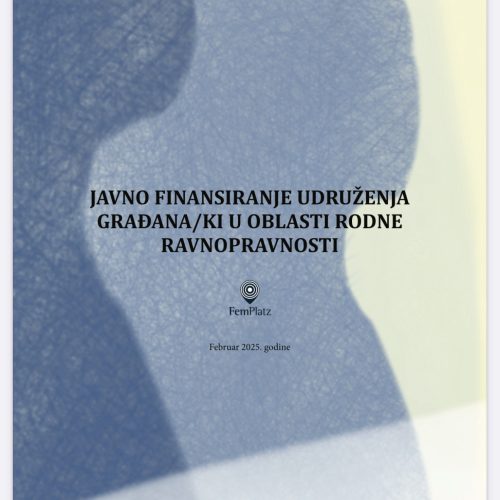
  • Analysis of public funding for gender equality: non-transparent funding and institutional apathy

    The analysis of public funds for gender equality was carried out in the period from August 2024 to January 2025 as part of the project “Strengthening the transparency of funding from public sources through the analysis of phantom and GONGO associations”, which is jointly implemented by Civic Initiatives, the Balkan Research Network of Serbia (BIRN) and FemPlatz.

    The goal of this project is to establish criteria for identifying phantom and GONGO associations in order to ensure transparent and responsible public funding, especially in the field of gender equality. In the long term, the project seeks to contribute to the creation of a standard methodology that could be adopted by public administrations throughout Serbia and the Balkans.

    As part of the research, the FemPlatz organization conducted a desk analysis of selected projects financed through the tender of the Ministry of Family Care and Demography and the Provincial Secretariat for Social Policy, Demography and Gender Equality, as well as an analysis of budget allocations for associations in the field of gender equality in nine cities and municipalities (Pančevo, Zrenjanin, Sombor, Sremski Karlovci, Požarevac, Leskovac, Ćac, Zaječar, Užice). All findings refer to the budget periods of 2023 and 2024.

    Key findings of the analysis

    • At the national level, there is no competition dedicated to the promotion of gender equality. The Ministry of Family Care and Demography does not mention the improvement of the position of women in its tenders, while the Ministry of Human and Minority Rights and Social Dialogue did not announce any tenders in this area in 2023 and 2024.

    • The only competition that formally supports gender equality is the competition of the Provincial Secretariat, but the analysis shows that more than 80% of the funds are allocated to “phantom” associations.

    • The process of public financing is non-transparent, especially in the part of project evaluation. There are no decisions on the appointment of project evaluation commissions, and civil society is not involved in this process. Also, the experience of associations in the field of tenders is often neglected, which allows organizations without previous work and expertise to receive funds.

    • The absence of special means for improving the position of women shows institutional disinterest in gender equality, despite clear indicators that the position of women in Serbia is deteriorating.

    • The process of regression in achieving gender equality is present at the legislative, institutional and social level, and the situation is further aggravated by the negative campaign of conservative actors and the decision of the Constitutional Court from June 2024 on the suspension of the implementation of the Law on Gender Equality.

    • Gender responsive budgeting (GRB) cannot be a substitute for special tenders. Although Serbia applies the ROB, it refers to budget users, not to the financing of women’s organizations and initiatives.

    This analysis shows that it is necessary to urgently redefine the system of public financing in the field of gender equality in order to ensure transparency, relevance and accountability. It is crucial that the competent authorities establish clear criteria for the allocation of funds and to prevent the financing of organizations that do not have proven capacities and experience in this area.

    You can download the complete analysis:

This site is registered on wpml.org as a development site. Switch to a production site key to remove this banner.