Potrebno ti je više informacija?

Author: Tijana Ilić

  • Decision on the suspension of cooperation with the legislative and executive authorities in Serbia

    Decision on the suspension of cooperation with the legislative and executive authorities in Serbia

    Since the beginning of the student protests, we have publicly and unequivocally supported all their demands. Since the fall of the canopy in Novi Sad on November 1 last year, we have been deeply shaken by the suffering of innocent people, the violence we are witnessing, as well as the actions of institutions that, instead of doing their job, try to use various maneuvers to extinguish the student struggle. The students showed that this is not possible and that, until the institutions start working in accordance with their competences, the struggle will not stop. The rule of law and the responsibility of public office bearers must be the foundation of society’s functioning. However, Serbia has not been a rule of law country for a long time.

    For years we have been witnessing pressures, attacks and threatening campaigns against civil society organizations, human rights defenders, activists, journalists and citizens who dare to oppose corruption and abuse of institutions. We are witnessing the abuse of security structures and other institutions for the purpose of illegal espionage of activists and mounting criminal and other processes with the aim of intimidating activists and journalists. For the first time, the pressure on civil society took an institutional form through the Draft Law on a special register of agents of foreign influence, in the same way as it is regulated in Russia and Belarus. In response to all this, the competent institutions are still silent and do not do what is in their job description – they do not protect citizens and the public good

    These days we witnessed harassment, arrests, expulsion from the country and the ban on entry of activists, students and public figures from abroad. We are also witnessing the targeting of citizens who have dual citizenship, while convicted war criminals are sharing personal data of students and thereby endangering their safety.

    We are also witnessing the government’s attempts to fake democracy and the inclusiveness of the policy-making process by formally involving civil society in various decision-making processes, the result of which, however good it may seem “on paper”, is not implemented in practice, and the standards of protection of human rights and freedoms have been in constant decline in recent years. Citizens and civil society do not have the opportunity to influence decisions about projects and activities that already have or may have a negative impact on the rights, property, health and safety of citizens. Public space and services, cultural heritage and natural resources are stolen from citizens every day with the active connivance of public institutions, public officials and the highest officials of this country.

    Due to all of the above, and guided by the idea that the rule of law must finally prevail, we made the decision to suspend cooperation with the legislative and executive authorities in Serbia. By cooperation we consider any membership – both formal and informal – in the working groups of the Government and its ministries, as well as all other permanent and ad hoc working groups, councils and similar instruments of state bodies that imply our direct involvement.

    We will not give up on returning the institutions of the Republic of Serbia to their responsibilities and citizens. We remain committed to our work and will continue to monitor all decision-making processes, regularly report to the public about their effects, and use all legal, administrative and other mechanisms of state bodies in the coming period. In this way, we will protect human rights,

    report crimes and misdemeanors, point out harmful decisions and actions, and use all available mechanisms in order to protect the public interest, human rights, freedoms, health, safety and property of citizens, in accordance with the goals, visions and missions of our organizations.

    In Belgrade, 04.02.2024.

    Signatories:

    A11 – Initiative for economic and social rights

    Alternative center for girls

    ASTRA-Action against human trafficking

    Media Association

    Online Media Association

    Autonomous Women’s Center

    Belgrade Center for Security Policy

    Belgrade Center for Human Rights

    Center for Contemporary Politics

    Crta

    Evropski pokret u Srbiji

    FemPlatz

    Građanske inicijative

    Helsinki Committee for Human Rights

    Youth Initiative for Human Rights

    Initiative for the Rights of Persons with Mental Disabilities MDRI-S

    Collective Ministry of Space

    Committee of Lawyers for Human Rights – YUCOM

    International Aid Network IAN

    National Coalition for Decentralization

    Independent Association of Journalists of Vojvodina

    Independent Association of Journalists of Serbia

    Partners for Democratic Changes Serbia

    PIN – Psychosocial Innovation Network

    Polekol – Organization for political ecology

    Regulatory Institute for Renewable Energy and the Environment – RERI

    SHARE Foundation

    Slavko Ćuruvija Foundation
  • ANALYSIS: Youth policy in focus – Open about competitions

    ANALYSIS: Youth policy in focus – Open about competitions

    The analysis “Youth policy in focus 2023” provides an overview of the state of youth policy in 25 cities and municipalities throughout Serbia. Through civil monitoring of public tenders, this publication reveals which local governments finance youth programs, which do not allocate a single dinar, but also what the practice of distributing funds looks like — from formal omissions and illogicality in project evaluation to examples of financing activities that have nothing to do with youth policy.

    The results point to serious challenges: more than a third of the analyzed LGUs do not fulfill their obligations in terms of youth policy, and smaller and economically weaker cities usually do not allocate systemic funds for youth — precisely where it is most needed.

    📄 You can download the analysis in its entirety by clicking the button below:

    This analysis was carried out as part of the “Openly about the open calls” project, jointly implemented by Civic Initiatives and BIRN Serbia, with the support of the British Embassy in Belgrade.
    The opinions expressed in this publication are solely the responsibility of the authors and do not necessarily reflect the views of Citizen Initiatives.
    For any use, reproduction and circulation of a part of the text or the text as a whole, the consent of Citizens’ Initiatives is required.

  • Three freedoms under scrutiny: January 17 – January 30, 2025

    Belgrade, January 30, 2025

    Violation of basic human rights in Serbia
    January 17 – January 30, 2025

    Two more female students were seriously injured in the previous period. This indicates a worrying trend of increasing extreme violence to which women engaged in activism are exposed. A student was hit by a car during the blockade on the day of the General Strike. The student hit her head on the curb and suffered serious injuries. On the day when the president of the state spoke declaratively about the necessity of dialogue, thugs attacked two groups of students from the premises of SNS and on that occasion beat one girl with baseball bats and injured her.

    The struggle of male and female students, pupils and their professors, is the struggle of all of us. It is a fight against a corrupt system, a fight for the rule of law and the independence of institutions.

    In the observed period, 13 foreign citizens who participated in workshops organized by the Erste Stiftung were expelled from Serbia. Their expulsion is a continuation of the pressure exerted by the security services on domestic, regional and foreign activists and should also be seen in the context of the government’s attempt to present legitimate student protests as an attempt to interfere with foreign factors in internal affairs.

    For more information about these and other cases recorded in the previous period, see the full report below:

  • ANALYSIS of the competition of the Ministry of Tourism and Youth from 2022 and 2023

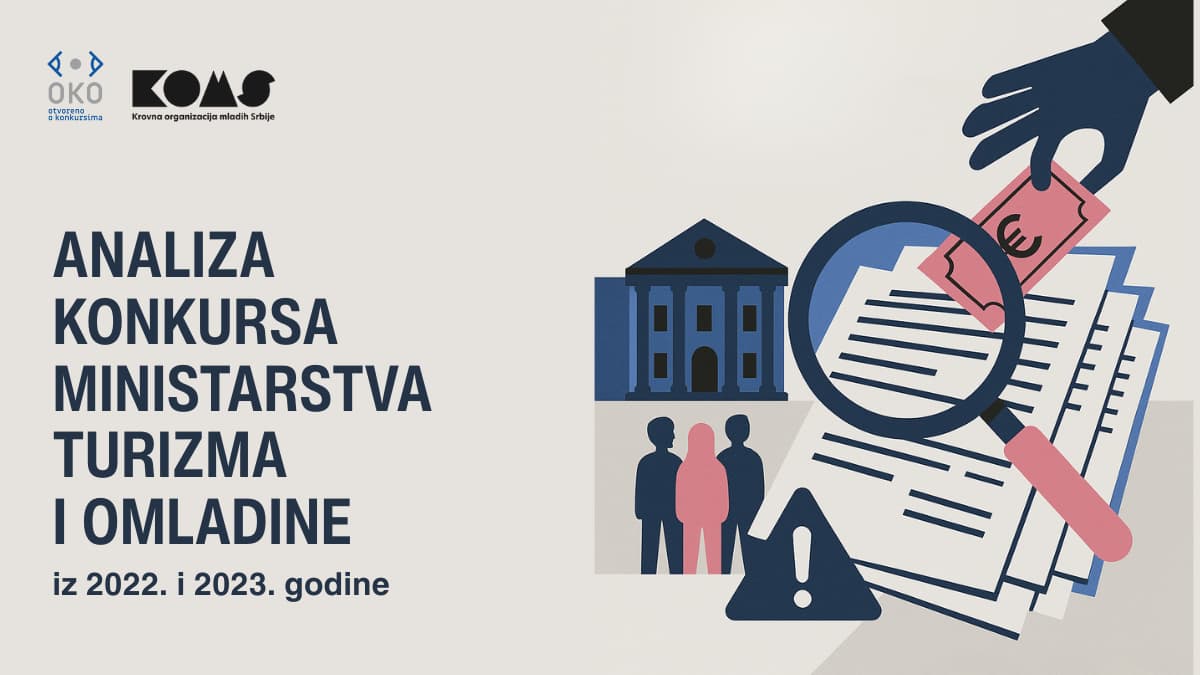
    ANALYSIS of the competition of the Ministry of Tourism and Youth from 2022 and 2023

    Belgrade, January 29, 2025.

    Who won all the money at the contests of the Ministry of Tourism and Youth? How visible, active are these organizations and how do they actually implement the projects they report? What amounts are awarded to organizations that have no website, no past traffic, and no evidence of activity?

    Those questions are answered by the analysis of the competition for youth associations and for young people, which was announced and implemented by the Ministry of Tourism and Youth in 2022 and 2023.

    119 organizations (youth and youth associations) that received projects in two competitions, one related to the implementation of the Youth Strategy, and the other related to encouraging employment, were analyzed — who they are, when they were founded, how active they were, what their budgets were, how (and whether) they implemented projects, as well as what can be learned from their digital presence and project documentation.

    This analysis points to systemic weaknesses, potential abuses and the need for greater transparency in the distribution of public funds.

    📄 Download the entire document by clicking the button below:

    This analysis was carried out as part of the project “Openly about the open calls” jointly implemented by Civic Initiatives and BIRN Serbia, with the support of the British Embassy in Belgrade.

  • Candidates for the REM Council withdrew their candidacies due to irregularities in the election process

    Candidates for the REM Council withdrew their candidacies due to irregularities in the election process

    Belgrade, January 26, 2025.

    Text: Cenzolovka

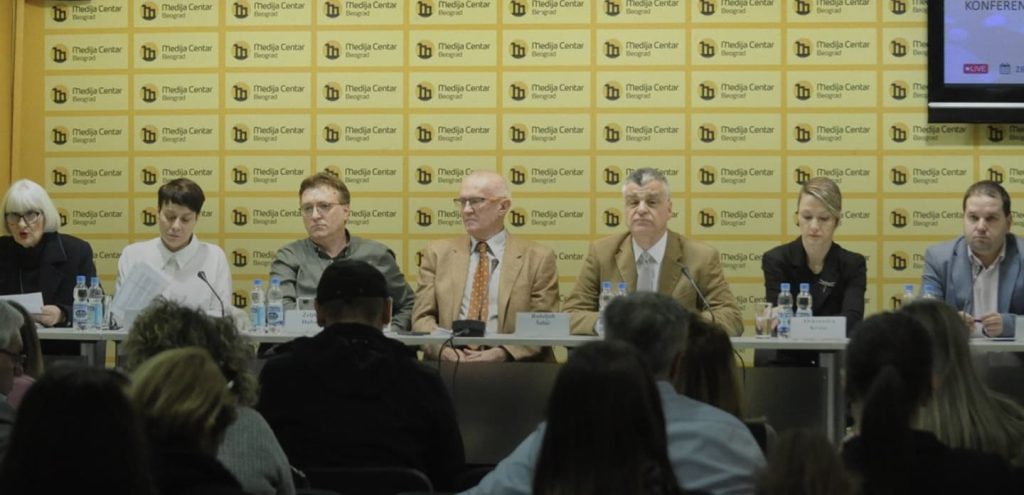
    Six independent candidates announced today that they are withdrawing their candidacies due to violations of the Law on Electronic Media during this process, because both proposers and candidates who do not meet the legal requirements were accepted, as well as because of discrimination against candidates.

    This was done earlier by Fijuljanin, a candidate of national minorities, for the same reasons, in a letter to the Serbian Parliament that Cenzolovka had access to.

    Mirković (candidate of the Commissioner for Protection of Equality), Šabić, Valić Nedeljković (candidates of the association for freedom of expression), Hubač (candidate of the association of stage and drama artists), Krstić and Aleksić (candidates of the association for the protection of children) emphasized the illegality of the entire process of selecting the Council from the very beginning.

    STOJANOVIĆ: IŠTVAN BODŽONI IS THE HUNGARIAN ŽELJKO MITROVIĆ

    Director of Civic Initiatives, Maja Stojanović, who is one of the proponents, said that the withdrawal of candidacies does not mean giving up the independent REM, on the contrary – this is pressure on the government to get an independent REM:

    “We here can create 35 organizations tomorrow and register them according to the law. This does not mean that those 35 organizations can propose candidates for the REM Council. And that is exactly what happened in this process.”

    She cited the law according to which a media owner cannot be on the Council of REM.

    “Željko Mitrović could thus be a candidate for the REM Council and say that he would resign if elected. Istvan Bodžoni, a candidate of national minorities, is Željko Mitrović in the Hungarian media. He has a mountain of media, he received 50 projects from the state of Serbia and every year he receives a million euros from the Hungarian government. So, he is under the control of both this and the Hungarian regime,” added Stojanović.

    Hubač: I will challenge this whole process because of discrimination

    Dušan Aleksić, a candidate for the Association for the Protection of Children, said that reporting on student protests shows how ineffective REM is “detrimental to our society.”

    “The four national television stations are now controlled by no one, even when the previous Council existed, no one reacted. Students suffer targeting through the media,” said Aleksić, who sees this process as a laughing stock in the face of the people.

    The candidate of the association of film, stage and drama artists Željko Hubač pointed out that the current social crisis must end peacefully, probably through elections, but:

    “With this election of the REM Council, they show that they do not care about democratic and equal elections.”

    Hubač recalled how SNS MP Nebojša Bakarec, at the first session of the Committee for Culture and Information regarding the election of the Council, when the proposed candidates were discussed, said that Hubač is known for his anti-Serbism and hatred of his own people and that he must not work in any state organization.

    Because of this, Hubač turned to the Commissioner for the Protection of Equality, who made a decision that these allegations violated the Constitution and the Law on Prohibition of Discrimination, stating that Bakareca is protected by the “immunity of irresponsibility”, a legal term that is no joke. Hubač repeated that due to discrimination, he will demand that the entire process be overturned:

    “I decided to withdraw my candidacy, because I no longer want to be exposed to discrimination in the parliamentary session. I also invite all other colleagues to withdraw from this process because of discrimination, because I will understand their silence as their approval.”

    Saša Mirković, the candidate for the Commissioner for Equality, thinks that proposers such as the Independent Association of Journalists of Serbia and the University of Arts, who proposed such names as professor Snježana Milivojević, Mileva Malešić, professors Ivan Medenica and Vanja Šibalić, were also eliminated illegally during the process.

    “The University of the Arts offered an example of how the academic community could contribute to the independence of the REM Council, but their candidacies were rejected. Candidates from other universities passed, for which numerous irregularities were found. I note that the law explicitly prohibits candidates who were members of the REM Council, as well as those who have a conflict of interest, but they still passed,” added Aleksandra Krstić, a candidate from the association for the protection of children.

    Illegal even before the start of candidacy

    The entire process of electing the new REM Council was marked by violations of the law. The Parliamentary Committee for Culture and Information did not announce the competition on time, which is why a criminal complaint was filed against the Committee’s president, Nevena Đurić (SNS).

    The competition was announced several months late, then with the obvious intention that Serbia fulfills the conditions for the Reform Agenda, for European integration and for the opening of cluster three, which refers to electronic communications and the information society.

    Despite the promise that the new REM Council should have been elected by the end of last year, it did not happen, so an extension until the end of January was requested. There is every chance that the REM Council will not be elected even then.

    Already at the first session of the Committee, where the proponents and candidates for REM Council members were discussed, the deputies of the Serbian Progressive Party openly said that they intend to continue to control this body, and that they are not interested in the fact that among the proponents are phantom organizations that do not meet the conditions of the competition, while some of the candidates proposed by such organizations are openly on the side of the government.

    The members of the opposition called the whole process a joke and a farce, and a number of candidates during the discussion with the Committee in the Assembly asked for the process to be repeated in seven of the nine categories.

    In the analysis of the process, citizens’ initiatives announced that even 17 of the 34 candidates for the REM Council do not meet the legal criteria, as well as 32 of the 121 proposers.

    Maja Stojanović, director of Civic Initiatives, during the conversation with the proposers and candidates in the Assembly, pointed out that one candidate, retired professor Zoran Jevtović, who is also the editor-in-chief of the magazine published by SNS, said that the candidates had passed the party selection.

    Watch the recording of today’s conference in the video attachment:

This site is registered on wpml.org as a development site. Switch to a production site key to remove this banner.