Violation of basic human rights in Serbia May 30 – June 12, 2025
Arrests of students and citizens protesting and showing their dissatisfaction intensified in the previous period. Because of the incident in “Studenjak”, when Miloš Pavlović, the leader of the so-called “students who want to study”, more than 18 people were detained. In contrast to this express, mass arrest, the persons who attacked the young YouTuber in Pionirski Park were not arrested, even though the police were only a few steps away from the scene of the attack. In the previous report, we informed you about the attack on the N1 cameraman by a local official from Kosjerić. That official, Ljubiša Knežević again physically attacked an activist, and the protection under which the officials and sympathizers of the ruling party are placed does not give hope that this official will be punished even for this violent attack.
For more information about these and other cases recorded in the previous period, see the full report below:
Civic initiatives and the “Slavko Ćuruvija” Foundation today appealed to the Committee for Culture and Information of the National Assembly of the Republic of Serbia with a request to stop the process of determining the final list of candidates and proposers for REM Council members, until numerous irregularities are eliminated.
The bodies of the National Assembly themselves — including the Committee for Culture and Information and the President of the National Assembly — have so far expressed suspicion of irregularities in 65 proposers and 12 candidates. Civic initiatives and the Slavko Ćuruvija Foundation challenged 26 proposers and 14 candidates.
This means that in total, 91 proposers and 26 candidates are suspected by the Board itself, as well as by independent observers and proposers, that they do not meet the legal requirements.
In addition, the official documents of the National Assembly themselves indicate serious misinterpretations of key legal concepts, including claims:
that persons aged 15 to 18 are not children,
that the protection of children does not belong to the area of human rights,
that print media portals are electronic media in the sense of the Law on Electronic Media.
Due to such serious and systemic legal problems, an additional request was submitted to the Committee for Constitutional Affairs and Legislation for an authentic interpretation of legal provisions.
At the same time, for today’s session of the Committee for Culture and Information, objections from several organizations participating in this process, which refer to the most flagrant violations of the law by individual proponents and candidates, were submitted.
In such circumstances, the adoption of the final list of candidates by the Committee for Culture and Information would represent an open violation of the law and ignoring even its own suspicions of the illegality of the proposers and candidates, which would further jeopardize the legitimacy of the entire election process for the REM Council.
Civil initiatives and the Slavko Ćuruvija Foundation demand that the Assembly of the Republic of Serbia return the procedure to legal channels and ensure that the REM Council is finally elected in accordance with the law, and not through obvious violation of legal frameworks.
The special rapporteurs of the United Nations (UN) published an official communication with the requests they sent to the Government of Serbia in connection with the events of March 15 in Belgrade, when at 7:11 p.m. a peaceful assembly of a large number of people was violently interrupted by the alleged use of sound weapons.
In the official communication sent to the State of Serbia, the UN rapporteurs pointed out that the information received about the events of March 15th cause serious concern regarding the full implementation of the Serbian Government’s obligations regarding the respect and protection of rights and fundamental freedoms according to international human rights law, the International Covenant on Civil and Political Rights, as well as the obligations arising from the Convention against Torture and Other Cruel, Inhuman or Degrading Punishments or Procedures, including specifically the failure to protect protesters.
UN Special Rapporteurs have expressed serious concern about the increasing restrictions on the right to freedom of peaceful assembly and in particular the alleged use of an illegal sound device, which has led to numerous further claims of injury and health problems caused by these weapons. They also note that Serbia has an obligation to regulate and supervise the production, procurement and use of equipment used by the police and law enforcement agencies, and that special caution is required when using experimental weapons, which include sound devices, because their nature is not sufficiently known, nor have the medical and other effects of their use been sufficiently investigated.
“These weapons and devices pose a risk of causing temporary or permanent hearing damage, depending on the model, distance and duration of exposure. They can be misused in an indiscriminate manner against masses of people or used to cause injury. Their effects, which rely on sensory disorientation and whose effects are general rather than targeted, can cause dangerous stampedes and chaotic behavior, affecting both protesters and bystanders. Although we cannot confirm that such weapons were used in this particular case, the evidence we have received indicate that its use caused mass panic, which is contrary to the precautionary principle,” states the letter of the UN special rapporteurs addressed to the Government of Serbia.
It is also added that if such weapons were used to disperse peacefully gathered people, that this represents an illegal break-up of a peaceful protest, and that the alleged use of such weapons is particularly disproportionate and cruel at the moment when the participants of the meeting were silently paying tribute to the victims of the fall of the railway station canopy in Novi Sad. It is also noted that any use of sound devices must be clearly regulated by law, with a special and high-ranking permit for a specific situation, and that it is necessary to ensure supervision and transparent reporting on such use.
The six UN Special Rapporteurs requested additional information and comments from the State of Serbia, including those relating to: measures taken by Serbia to conduct a prompt, impartial, independent and effective investigation into the alleged use of sonic/acoustic weapons to unlawfully break up a peaceful assembly on March 15; on the legal basis for such weapons, previous approvals, hierarchy of command and rationale for use; about the possession of less lethal weapons that Serbia has acquired or produced, including acoustic or other weapons based on sound waves; as well as information on the number and types of injuries caused by the use of the mentioned device.
The official communication of the UN special rapporteurs was published 60 days from the moment of referral, and it will be included in the regular report of the UN Human Rights Council, as well as possible responses, if Serbia submits them.
The six special rapporteurs of the United Nations who sent the communication to the Government of Serbia are:
Gina Romero, Special Rapporteur on the rights to freedom of peaceful assembly and association;
Farida Shaheed, Special Rapporteur on the right to education;
Irene Khan, Special Rapporteur for the promotion and protection of the right to freedom of opinion and expression;
Tlaleng Mofokeng, Special Rapporteur on the right of every individual to the highest attainable standard of physical and mental health;
Mary Lawlor, Special Rapporteur on the situation of human rights defenders;
Alice Jill Edwards, Special Rapporteur on Torture, Torture and Other Cruel, Inhuman or Degrading Treatment or Punishment.
The entire request communication is available at this LINK.
Six civil society organizations – Belgrade Center for Human Rights, CRTA, Civic Initiatives, Initiative A11, FemPlatz and Committee of Lawyers for Human Rights – YUCOM, addressed the UN Special Rapporteurs regarding the events during and immediately after the protest in Belgrade on March 15, 2025. Let us recall that on April 30, the European Court of Human Rights issued a temporary measure ordering the Republic of Serbia to further refrain from using sound devices for the purpose of crowd control, following a request submitted by these civil society organizations on behalf of 47 citizens of Serbia. 9. On April 15, 2025, six organizations filed a criminal charge of terrorism with the Prosecutor’s Office for Organized Crime due to the incident at the protest on March 15, while the preliminary investigation procedure is ongoing before the First Basic Public Prosecutor’s Office in Belgrade to collect the statements of more than 150 citizens who were at the protest in Belgrade on the evening of March 15 from 7 p.m. in Kralja Milana Street and around Slavija Square.
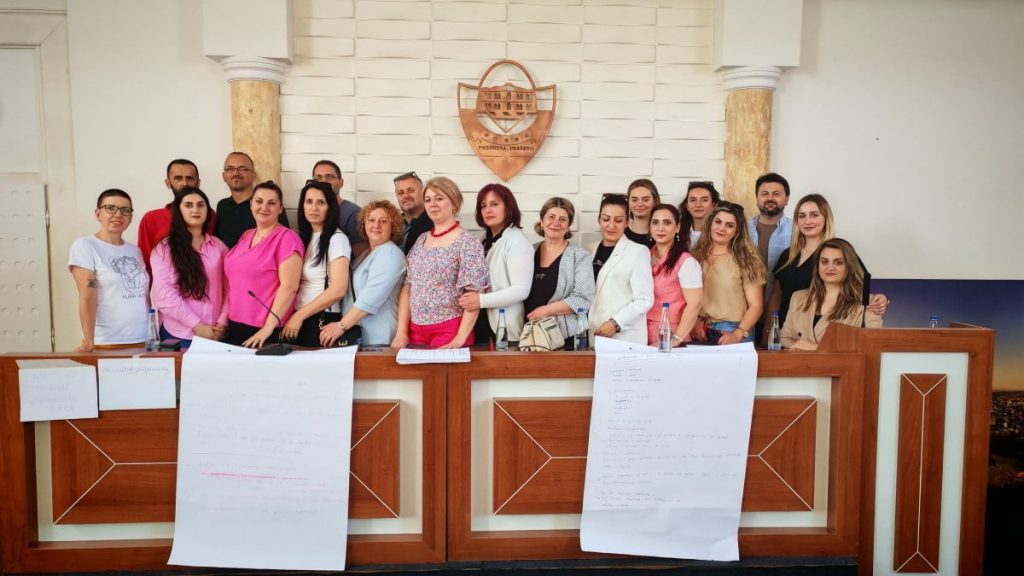
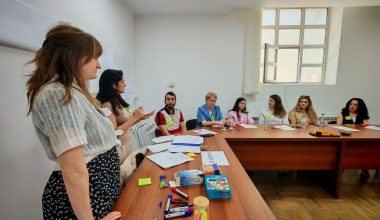
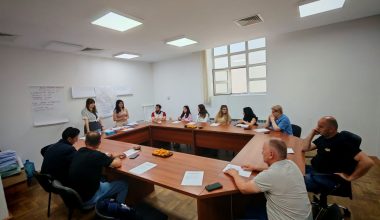
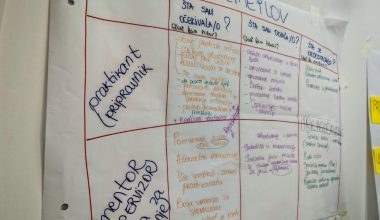
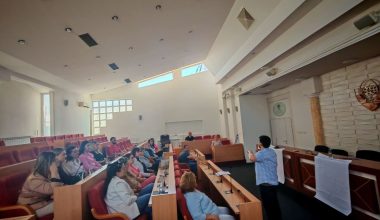
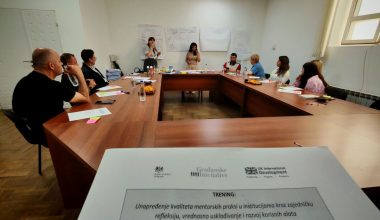
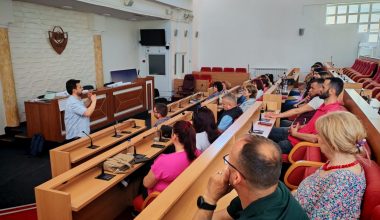
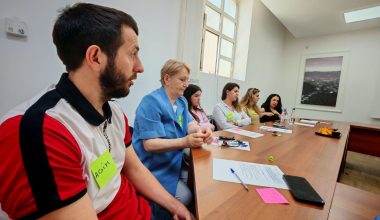
Two trainings aimed at improving professional practices in local institutions were held in Preševo 3. and June 4, 2025. The trainings are organized for practitioners who are currently attending professional practices in municipal institutions – Municipality, Sports Center, Library, Preschool and Cultural Center, as well as for their mentors.
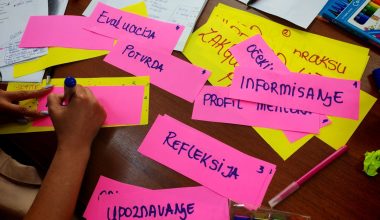
The two-day training for practitioners included topics in the field of intercultural communication, understanding prejudices and stereotypes, as well as prevention and resolution of conflicts in the institutional environment. Through interactive sessions and practical examples, participants developed active communication skills and self-awareness in working with people from different backgrounds.
The mentoring training was aimed at empowering employees who follow and support practitioners during their engagements. Participants discussed together what a quality mentoring cycle looks like, shared experiences, developed useful tools for mentoring work and discussed the potential of digital technologies in managing practice.
Both trainings are part of a wider effort to make professional practices in the local community more qualitative, meaningful and useful – both for the practitioners and for the institutions that receive them.
This activity is supported by the UK Government through the Conflict, Stability and Security Fund (CSSF).
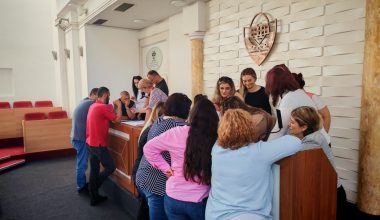
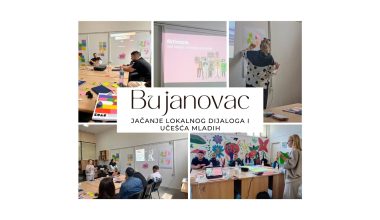
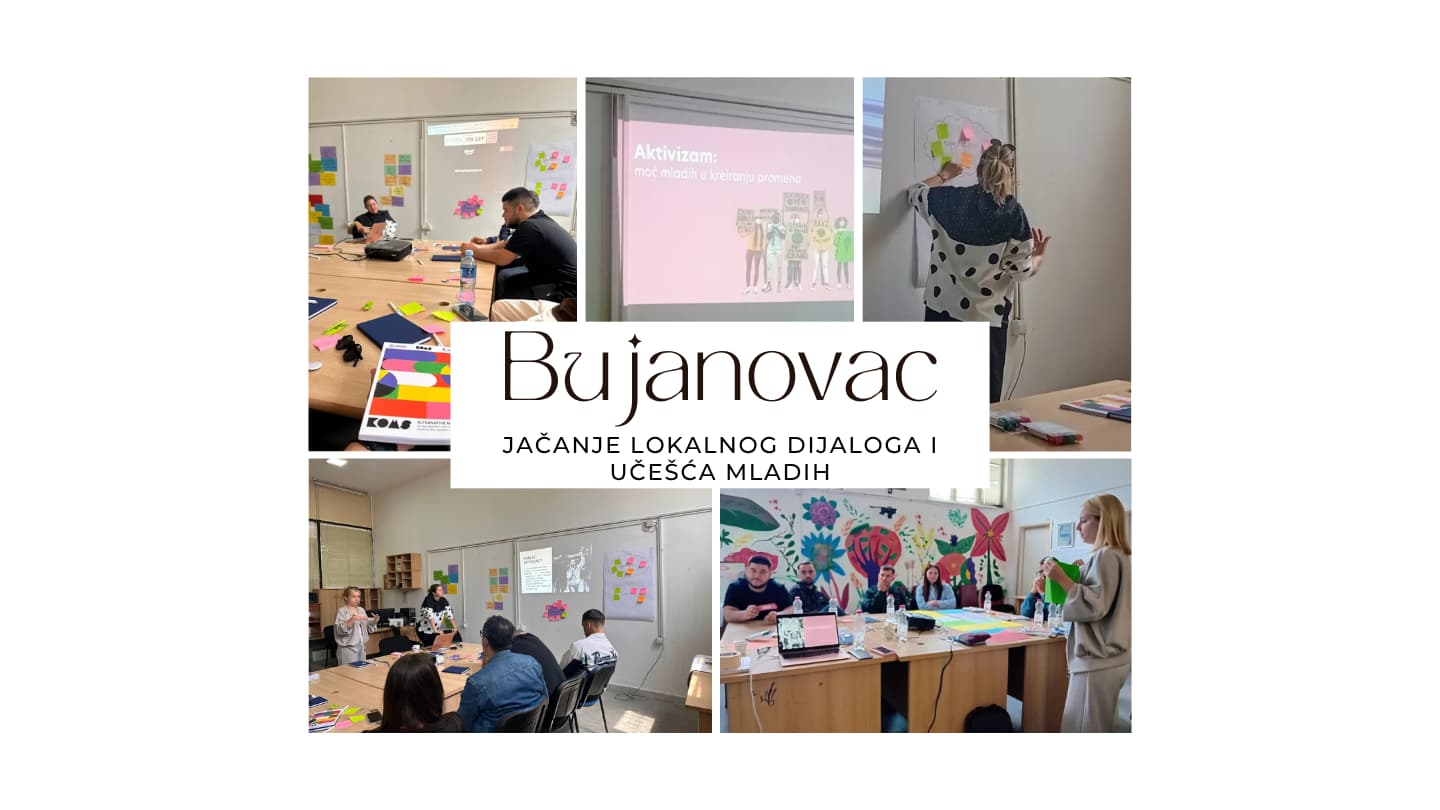
Training on local dialogue mechanisms was held on May 31 and June 1 in Bujanovac, and the two-day training was led by Gordana Adamov and Milica Borjanić from the Umbrella Organization of the Youth of Serbia (KOMS). The training, which is part of the Program for Strengthening the Capacity of Civil Society Organizations from Bujanovac and Preševo, brought together participants from various organizations, as well as activists from the Bujanovac Youth Office.
On the first day, the focus was on familiarizing yourself with the work of KOMS and the opportunities that this organization provides to youth organizations and organizations that work with young people. Topics included the basics of youth activism, mechanisms of local dialogue, identification of relevant actors and effective ways to initiate issues and dialogue in the community.
On the second day, the participants worked together on mapping the most important problems and challenges for young people and agreed that it was the revision and improvement of the Local Action Plan for young people in Bujanovac. During the workshop, special emphasis was placed on concrete steps to encourage and maintain the active participation of young people in local decision-making.
The training is part of a wider Program for strengthening the capacity of civil society organizations in Bujanovac and Preševo and represents a significant contribution to empowering young people and encouraging their participation in local politics.
This training was implemented as part of the initiative “Empowerment of Albanian youth and improvement of integration into Serbian society” which is supported by the Government of the United Kingdom through the Conflict, Stability and Security Fund (CSSF).
This site is registered on wpml.org as a development site. Switch to a production site key to remove this banner.