

Potrebno ti je više informacija?

Author: Tijana Ilić

  • The president’s call to lynch Veran Matić is an act of political desperation and a brutal message against the rule of law

    The president’s call to lynch Veran Matić is an act of political desperation and a brutal message against the rule of law

    July 23, 2025

    Civil society warns of increasingly dangerous smear campaigns against media workers, the consequences of which can seriously threaten their safety. These attacks come from the highest public positions in Serbia. President Vučić’s statement, which demands that Veran Matić apologize to the people who were accused of murdering journalist Slavko Ćuruvija and “take them a bottle of wine”, represents an unequivocal and dangerous political message: that targeting and calling for revenge against those who fight for truth and justice is once again allowed in Serbia.

    Veran Matić dedicated his life to freedom of speech, protection of journalists, building a culture of solidarity and charity in our country. As part of his charitable work, Veran launched the “Battle for Babies” initiative, which enabled maternity hospitals across Serbia to receive more than 220 incubators and thereby save the lives of thousands of babies. Through the establishment of the Serbian Philanthropic Forum and management of the B92 Fund, he mobilized the public, companies and institutions to engage in numerous humanitarian actions in the areas of health, education and media freedom. He particularly distinguished himself in the collection and distribution of aid during emergency situations such as the floods of 2014 and the COVID-19 pandemic, showing that media influence combined with social responsibility has a direct positive effect on raising the level of social solidarity and finding systemic solutions to problems that directly affect the lives of citizens.

    In addition, Veran Matić has consistently and courageously protected the safety of journalists in Serbia for decades – from the establishment of the Commission for Investigating the Murders of Journalists, through the SOS telephone to help journalists, which he personally answered, to the constant support of local media throughout Serbia, in the most difficult conditions of pressure and threats. While Matić was with his colleagues, the state was symbolically and institutionally absent. The most painful example of this remains the fact that the case of the murder of Slavko Ćuruvija, after all the years and trials, did not receive its epilogue and justice.

    By calling for revenge against a man dedicated to truth and the public good, the president shows that he uses his position to attack defenders of freedom of speech, while at the same time absolving bullies and providing protection to those who brutally attack citizens with fists, baseballs and cars. With this act, the president continues to stand openly on the side of violence and impunity, clearly showing that crime and violence are not incidents, but state policy.

    Therefore, we, the undersigned civil society organizations, call on the competent institutions to act professionally and conscientiously, protect the personal safety of Veran Matić and reject the political practice of impunity for violence, and citizens to be persistent and united in the fight for responsibility.

    In a responsible society, the president of the state, when he gives up and loses power, does not call for lynching.

    In a responsible society, people like Veran Matić are protected and rewarded – not targeted.

    Civil society organizations – signatories:

    • Catalyst Balkans
    • Građanske inicijative
    • Youth Initiative for Human Rights
    • CRTA
    • Belgrade Center for Human Rights
    • Independent Association of Journalists of Serbia
    • Trag Foundation
    • Partneri Srbija
    • Our House Association
    • Association of Citizens of Novi Sad Bicycle Initiative
    • Slavko Ćuruvija Foundation
    • “Living Upright” Center
    • Romani Asvin
    • Green oasis Kučevo
    • Kučevo Initiative
    • “Teach Me” Association
    • Pro.Tok21
    • “Our world, our rules” youth association
    • Center for girls
    • Association of independent electronic media ANEM
    • Fond B92
    • A 11 – Initiative for economic and social rights
    • New optimism
    • Candles BASE
    • Serbian Philanthropic Forum
    • Prijepolje Women’s Forum Association
    • KROKODIL Association
    • Proaktiv
    • Okular
    • Association ZOO Planet Niš
    • Local StPa Foundation
    • Tatamata Association
    • Cirkusfera Association
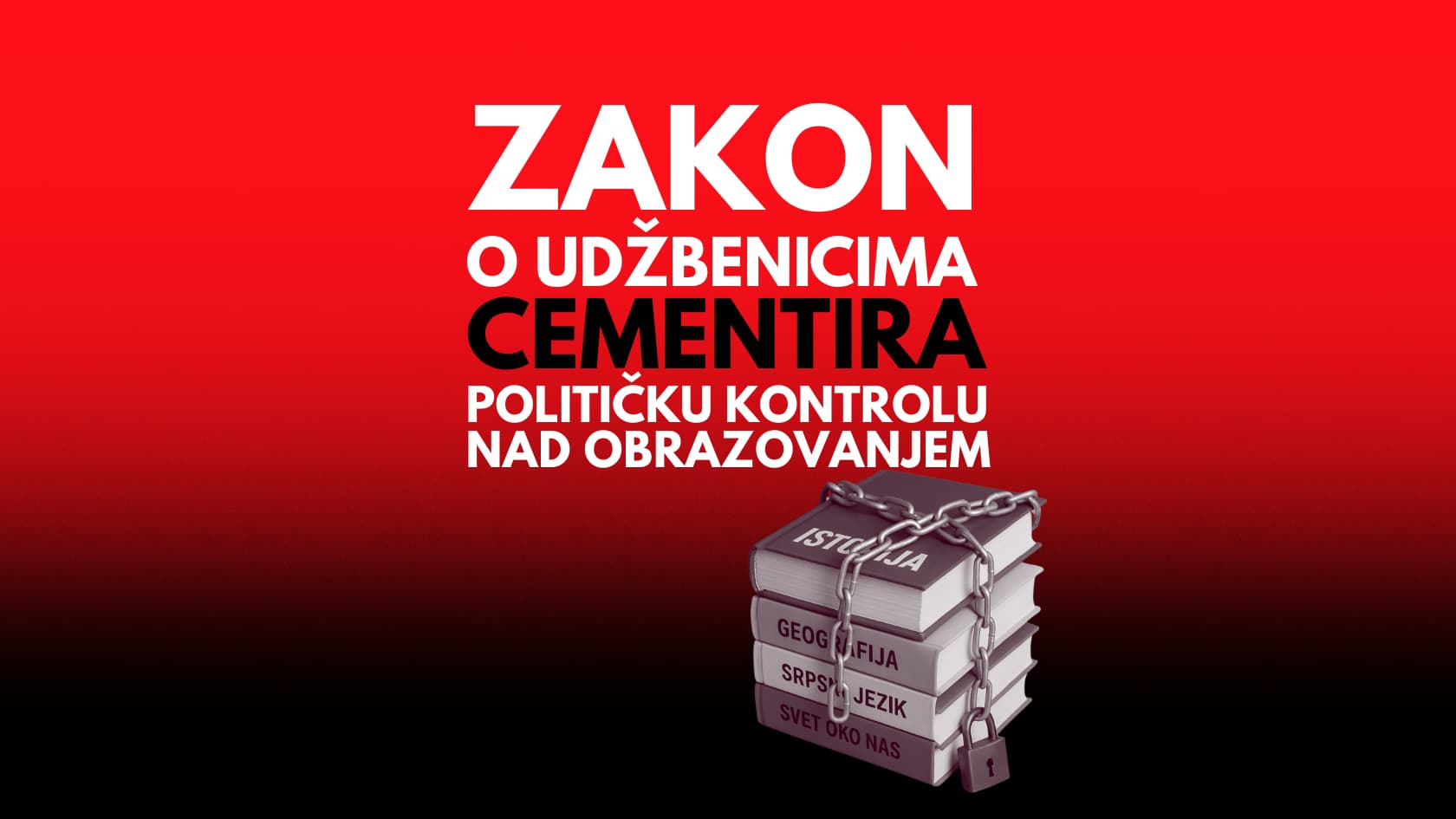
  • The textbook law cements political control over education

    The textbook law cements political control over education

    Published: July 22, 2025.

    Civic initiatives warn the public about the Bill on Amendments to the Law on Textbooks, which will cement political control over education in Serbia, and call on the Government of Serbia to withdraw this regulation from the parliamentary procedure.

    By introducing “textbooks of national importance”, the new law establishes a state monopoly over educational content and enables the ideological shaping of teaching content, especially in subjects such as history, Serbian language and literature, and geography. The new textbooks will not be scientifically and pedagogically independent, which can be seen from the complete absence of any mechanisms of professional quality control and expert reviews. Male and female students in schools will probably be exposed to the daily populist demagoguery that the public is exposed to in the media space under the control of the ruling party.

    The law additionally foresees the complete monopolization of publishing because the public publisher, the Institute for Textbooks, is given the exclusive right to publish textbooks in as many as eight subjects of primary school education “of national importance”. It is not clearly defined who, how and according to what criteria selects the authors of national textbooks and guarantees that the contents are accurate, scientifically based and in accordance with modern educational standards, nor is it clear what is meant by “national importance”. The proposed law thus contradicts the basic European values ​​of pluralism, transparency and competition in the textbook market, and represents a step backwards in fulfilling Serbia’s obligations as a candidate country for EU membership.

    Additionally, the Bill was adopted with significant omissions in the domain of the principles of transparency and participation. On the website of the Ministry, as well as on the eConsultation portal, it was not possible to find the Report on the conducted public hearing, although according to Article 41 of the Rules of Procedure of the Government, the report had to be published within 15 days from the end of the public hearing, which was June 19, 2025. The Report on the Public Debate, which is part of the Draft Law, does not state which public comments were accepted and whether they were partially or fully accepted, but only states that they were accepted. In several statements of the relevant associations, it was stated that they never received a response to the submitted comments on the Bill. The public was prevented from seeing the final version of the Draft Law before it was put on the agenda of the Government for adoption.

    If this Bill is adopted by the National Assembly, the government will institutionalize political control over education, especially in the context of increasingly frequent attempts at revisionism and nationalist reinterpretation of history. Therefore, we call on the Government of Serbia to withdraw the Bill and thereby stop the instrumentalization of education for personal and party purposes and the violation of international obligations in this area.

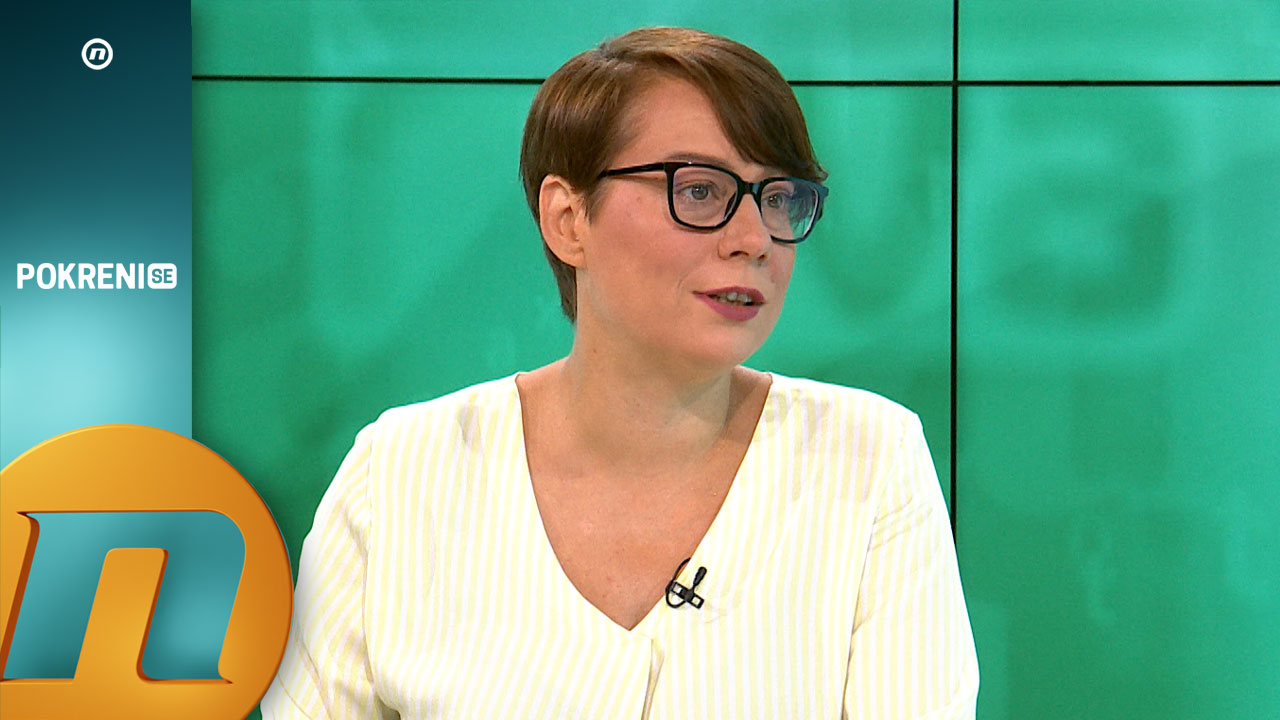
  • Stojanović on TV Nova: The government avoids elections because of the support students have

    Stojanović on TV Nova: The government avoids elections because of the support students have

    Source: Nova S

    The Executive Director of Civic Initiatives, Maja Stojanović, analyzed current topics from the daily press, including the question of why President Vučić does not call elections, even though he himself demanded them 14 years ago. Stojanović believes that it is clear that the government is avoiding elections because of the current political climate and the support students have.

    She points out that citizens are aware of corruption and the lack of rule of law, which led to mass protests throughout Serbia. A key difference in the current protests is the active participation of young people and students, who brought creativity and energy to the protests. Stojanović emphasizes the importance of coordination between various social actors and civil society, such as Crta and Transparency, in order to improve electoral conditions.

    He also talks about the process of electing REM Council members, stressing that it is important that this process be carried out in accordance with the law and the values ​​of the European Union. The European Union is interested in the rule of law in Serbia, especially because of the current situation on the streets and the demands of citizens. She highlighted problems in the areas of child protection and the film industry, where the proponents are often organizations that are not legitimate. These are mostly organizations formed by the Ministry of Demography or the Cabinet of Minister Matura, but a large part of them do not deal exclusively with the rights and protection of children, but people with disabilities, said Stojanović.

    Watch the entire guest appearance in the video attachment:

  • Support for KRIK journalist Sofia Bogosavljev and an urgent appeal to the state to prevent abuse of lawsuits against journalists

    Support for KRIK journalist Sofia Bogosavljev and an urgent appeal to the state to prevent abuse of lawsuits against journalists

    The National Anti-SLAPP Working Group expresses serious concern regarding the criminal lawsuit that the “Starting” company, one of the main subcontractors of the railway station building in Novi Sad, from which the canopy fell and killed 16 people, filed against KRIK journalist Sofija Bogosavljev.

    KRIK, in the research text, which led to the lawsuit, revealed that a number of misdemeanor proceedings against the “Starting” company were previously conducted due to injuries to workers at unsecured construction sites, but that these proceedings were generally time-barred due to the slowness of the courts.

    The company sued the journalist for the criminal offense of harming business reputation and creditworthiness (Article 239 of the Criminal Code), which provides for a fine or prison sentence of up to one year, or up to three years if serious consequences occur. This offense is prosecuted by private prosecution, and is most often used by companies and powerful individuals in an attempt to intimidate or discredit those who deal with issues of public importance. In addition to the journalist, “Starting” sued six other people, including a professor, a lawyer, engineers, an architect and an opposition politician, who publicly criticized the company’s work.

    The case of the company “Starting” is another example of a lawsuit with the characteristics of SLAPP (Strategic Lawsuits Against Public Participation) – a legal instrument used to intimidate, obstruct and financially exhaust journalists. Such lawsuits do not serve to protect rights, but to stifle freedom of expression and discourage investigative journalism.

    Currently, there are as many as 17 proceedings against the KRIK editorial office and its journalists, initiated by high-ranking officials or companies and individuals close to the government. And all because they published research texts in the interest of the public.

    The tendency for journalists to be sued on the basis of criminal provisions – and that because of the alleged “damage to the reputation” of companies that do business with the state represents a particularly dangerous trend. It is a matter of legal abuse, the aim of which is to criminalize investigative journalists, to try them as perpetrators of criminal acts, and thus silence them and discourage them from further work.

    SLAPP lawsuits, regardless of whether they are civil or criminal, are a clear threat to free expression and the democratic order. Their goal is not to protect the law, but to abuse the court system as a means of pressuring the media.

    Since the company “Starting” is engaged in projects financed by the citizens of Serbia, it is important that the public knows whether the company respects the laws, but also how the institutions treat those who violate them.

    Lawsuits with SLAPP features are already recognized as a serious threat to democracy – the Council of Europe and the European Parliament have called on member states to introduce mechanisms to prevent them. In Serbia, unfortunately, this term is still not officially accepted, but the practice of multiple and identical lawsuits clearly shows that it is an abuse of the judiciary in order to silence all critical voices.

    The National Anti-SLAPP Task Force demands that the state urgently recognize the problem of SLAPP lawsuits and, in accordance with the recommendations of the Council of Europe and the European Union, introduce the necessary measures to prevent them.

    Media freedom and the public’s right to know must be protected, and journalists must not be punished for their professional work in the interest of citizens.

    In Belgrade,

    17.07.2025.

    The National Anti-SLAPP Task Force, consisting of:

    Građanske inicijative

    Partneri Srbija

    Independent Association of Journalists of Serbia

    Slavko Ćuruvija Foundation

    KRIK

    Independent Association of Journalists of Vojvodina

    Committee of Lawyers for Human Rights – YUCOM

    KROKODIL Association

    Belgrade Center for Human Rights

    BIRN Serbia

  • Three freedoms under scrutiny: June 27 – July 10, 2025

    Belgrade, July 11, 2025

    Violation of basic human rights in Serbia
    June 27 – July 10, 2025

    While the authorities persistently characterize the blockades and protests as “a problem that can be solved quickly”, citizens and students continue to suffer police brutality and pressure. In several cities of Serbia, including Belgrade, Novi Sad, Niš and Užice, there have been recorded violent breaking of blockades, mass arrests and identification of citizens who peacefully express their dissatisfaction. The police used excessive force, and reports and punishments come even to those who did not commit violence.

    Students have been targeted for 8 months, and among those arrested are well-known activists. The pressure does not stop there either, as attacks and threats against journalists are becoming more frequent, and cases of SLAPP lawsuits against critics of the government confirm the trend of stifling freedom of expression.

    In this context, arrests and police interventions are part of a broader government strategy to crush civil movements and prevent the spread of protests, while the rights to peaceful assembly and freedom of speech are systematically restricted.

    More details on the arrests, raids and legal pressure, as well as public reactions, can be found in the full report below.

This site is registered on wpml.org as a development site. Switch to a production site key to remove this banner.