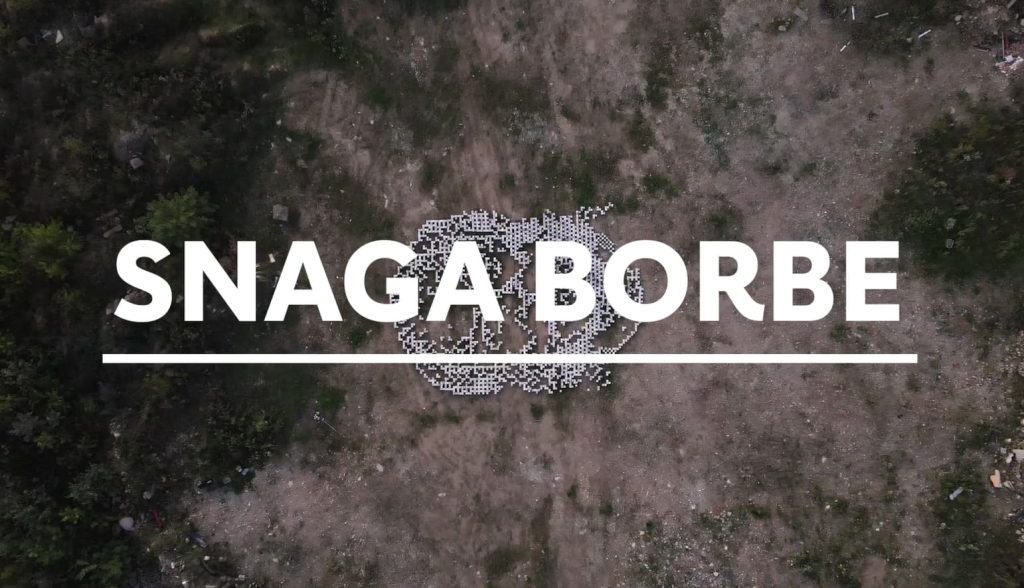
There are so many environmental problems in Serbia that it takes enormous strength to persevere in these struggles.
The people we present to you obviously have it, even though they hit the wall countless times, were arrested, intimidated… They all make up Polekol, an organization whose vision is a society where nature is respected as an equal, and not a resource to be exploited. A society of people who cooperate, not those who compete. A society in which the calculation of profit is overcome, and the emphasis is placed on the well-being of all.
Polekol is known for gathering, but also for launching initiatives. One of them is the Right to Water.
We bring their story to you in the first episode of the “Strength of Struggle” show – a series we launched to highlight the inspiring stories of people and organizations working tirelessly to create a fairer and more sustainable society.
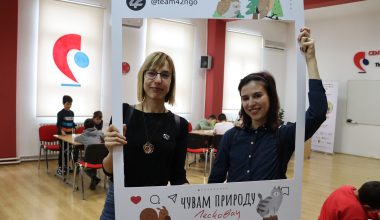
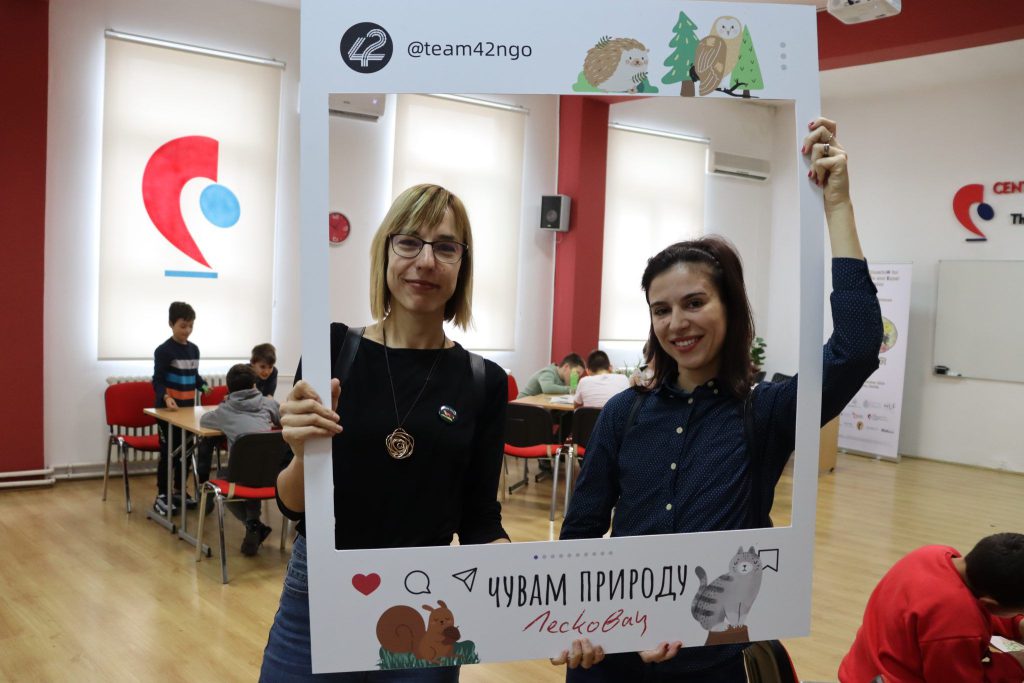
Internship in a local civil society organization is an excellent chance to gain first work experience, believes Aleksandra Cvetković, who started her three-month internship in the organization Team 42 from Leskovac.
As she says, since she is very shy by nature, her biggest fear was how she would be accepted in the organization, but the fear was removed already in the first days.
“In this organization, I am developing many skills, especially communication in general, both live and via e-mail, phone, etc. I was completely outside the world that includes organized events, writing, and now I am slowly entering that world and I feel good in it.”
Already in the first month of her internship, Aleksandra actively participated in the organization of the large Eco Bazaar in Leskovac, through which more than 400 people passed.
“It was much more interesting, more interesting than I thought, the organization process itself, as well as the event itself. I didn’t know what it all entailed, how many details – invitations to events, networks, procurement of materials and the like. I was proud of myself, it was a big step out of my comfort zone. When everything was over and it was more than good, I was really proud of myself.”
As he says, there is a great advantage of practice in the organization of the civil sector, and he recommends it to every young person.
“Looking at myself a month ago and now, I see great progress. I’ve learned a lot and will learn a lot more, and most importantly, everyone understands what I don’t know and everyone is open to helping me learn, because for me this is first and foremost a learning process,” says Alexandra.
Well done to Alexandra and Team 42 – an inspiration to all who want to grow and learn through practice!
This program is part of the project “For a stronger civil society” which is supported by the United States Agency for International Development (USAID) and the Swiss Agency for Development and Cooperation. The project is implemented by Partners Global, DT Institute, the European Center for Non-Profit Law and two organizations from Serbia – Partners Serbia and Civic Initiatives.
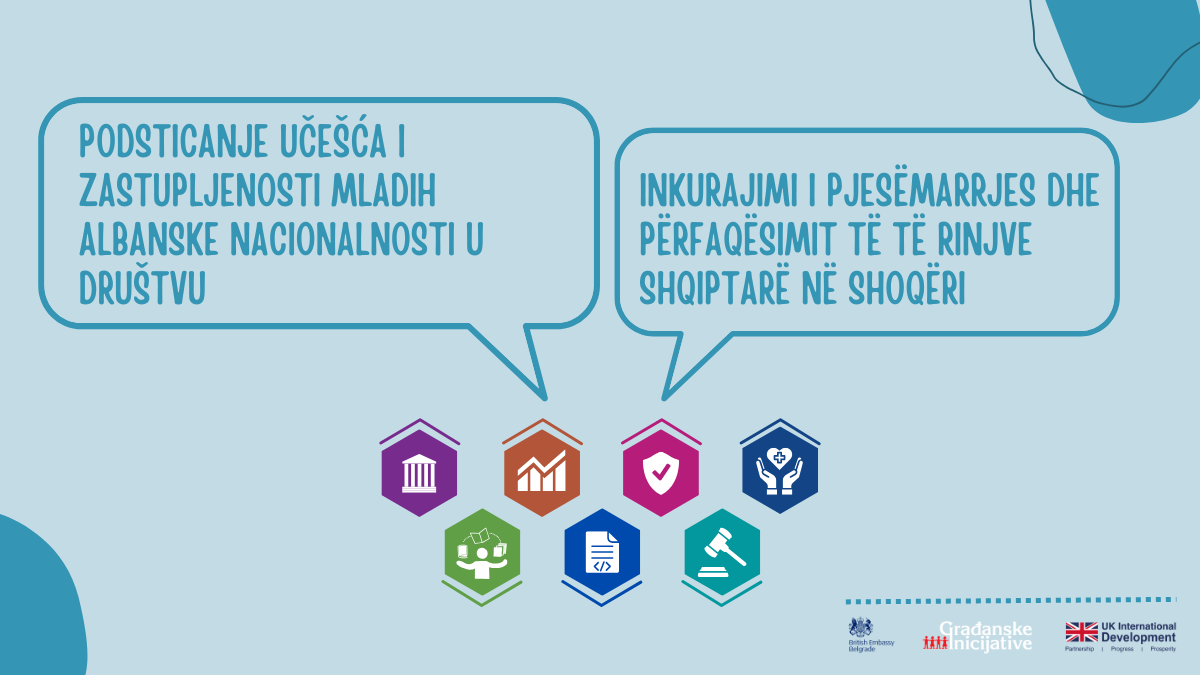
Civic initiatives within the framework of the call Encouraging the participation and representation of young Albanians in society were supported by the following organizations and project ideas:
The future – “Language and writing are integral parts of Albanian identity” LIVRIT in partnership with Forum ZFD – “School of activism and culture: Empowering young people for change” Cultural association Dituria – “Media education for young people in the Presevo Valley” Demokratik Institut Mosaic – “Strengthening the participation of Albanian youth and awareness of rights in Serbia” Dolina Center for Democracy and Education in partnership with the Committee for Human Rights – “Priorities for the implementation of the ‘7-point plan’ for young Albanian national minorities” Group 484 in partnership with Bujanovačke – “(Strengthening), youth voice with Bujanovačke”
The aim of the call is to support civil society organizations in encouraging the participation and representation of young Albanians in social processes, with a focus on the key objectives of the Seven-Point Plan from the perspective of young people. Our goal is to create an environment where Albanian youth actively participate in social events and where their voice is heard and respected.
How? By empowering local organizations to use their connection with the community and understanding of local challenges, contributing to better implementation of public policies. This project is supported by the United Kingdom Government through the Conflict, Stability and Security Fund (CSSF) within the initiative “Empowering Albanian youth and improving integration into Serbian society”.
Young people, your voice matters!
Encouraging the participation and representation of Albanian youth in society
Civic initiatives, within the framework of the call for Encouraging the participation and representation of young people in society, supported the following organizations and project ideas:
The future – „Language and writing are part of the uniqueness of Albanian identity“ LIVRIT in partnership with Forum ZFD – „School of Activism and Culture: Empowering Youth for Change“ Cultural Association Dituria – „Media Education for Youth in the Preševo Valley“ Mosaic Democratic Institute – „Encouraging Albanian Youth Participation and Rights Awareness in Serbia“ Center for Democracy and Education Lugina in partnership with the Human Rights Council – „Priorities for the Implementation of the ‘7-Point Plan’ for the Youth of the Albanian Minority“ Grupa 484 in partnership with Bujanovačke – „(For)strengthen, the Voice of Youth in Bujanovac“
The aim of the Call is to support civil society organizations in encouraging the participation and representation of Albanian youth in social processes, with a focus on the key objectives of the 7-Point Plan, from a youth perspective. Our aim is to create an environment where Albanian youth are an active part of social events and where their voice is heard and respected.
And? By empowering local organizations to leverage their community connections and knowledge of local challenges, contributing to a more efficient implementation of public policies.
This project is supported by the Government of the United Kingdom of Great Britain and Northern Ireland through the Conflict, Stability and Security Fund (CSSF), within the framework of the initiative “Empowering Albanian Youth and Encouraging Integration into Society”.
As legally authorized proposers, 23 civil society organizations dealing with freedom of expression proposed Rodoljub Šabić and Prof. Dr. Dubravka Valić Nedeljković as members of the Council of the Regulatory Authority for Electronic Media (REM).
The candidacies were submitted to the Committee on Culture and Information of the National Assembly of the Republic of Serbia in accordance with the Public Call for the Election of Members of the REM Council.
Rodoljub Šabić is a lawyer and former Commissioner for Information of Public Importance and Personal Data Protection, known for building the foundations of the Commissioner’s institution and establishing high standards in the protection of the right to access information. As Commissioner, he enabled the media to raise key issues of public importance, especially in the fight against corruption and crime. He has received a number of awards, including the OSCE’s “Person of the Year” and NALED’s “Reformer of the Year”. His work has also been recognized through the European Union and the Anti-Corruption Council’s Award for Contribution to the Fight against Corruption.
Prof. Dr. Dubravka Valić Nedeljković, a renowned expert in media literacy, was the manager of projects such as “Media Observatory” and “Minorities and Media in the Western Balkans”, which significantly contributed to the understanding of media integrity and the quality of content about minority communities. As the founder and president of the Novi Sad School of Journalism, she worked on improving media ethics and regulations. She is the recipient of numerous journalism awards and actively participates in professional and scientific circles, both in the country and abroad.
Both candidates are dedicated to strengthening media freedoms, ethical standards and public interest, and with their professional integrity and expertise, they can significantly contribute to the work of the REM Council.
We invite citizens to follow the process of selecting members. The openness of the elections ensures greater integrity of the process and reduces the possibility of political pressure and manipulation outside the framework of legal provisions. The first session of the Committee on Culture and Information of the National Assembly, at which the list of candidates and proposers will be determined, will be held on Friday, December 20, at 12:00. The broadcast of the session can be followed on the website of the National Assembly.
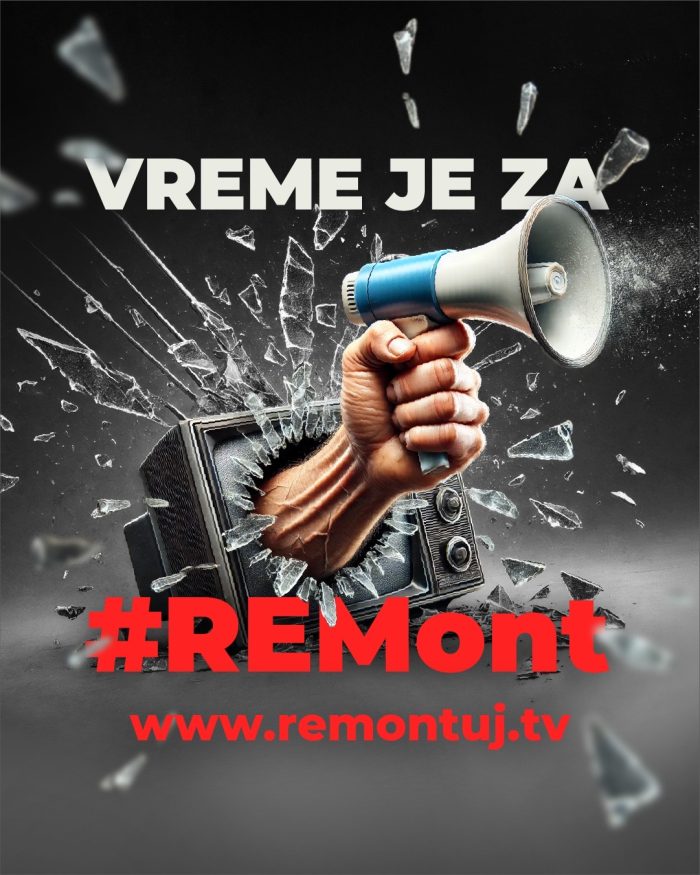
Follow all information about the selection process on the website: www.REMontuj.tv
Signatories of the statement:
Slavko Ćuruvija Foundation
SHARE Foundation
Res Audience
Join Paraćin
Sandstone Krusevac
Partners Serbia
Eyepiece Ćićevac
Human Rights Committee Niš
Novi Sad School of Journalism
Media and Reform Center Niš
Labyrinth
Human Rights House
Committee of Lawyers for Human Rights – YUCOM
Klara and Rosa Subotica
Građanske inicijative
CK13 Novi Sad
Belgrade Center for Human Rights
Belgrade Open School
Balkan Research Network – BIRN Serbia
Autonomous Women’s Center
Association of Independent Electronic Media – ANEM
Violation of basic human rights in Serbia November 22 – December 12, 2024
CIVICUS, the international confederation of non-governmental organizations, has published a regular annual report on the state of basic freedoms around the world. The report stated that the right to protest is under threat around the world and that the arrest of protesters is by far the most common tactic that restricts the rights to freedom of expression, assembly and association. In the CIVICUS report, Serbia was marked as a “country of interest” due to the pressures to which citizens and the civil sector are exposed.
That the right to protest is threatened in Serbia is visible every day at the blockades due to the fall of the canopy in Novi Sad when 15 people died. Organized groups of people appear at the blockades and provoke and verbally and physically attack the gathered citizens. The attacks became more and more brutal, and the provocateurs did not even hesitate to drive their cars through the crowd. Information is also reaching the public that the provocateurs are most often from the ranks of the Serbian Progressive Party. A video was also published in which a SNS official gives orders on what the provocateurs should do. Officials of municipal councils also attacked activists who oppose the demolition of the Old Sava Bridge, and the mayor of Belgrade does not consider the organized arrival of members of the ruling party to protest rallies, with the intention of harassing citizens, activists and journalists, objectionable.
The movement of socialists Aleksandar Vulin submitted a bill on foreign agents to the Serbian Parliament. The government tries to stifle any form of criticism, and it no longer even hides its violent methods. Freedom of thought and expression is stifled in institutions, public spaces, and on social networks. The future of basic human rights in Serbia is questionable under a regime that uses the fist as a means of rule.
For more information about these and other cases recorded in the previous period, see the full report below:



 The future – “Language and writing are integral parts of Albanian identity”
 The aim of the call is to support civil society organizations in encouraging the participation and representation of young Albanians in social processes, with a focus on the key objectives of the Seven-Point Plan from the perspective of young people. Our goal is to create an environment where Albanian youth actively participate in social events and where their voice is heard and respected.
  How? By empowering local organizations to use their connection with the community and understanding of local challenges, contributing to better implementation of public policies.
 Young people, your voice matters!