


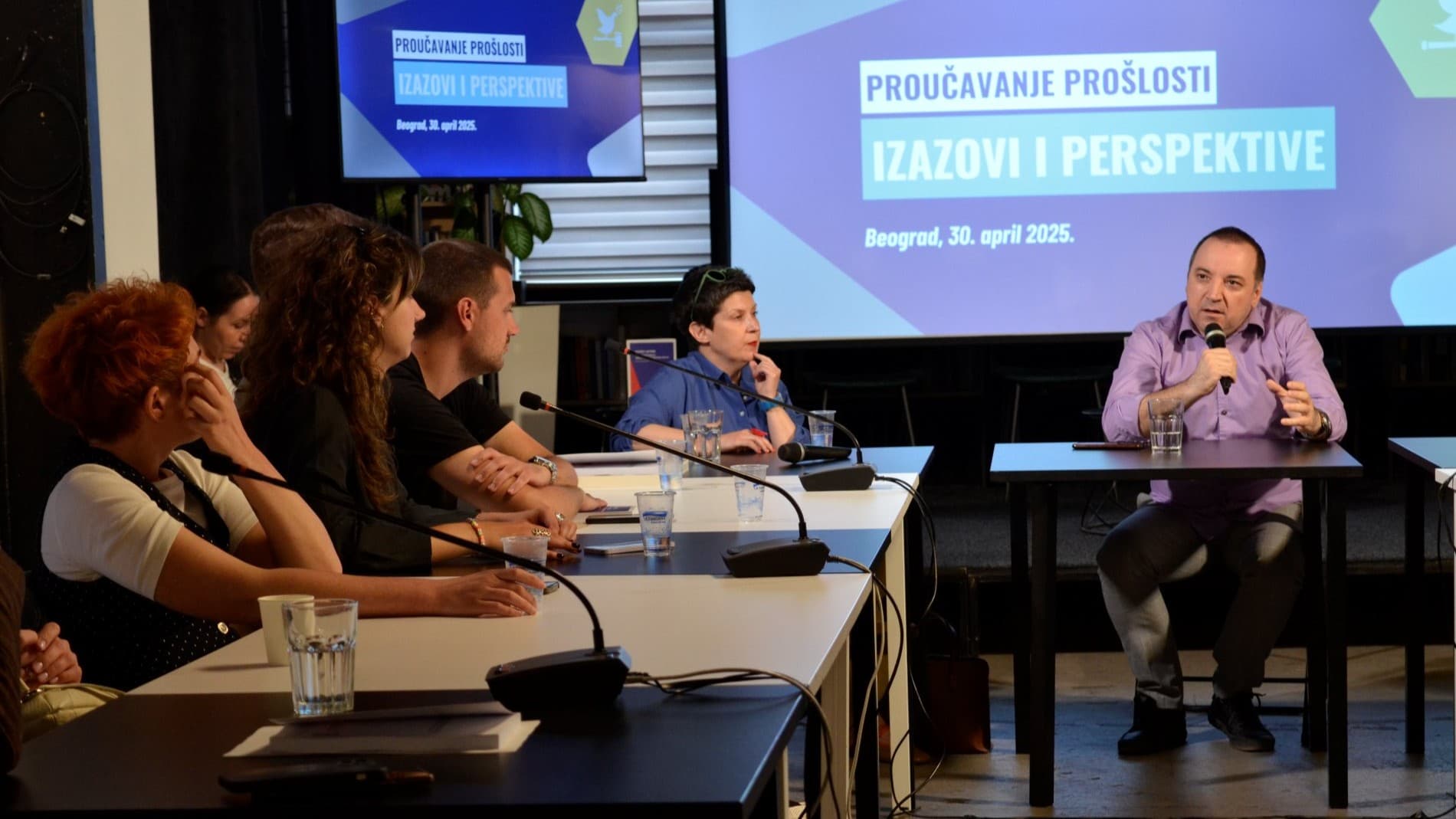
Belgrade, April 30, 2025.
Civic initiatives held on Wednesday, April 30, 2025, in the “Miljenko Dereta” area, an event called “Study of the past: Challenges and perspectives”, where two collections of works by young researchers were presented to the public, “Sources and actors – new studies of the Yugoslav wars of the 1990s” and “Reviews of the wars of the 1990s”, which offer a new perspective on the conflicts in the territory of the former Yugoslavia.
The presentation of the proceedings as well as their publication are part of the project “Confronting the past – new generations, new perspectives” which is carried out within the regional initiative “Support of the European Union to building trust in the Western Balkans”.
The event brought together historians, researchers and representatives of civil society to discuss the need for a thorough and responsible study of the wars of the 1990s, thirty years after their outbreak. The presented anthologies bring together authors of the younger generation, who, through various sources – the archives of the International Criminal Tribunal for the former Yugoslavia, the media, memoirs and oral testimonies – shed light on topics that are still often avoided. Although the avoidance of this topic can be explained, according to the authors, it can no longer be justified – “enough time has passed to create the conditions for an honest, thorough and multidisciplinary approach”. In the works included in the collections, the focus is not only on political and military elites, but also on local communities, media, international organizations and anti-war movements.
At the opening of the event, Gojko Pantović, head of the “EU Support to Confidence Building in the Western Balkans” project in front of the United Nations Development Program (UNDP) office in Serbia, stated that this is one of 12 civil society initiatives in Serbia, to which the European Union provided grants in the total amount of 578,000 euros in 2024 in order to promote dialogue and peace in the region, with a special focus on initiatives dealing with education about recent history.
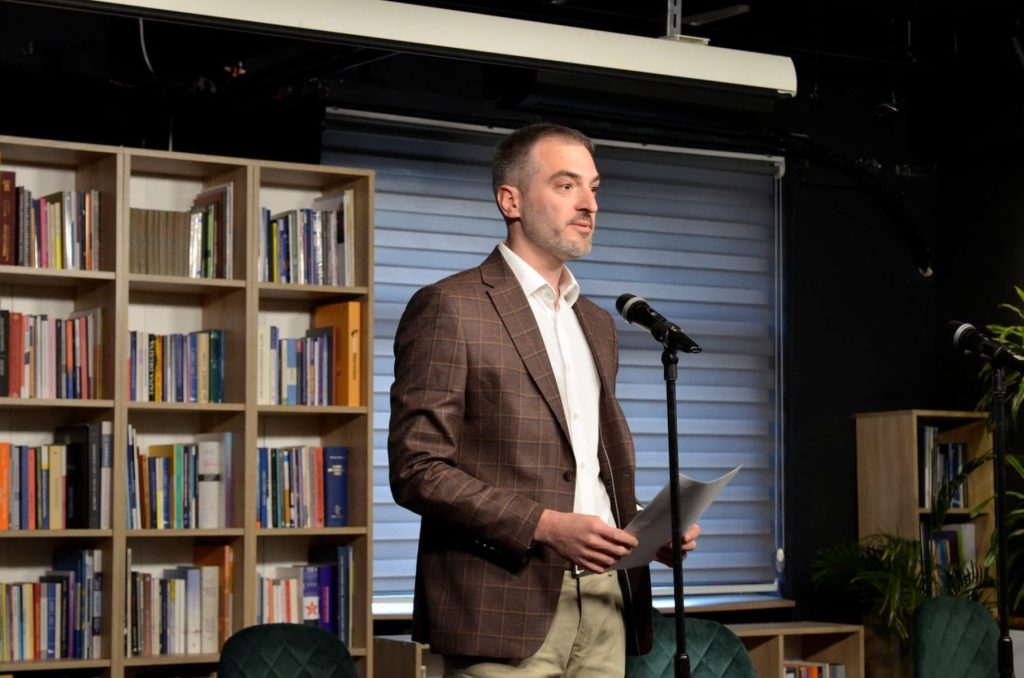
“We recognized the work with young researchers, scientists and new generations in general as particularly important for understanding conflicts from the recent past in the light of proven and legally established facts. This is also a key prerequisite for overcoming the legacy of the past and an open way for the cooperation of the entire region,” said Pantović.
He emphasized that UNDP, apart from these 12 initiatives, has supported similar civil society initiatives throughout the region, as well as the activities of associations of victims and their families.
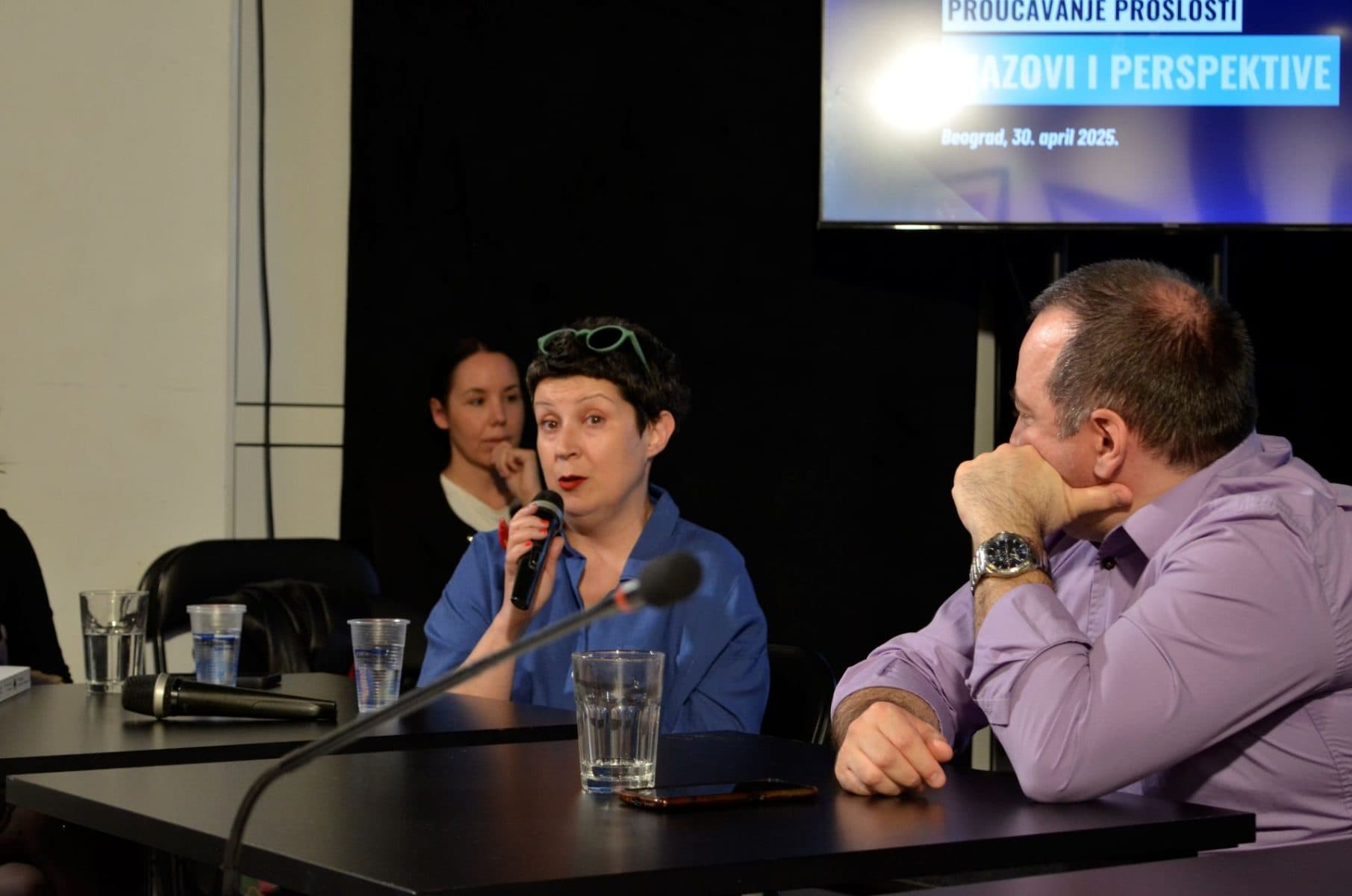
The editor of the collection “Sources and actors – new studies of the Yugoslav wars of the 1990s” Dragan Popović pointed out that the Civic Initiatives in the previous year and this year enabled a large number of young scientists to publish their works on the wars of the 1990s, primarily through two scientific collections.
“Thus, a shift was made, not only in scientific production, but also in the topics that society deals with in Serbia. Young scientists, primarily historians, generally do not deal with the wars of the 1990s, including the crimes that followed them. There are many reasons for this, and the social atmosphere is not the least of them. That is why these collections and the entire process of working with young scientists are important and as an incentive to others to take courage and decide to devote themselves to one of the numerous topics related to this traumatic decade. “Serbia and the whole of former Yugoslavia must take a good look at themselves in order to leave a foundation for building new relations for generations to come. Science is irreplaceable here,” said Popović.
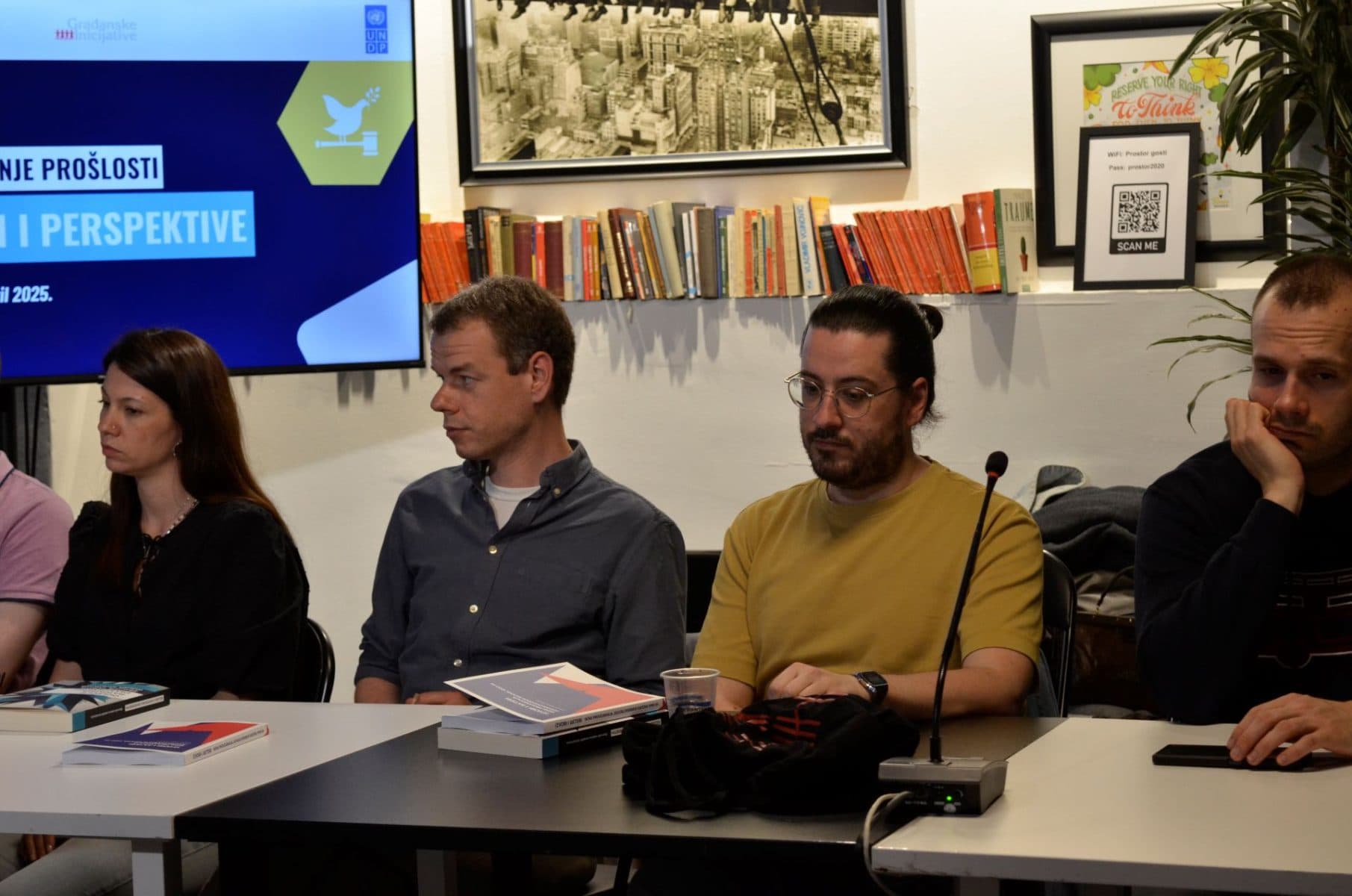
The collection “Glimpses of the Wars of the Nineties”, which was presented to the general public on this occasion, was created as a result of a multi-week seminar organized at the end of 2020 and during 2021 as part of the Regional War Crimes Project (RWC), which was implemented by UNDP with the financial support of the United Kingdom government, in the period from December 2018 to March 2022. On that program, students of history, sociology and history of art worked with judgments, archives, testimonies and analyzed the cultural aspects of the wars, under the guidance of professors from the Faculty of Philosophy in Belgrade, Dubravka Stojanović and Radina Vučetić.
Ksenija Nikić from Civic Initiatives pointed out that the topic of dealing with the past has become almost taboo in Serbia – “it is rarely talked about, and when it is talked about, the nationalist narrative mostly prevails.”
“Civil society has been putting efforts into this fight for years, but we are aware that without a strong support in the scientific community, those scopes remain limited. We believe that it is the academic community, especially historians, who can ask this question in a way that is grounded, professional and socially relevant,” Nikić said.
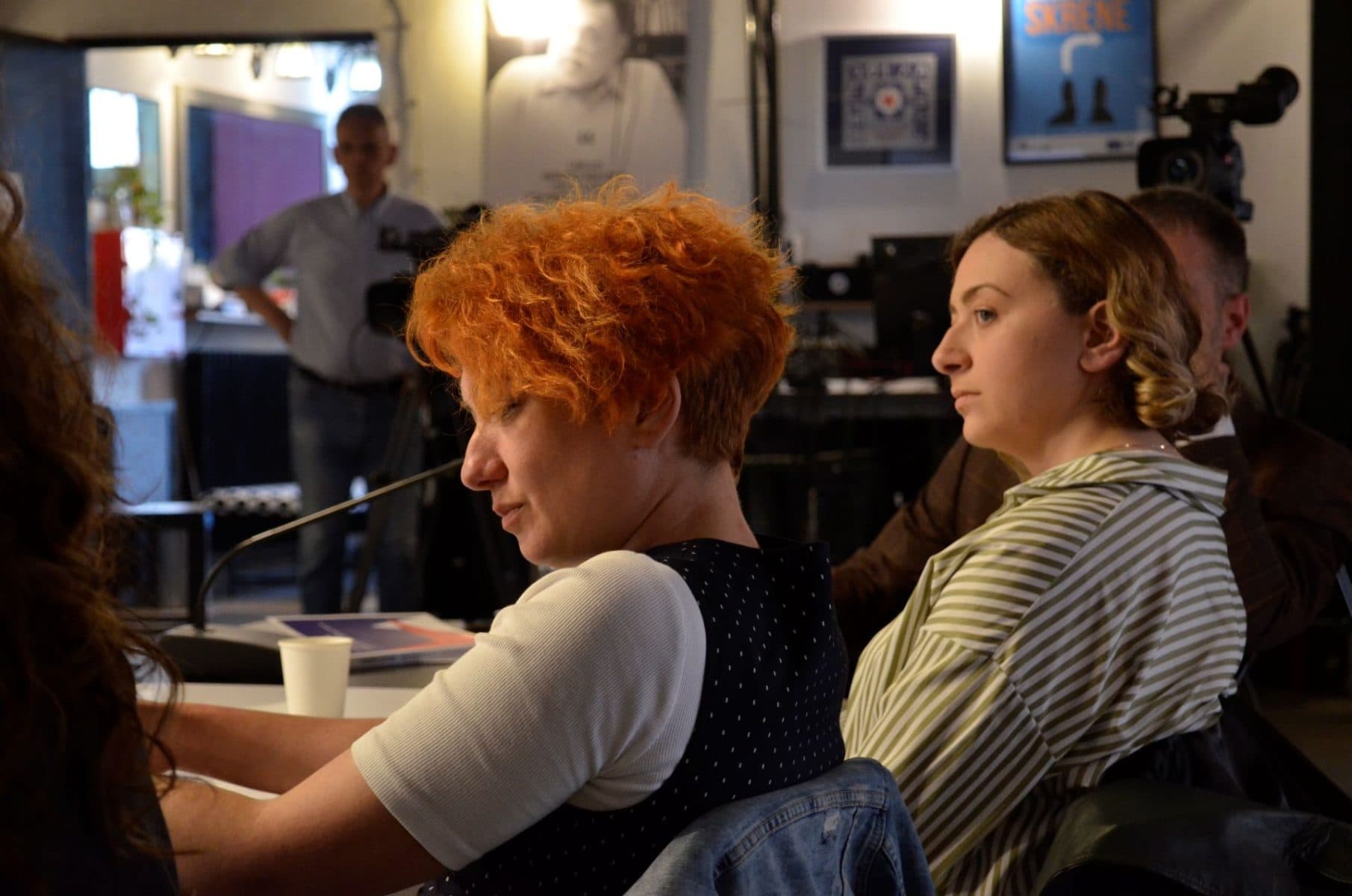
This event is organized as part of the project “Confronting the past – new generations, new perspectives” which Citizen Initiatives implements with the help of the project “Support of the European Union to building trust in the Western Balkans” funded by the EU and implemented by UNDP.