


Source: N1info.rs
The high-ranking official of the European Commission, Gert Jan Kopman, who is in charge of the Western Balkans Growth Plan, spoke today in Serbia with President Aleksandar Vučić, as well as representatives of the civil sector about the obligations that Serbia needs to fulfill in order to be able to continue with its European path, that is, the opening of Cluster 3, for which it is necessary, as the EU has repeatedly pointed out, for Belgrade to agree on a set of so-called Mrdić’s laws with the recommendations of the Venice Commission, the adoption of the remaining laws in accordance with the recommendations of the ODIHR on the improvement of the electoral process, as well as the formation of REM, which has not been constituted for 19 months.
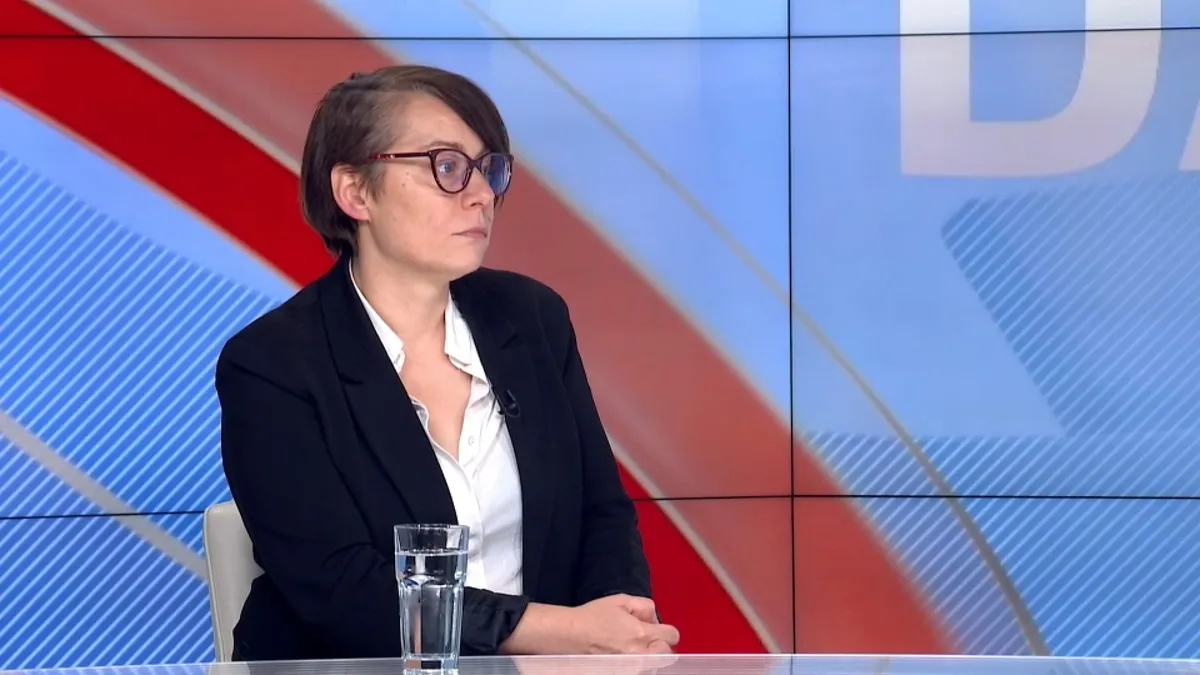
Maja Stojanović from Civic Initiatives, when asked where the last attempt to constitute the REM Council got stuck, points out that all nine of its members should be independent, but it has been established in the public that four are independent, four are close to the state and one is from the Council of National Minorities, however, that it all depends on the proposer.
“We have some proponents, such as the Association of Electronic Media, which are already under the control of the state, and candidates who are close to the authorities often come to us from those areas, but all nine candidates should be independent. We had that process, it lasted a year and a few days last year, and in that process nine candidates were elected. We got to the Assembly and then in the Assembly that last candidate was not elected precisely because the authorities concluded that they could only control four candidates out of all those candidates,” explains Stojanović.
He adds that the government repeated the process for the ninth candidate (from among national minorities) and for four independent candidates, who in the meantime said that they will not work in such a REM, “and now we have both processes stopped, the status quo, nothing happened, the law is still being broken because we do not have a REM”.
When asked if the ninth place belongs to the National Council of Hungarians, as claimed by the Union of Vojvodina Hungarians, Stojanović confirms that the place belongs to the national councils, but who will get that place depends on the procedure and who decides to run for a candidate.
“In the first process, which functioned as it should, we had the National Council of Hungarians, Bosniaks and Albanians, however, in the end, since the Hungarian candidate was outvoted, the authorities decided not to choose a candidate in that area, and that’s where the area stopped,” she says.
He adds that it is not a violation of the law that one candidate was not selected, but the way in which the process leading up to the selection of the candidate was conducted, he points out, was not in accordance with the law and “that is why the big question was raised as to why we do not have a ninth candidate”.
According to her, neither civil society, nor the university, nor all other proponents are ready to participate in yet another new process.
“We have to find a solution on how to apply the law in this process. Unfortunately, I think that we and the European Union have the same view on how the law is applied, but the government is trying to find some loopholes and so far we have not been able to find a common language on how to apply the law,” he points out.
The key political will
He believes that it is crucial whether the government has the political will to form an independent REM council.
“What scares me a little is that even after Tivat and after those specific requests that the state of Serbia received from the European Union, the president again declared that he will not allow him to lose his majority in REM, which means nothing, because REM is entirely independent, and there is, in fact, the question of whether this is the right moment and whether this is a moment where the government will change its political will in order to obtain the opening of Cluster 3, which is not only for the government, but for the citizens of Serbia,” points out Stojanović and adds that the EU says that if the law is not implemented, there will be no opening of Cluster 3.
He states that this train (of expansion) is very important.
“I think it is crucial, that now that train is going very fast without us and there is an opportunity for this government to choose REM, to sort out laws on the judiciary, to have some three or four steps that will show whether the state of Serbia, I believe that the state of Serbia wants to join the European Union, but whether the government that leads this country at the moment wants to take those steps or not,” Stojanović assesses.
And as to how she interprets Vučić’s statement that there is no country where the government leaves such an important body like REM to those who did not win the elections, she says that it is a professional body, and that it has nothing to do with who won or not.
“No one who took part in the elections is in that body in any country. It is true that this body of ours is extremely regulated so that it is extremely independent due to the political situation, and that is the law that our country passed. It is again due to pressure from the civil sector and the European Union that we have to have such a solution, because we are unable to have another solution that would ensure the independence of this body,” he says.
And when asked to comment on Vučić’s statement that he does not see how the matter with REM can be resolved and whether she sees a solution, she says that “if we combine those two parts of his sentences in which he says – ‘I don’t want an independent REM and I don’t see how this can be resolved’, it is very logical to me”.
“Then I don’t see how to solve it either, because there has to be the political will of the government, that is, let’s say concretely now – the Assembly and the ruling majority, which is the SNS majority, to simply reach a solution. If that political will changes, in the sense that the government understands that this state and the government itself need that independent REM, in order to control the media scene, grant permits and other things, then a window opens for possible solutions, which of course are in accordance with the law,” said Stojanović.
However, he points out, even if the REM Council is formed, “it cannot pass anything on its knees”.
“If we want it to work according to the law, there are procedures, there are warnings to the media, there is a deadline for the media to change their policy and everything else, so let’s be very clear, even at this moment if we get an independent REM, he cannot close the media overnight, regulate the price and everything else,” he points out.
He adds that there are other problems, such as emphasizing the mandate of the RTS and RTV management boards, which he considers a big deal.
“Those governing boards choose the editor and influence the editorial policy. It’s something that comes to us now in time. The rest is the granting of licenses to the media. At this moment, of the 313 radio and television stations that broadcast their programs terrestrially, that is, of the 313 – 192, they do not have a license. So, we now, in this huge chaos when REM does not exist, we have a scene that is completely without any rules, it’s literally a circus on the media scene,” he concludes.
Watch the entire guest appearance in the video attachment: